Detailed Explanation of Pollution-Free Apple Production Technology in Yongji, Shanxi
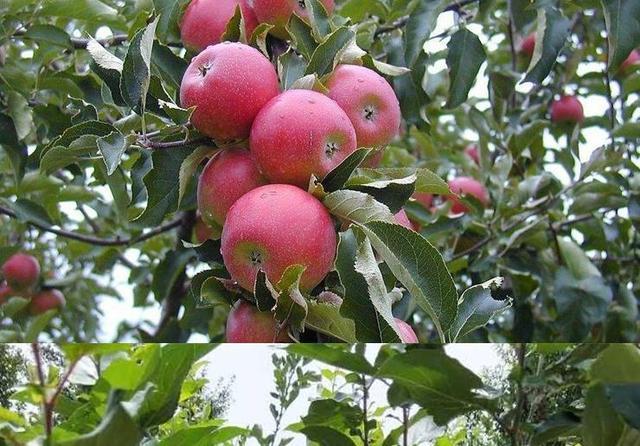
Pollution-Free Apple Production Technology in Yongji, Shanxi
Pollution-free apple production aims at high yield, high efficiency, safety and superior quality, is based on improving the ecological environment and raising cultivation management levels, and requires that pesticides, fertilizers and water comply with relevant standards or guidelines. It is strictly forbidden to use pesticides, fertilizers or plant growth regulators that are explicitly banned by the state, of unknown composition, or produced without state approval. Priority is given to agricultural measures and biological agents, to minimize pesticide use, reduce pesticide residues, and keep pests and diseases below the economic threshold. In fertilizer use, planting green manure and returning straw to the field are advocated, with high-temperature fermented organic fertilizer as the main type and scientific and rational use of chemical fertilizers. Industrial wastewater, urban sewage, etc. are prohibited as irrigation water for orchards.
1 Production Technology Standards
The production base construction, cultivation techniques, fertilizer and water management techniques, pest and disease control techniques and harvesting requirements for pollution-free apples apply to the production of pollution-free apples in Yongji City, Shanxi Province.
"NY/T 5012-2001", "NY/T 393-2013" Green Food Pesticide Use Guidelines; "NY/T 394-2000" Green Food Fertilizer Use Guidelines; "NY/T 441-2001" Apple Production Technology Regulations; "NY/T 5013" Environmental Conditions for Pollution-Free Food Apple Production Areas; the production area environment meets the air, water quality and soil quality standards stipulated in the Ministry of Agriculture's "NY 5010-2001" standard and Shanxi Province's Pollution-Free Agricultural Product Production Technology Regulations "DB 14/87-2001".
2 Production Operation Regulations
2.1 Selection of Production Base
(1) Selection of orchard site. The pollution-free apple production base must be far from cities and major traffic routes, with no direct pollution sources (discharge of the "three wastes") or indirect pollution sources (pollution from upwind directions and upstream water areas) from industry or mines in the surrounding area. The base must be more than 100 m away from roads, and the atmosphere, soil and irrigation water of the area must be tested and comply with national standards.
(2) Variety selection. Varieties must meet market requirements, with attractive appearance and excellent internal quality, that is, red, large, sweet, fragrant, crisp, and resistant to storage and transport. The apple varieties suitable for development in Yongji are mainly early-maturing and mid-maturing varieties, such as Granny Smith, Senshu, Qinguan, Jinfu No. 1, Red Gala, and Pink Lady.
2.2 Soil Management
The orchard soil's active soil layer is required to reach 80 cm, with good permeability, an oxygen content in soil porosity of more than 5%, and a soil organic matter content of 1% in the main root distribution layer (within 50 cm). Soil management includes three items: deep plowing and soil improvement, mulching with grass around the tree basin, and growing grass between rows.
(1) Deep plowing and soil improvement. After apple harvest in autumn, deep plowing is carried out together with the application of organic fertilizer. The whole orchard is deep plowed once every 2 years, or every other row is deep plowed once, with a depth of 30-40 cm. When backfilling soil, mix it with organic fertilizer and ground cover grass and fill it into the pits, then irrigate thoroughly with freezing water.
(2) Mulching with grass around the tree basin and growing grass between rows. Adopting the combined method of mulching with grass around the tree basin and growing grass between rows can both store water and preserve moisture and increase soil organic matter content. It is advocated to raise pigs and chickens in the orchard and build biogas digesters, taking the path of combining planting and breeding.
Mulching with grass around the tree basin is carried out after spring fertilization and irrigation. Wheat straw, corn stalks, etc. are used to cover under the tree basin, with a suitable thickness of 20 cm. When materials are insufficient, it can be done batch by batch, but the mulching thickness must be ensured. Press a small amount of soil on top to prevent fire, shallowly turn once every 2 years, and after 4 years open trenches and deeply turn it into the soil. When topdressing, pull aside the grass layer and apply.
Growing grass between rows can be artificial planting of green manure (hairy vetch, flat-stemmed milkvetch, clover, etc.), or intercropping low-stalk crops such as peanuts and beans, or growing grass within the orchard. Grass-growing orchards should mow 3-4 times a year and cover the ground, and the maximum growth height should not exceed 25 cm, and it must not affect the normal growth of fruit trees. Regardless of grass-mulched or grass-grown orchards, spray chemicals for disinfection each year during the dormant period to kill overwintering pest and disease sources.
2.3 Fertilization
(1) Fertilization principles. Mainly apply decomposed organic fertilizer (including high-temperature compost, biogas fertilizer, human excrement and urine, sheep manure, chicken manure, etc.) or commercial organic fertilizer and biological fertilizer, with chemical fertilizer as a supplement. The fertilizers applied must comply with relevant national standards, have approval numbers, and should not have adverse effects on the orchard environment and apple quality.
(2) Base fertilizer. Apply base fertilizer after fruit harvest. The application rate of organic fertilizer is calculated at 1.5-2 kg per 1 kg of apples produced. Orchards with insufficient fertilizer sources should also reach the standard of 1 kg fertilizer per 1 kg fruit. Generally, in full fruiting period, depending on yield, apply 2000-4000 kg of organic fertilizer per mu. The fertilization method is mainly trench application or broadcast application, and the most suitable application site is the vertical projection of the outer canopy.
(3) Topdressing. Topdress 3 times each year. The application rate is calculated at 1.0 kg pure nitrogen, 0.3-0.5 kg pure phosphorus, and 1.2-1.3 kg pure potassium per 100 kg of apples produced. The fertilization method is to open shallow trenches 15-20 cm under the canopy and apply. The first application is before and after bud break (mid-April), mainly nitrogen fertilizer, accounting for 70% of the annual nitrogen fertilizer amount; the second application is during flower bud differentiation and fruit expansion (early to mid-June), mainly phosphorus and potassium fertilizer plus a small amount of nitrogen fertilizer, with nitrogen fertilizer accounting for 20% of the annual amount, phosphorus fertilizer 25%-30% of the annual amount, and potassium fertilizer 30%-35% of the annual amount; the third application is in the late fruit growth period (late July to early August), mainly potassium fertilizer, accounting for 65%-70% of the annual amount. Irrigate promptly after topdressing.
(4) Foliar fertilizer. Spray 4-5 times throughout the year. Spray 2 times during the spring shoot growth period (late April to mid-May), mainly nitrogen fertilizer, spraying 0.3%-0.5% urea, with an interval of 15-20 days. Spray 1 time from the end of spring shoot growth to the early stage of flower bud differentiation (late May to mid-June), and spray 2 times during the autumn shoot growth period (early July to early August), mainly amino acid series micro-fertilizer (400 times dilution) or 0.2%-0.3% monopotassium phosphate.
2.4 Irrigation
Irrigation must be carried out 3 times throughout the year, namely after bud break or during the vigorous spring shoot growth period, during fruit expansion, and before soil freezing. According to rainfall conditions, irrigation can be appropriately increased by 1-2 times during drought. The irrigation amount should be based on soaking through the root distribution layer (30-40 cm), that is, reaching 60%-70% of field water capacity. In rainy years, attention should be paid to timely drainage and waterlogging prevention.
2.5 Training and Pruning
(1) Tree form indicators. After winter pruning, leave 80,000-100,000 branches per mu, with a maximum of no more than 100,000. Tree height should not exceed row spacing, trunk height should not be less than 40 cm, and the canopy overlap rate between trees should be less than 30%. The average annual growth of new shoots on the outer canopy is 30-40 cm. The ratio of fruiting branches to vegetative branches is 1:3, and medium and short branches account for 90%. Orchard coverage rate is 75%, and leaf retention rate is 80%.
(2) Principles and requirements. ① Young trees to early fruiting trees. The main task is training the tree form and cultivating a good tree structure. Use light pruning, long pruning, and leaving more branches. Permanent branches and temporary branches should be treated differently, making full use of auxiliary nurturing branches, and while bearing fruit, shape the tree without affecting ventilation and light penetration of the whole tree. ② Full fruiting period trees. Use technical measures of regulating light, regulating branches, regulating flowers, and regulating vigor, adopting methods such as notching, branch thinning, angle opening, topping, scoring (girdling), and controlling, mainly summer management supplemented by winter pruning, to cultivate good fruiting branch groups, reduce peripheral branches, control auxiliary nurturing branches, remove upright branches and competing branches, lower the head and open the center, control the canopy, and improve ventilation and light penetration conditions throughout the orchard. ③ Aging trees. Retract in a timely manner and renew and rejuvenate. The specific method is to remove weak branches and keep strong ones, remove slanted ones and keep upright ones, remove old ones and keep new ones, remove peripheral and inner canopy branches, and keep strong branches and strong buds, etc.
(3) Density and tree form. According to differences in soil fertility, management level, variety habits, etc., select suitable planting density and adopt different tree forms. Row spacing 4 m ×
2-3 m (55-83 trees per mu) adopts the small canopy delayed open center form and the free spindle form. ① Small canopy delayed open center form. Trunk height 40 cm, tree height 3 m, canopy diameter 2.5 m, with a central leader. 5-6 main branches, arranged from bottom to top as 3-2-1, main branch angle 60-70°, larger at the bottom and smaller at the top, with 2-3 side branches on the main branches, the spacing between the first and second tiers is 70 cm, and the spacing between the second and third tiers is 50 cm. ② Free spindle form. The appearance resembles a cedar shape, trunk height 50 cm, tree height 2.5 m, with 10-15 main branches evenly distributed on the central trunk, branch angle 80-90°, not layered, evenly arranged in a spiral upward pattern. There are no side branches on the main branches, and fruiting branch groups are directly attached. The length of the main branches from bottom to top is 1.5 m, 1 m, and 0.7 m respectively, and the spacing between two adjacent main branches is 20 cm, making the canopy compact.
2.6 Flower and Fruit Management
(1) Flower and fruit thinning. Flower and fruit thinning should be done early rather than late, following the three steps of flower thinning, fruit thinning, and final fruit setting. Start flower thinning 7 days after inflorescence separation and complete it in 15 days. First thin out side flowers and keep the central flower. Start fruit thinning 7 days after petal fall and complete it within 20 days. Keep fruit according to distance: leave 1 fruit every 20-25 cm for large-fruited varieties, and leave 1 fruit every 15-20 cm for medium-fruited varieties. Remove deformed fruit, damaged fruit and terminal shoot fruit. About 15% more fruit can be reserved. Final fruit setting is carried out 1 month after petal fall and completed in 3-5 days, removing poorly developed fruit. The retained fruit quantity should be appropriate. When the yield per mu is 1500-2500 kg, retain 8000-13000 fruits, and the average single fruit weight can then be above 200 g.
(2) Bagging and bag removal. Bag after final fruit setting (starting 40 days after flowering). High-quality plastic film bags or paper bags can be selected for bagging. Before bagging, spray 2-3 times protective fungicide + amino acid calcium. Bag after the liquid dries. If bagging is not completed within 5-7 days after spraying, spray again before bagging. Bagging time should avoid the midday high-temperature period. Orchards using double-layer paper bags should remove bags about 15-20 days before harvest: first untie the outer bag, and after 3 sunny days remove all bags. Bag removal is best before 10:00 and after 14:00, to promote full coloring of the fruit and prevent sunburn. After bag removal, remove the leaves around the fruit and turn the fruit promptly. The amount of leaf removal must not exceed 20% of the total leaf amount of the whole tree. Orchards using plastic film bags can harvest with bags on.
2.7 Pest and Disease Control
Adhere to the plant protection policy of "prevention first, integrated control", take agricultural and physical control as the foundation, and according to the occurrence patterns of pests and diseases and the economic threshold, scientifically and rationally use chemical control techniques to effectively control pests and diseases and minimize pesticide use. Pesticide use shall refer to the "NY/T 5012-2001" standard to ensure that apple quality meets national standards.
(1) Dormant period (after leaf fall to before bud break). Whitewash the trunk, main branches and large side branches. The formula of the whitewash is 12 parts quicklime, 2 parts salt, 0.5 part soybean juice, and 36 parts water. Thoroughly clean up dead branches, fallen leaves, and diseased and insect-damaged fruit in the orchard, prune diseased and insect-damaged branches on the trees, scrape off old rough and cracked bark on the trunks, and bury deeply or burn them in a centralized manner to eliminate various overwintering pest and disease sources. Deeply plow the soil under the canopy by 20-25 cm, using low winter temperatures to eliminate overwintering pests in the soil.
(2) 7 days before bud break. Spray the whole orchard with 5 degrees Baumé lime sulfur mixture in a washing manner, focusing on controlling scale insects and spider mites. The formula of lime sulfur mixture is 2 parts sulfur, 1 part quicklime, and 10-12 parts water. Apply the mixture to protect wounds and pruning and saw cuts. Use lime sulfur mixture or the residue from boiling lime sulfur mixture to seal pruning and saw cuts and large wounds.
(3) Flowering period. Spraying pesticides is prohibited during the flowering period. Use physical methods such as manual capture and sugar-vinegar liquid trapping, focusing on controlling scarab beetles.
(4) From petal fall to leaf expansion. Focus on controlling aphids and leaf rollers, and prevent various diseases. Spray fungicides 3 times consecutively, with an interval of 10 days each time. The first time is 7 days after petal fall, spraying 10% imidacloprid wettable powder 2000 times + 1.5% polyoxin wettable powder 500 times + amino acid micro-fertilizer 400 times dilution. For leaf rollers, manually cut off and burn the insect nests. The second and third times start 15-20 days after petal fall, spraying fungicides 2 times consecutively, selecting 1.5% polyoxin wettable powder 400 times dilution, 70% thiophanate-methyl wettable powder or 60% carbendazim wettable powder 800-1000 times dilution once each, plus amino acid calcium 400 times dilution. After the third spraying, begin bagging.
(5) From the end of spring shoot growth to before wheat harvest. To prevent spider mites and lithocolletis ringoniella, spray once with 25% chlorbenzuron No. 3 suspension concentrate 1000-1500 times + 1.8% abamectin emulsifiable concentrate 6000-7000 times + amino acid 400 times dilution.
(6) Fruit expansion period (autumn shoot growth period). Protect leaves well and promote flower bud differentiation. Spray Bordeaux mixture in a large amount or other fungicides + 0.3% monopotassium phosphate 2 times (only 1 time for mid-maturing varieties), with an interval of 25 days. Stop using chemicals 30 days before harvest.
2.8 Timely Harvesting
Different varieties have different fruit development periods. Harvest time should not be too early or too late. Too early affects coloring, quality and flavor, while too late easily causes a large amount of fruit drop. The order of harvesting is outside first and then inside, bottom first and then top. Handle gently to prevent squeezing, bruising and puncturing the fruit.
2.9 Fruit Grading, Packaging, Storage and Transport
(1) Grading and packaging. Before storage or external sale, fruit must be strictly graded and packaged according to standards. A single package should preferably be 7.5 kg per box. Materials used for packaging (including cartons, wrapping paper, tape, etc.) must be clean, non-toxic and odorless. Leave 4-8 ventilation holes on both sides of the box. The box should indicate the variety, place of origin, weight, and mark it as pollution-free apple.
(2) Storage. The most suitable storage temperature is 0-3°C (not lower than 0°C at minimum, not higher than 5°C at maximum). Chemical preservatives must not be used during fruit storage. Fruit should be placed in a constant-temperature warehouse or refrigerated controlled-atmosphere warehouse. The storage environment should be kept clean, hygienic and odorless. Boxed apples should not be placed directly on the ground or against the wall. Leave a 15-20 cm ventilation channel. Stacking should not exceed 5 layers, and a 40-50 cm working aisle should be left between stacks.
(3) Transport. Tools for transporting fruit must be clean and hygienic and must not be mixed with toxic, harmful or odorous items.