Give your pothos less water and it will grow black "beards," making it even easier to get a full, bushy pot.
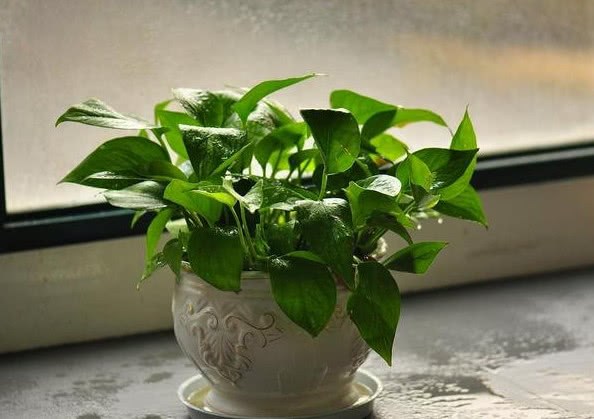
If you ask which plant is grown in the most homes these days, the answer is definitely pothos. Pothos is now found in almost every household, because it not only stays green all year round and is very easy to care for, but it can also help remove formaldehyde from a newly renovated home. Even if you just keep a pot around for no particular reason, purifying the air a little is still a good thing, isn't it!
Usually, once you have one pot of pothos, you don't need to buy more. Just cut off part of its long vines for cuttings, and you can have several brand-new pots of pothos right away. But if you want your pothos to fill out its pot, you can't just pay attention to ordinary care. If you can get your pothos to grow "black beards," then filling out the pot becomes very easy.
I believe many plant lovers have never even noticed before whether their own pothos has "black beards." In fact, the black beards here refer to the aerial roots of pothos. In the plant world, many plants and flowers have aerial roots. Once aerial roots are grown, they can absorb more nutrients, and naturally the speed of filling out the pot will be faster.
If you want to get your pothos to grow aerial roots, the first thing to start with is your care method. Many times when we care for pothos, we give it a lot of water, thinking that pothos is a water-loving plant and that more watering will naturally make it grow faster. With frequent watering, pothos will still grow, but it is not so easy to get it to grow aerial roots. At this point we need to do the opposite, that is, water the pothos a little less, so that the aerial roots will grow out faster.
We can water the pothos about once a week. Especially now that it is autumn, there is no need at all to worry that the pothos will die from lack of water. Remember that before each watering, you must wait until the soil in the pot has dried out completely, because aerial roots rely on absorbing moisture from the air to support the pothos's growth. Once the potting soil is dry, the aerial roots will naturally grow out as well.
After the aerial roots have grown, we can slightly increase the amount of watering. Remember that while watering the pothos, you also need to spray a little water on the aerial roots, so that the aerial roots can absorb enough moisture from the air and naturally grow bigger and bigger. Once the aerial roots have grown large, it means the pothos now has two places to supply it with nutrients. If you keep caring for it this way, won't it fill out its pot very quickly?
In fact, when we get pothos to grow aerial roots, not only can its growth speed increase quite a bit, but later on, once the vines have matured, cuttings will not only be easier but will also root and sprout faster. This is because at the time of cutting, the aerial roots act just like the pothos's root system. Whether placed in soil or in water, they will absorb nutrients and grow quickly, so naturally the survival rate of the cuttings will be much higher.
With this little method, Huahua believes that if you want to get your pothos to fill out its pot, it will be even easier. Hurry home and give it a try!