5 major secrets of rose pruning: follow them and your flowers will bloom abundantly and beautifully
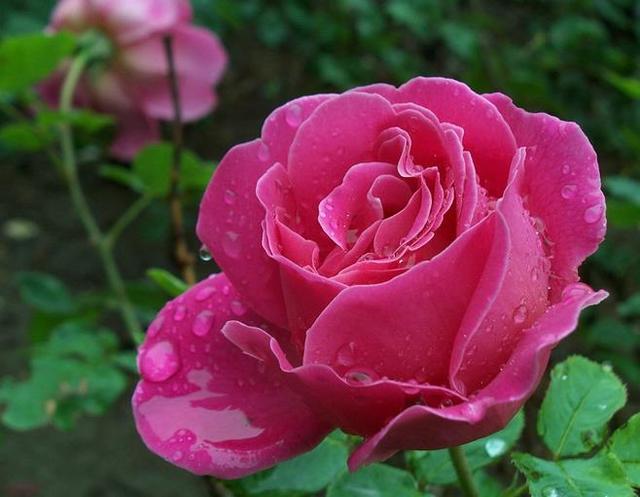
Post-bloom pruning of roses can be done 3 times from mid-May of the same year until after "Start of Autumn", with slightly different pruning methods each time, mainly determined by how the rose grows in different seasons. During the growing period, roses have the trait of forming flower buds and blooming on new shoots; especially for vigorous varieties, as soon as the flower on a branch fades, the axillary buds begin to grow and form new shoots, and flower buds form again at the branch tips. If left to grow freely, the branches grow thin and weak, the plant shape becomes messy, and ventilation and light penetration are affected. Therefore, after each bloom, pruning must be carried out so the plant grows robustly and blooms profusely.
Pruning after the flowers wither
After roses finish blooming, be sure to promptly cut off the spent flowers to prevent the flowers from rotting and inducing fungus, and to properly retain nutrients and promote the next round of flower bud formation. Cut off spent flowers promptly to avoid seed set, so that nutrients are concentrated on sprouting new shoots, making the second bloom large and beautiful and the branches stronger. To appropriately suppress growth, prune lightly and keep 4-5 buds; for moderately developed branches, prune to medium length, leaving 2-3 buds, and cut off the upper part.
Cut off useless branches and leaves
Cut off all the branches and leaves at the base of the rose. These branches not only affect the plant's ventilation and light penetration, but also easily accumulate water and induce fungal infections and pest problems. Moreover, the branches at the base will not bloom; they only waste nutrients in vain, so these branches and leaves must be cut off. Because different new shoots are pruned to different degrees of severity, the plant shape develops in a balanced way, avoiding uneven branches or excessive leggy growth. When pruning, note that the cut should be 0.5 cm above the bud; cutting too high not only affects appearance but also delays the sprouting of the branch.
Precautions for rose pruning:
If pruning is done from late June to early July, this is the height of midsummer when the plant's growth vigor is weak, so pruning should be light, cutting only at the second leaf below the spent flower. There is no need to cut off too many branches and leaves, to avoid reducing the area for photosynthesis, but spent flowers and leggy branches should be removed promptly. When pruning roses, note that the pruning shears must be sharp and must be disinfected beforehand; you can soak them in alcohol before use for pruning. After pruning diseased leaves and diseased branches, the shears should be disinfected again before being used to prune other potted plants.
Seedling stage is also a time when pruning can be done
If your rose plant is still relatively small and weak, do not keep the flower buds it produces; being ruthless and cutting them off is the correct choice. A seedling forming flower buds consumes an enormous amount of nutrients, which is harmful to later growth. In late December, around the Winter Solstice, when temperatures drop, the rose will enter its dormant period. At this time, prune heavily once. Choose thick, sturdy flowering branches that grew in spring and summer, keep 2-3 buds from the base upward, and cut off the rest. Diseased and weak branches, old orange-brown branches, crossing branches, and rootstock suckers should be cut off as much as possible.
Common-sense pruning techniques
When pruning, if you can take care to prune weak branches heavily and strong branches lightly, then after sprouting next spring the height will be uniform and flowering will be more orderly. After heavy pruning of roses, you can prepare them for winter. After they sprout next spring, pay attention to bud thinning, removing secondary buds and inner buds, to encourage the first buds to develop robustly. At the same time, you can decide whether to keep a bud based on how robust the branch is. When pruning, also pay attention to the reasonable arrangement of branches, to encourage lush growth of the rose. If what you are growing is a large-flowered rose variety and one flowering branch grows many flower buds, and you want the flowers to bloom larger, then keep only one robust flower bud on that flowering branch, and the flower will be able to bloom very large. For other medium-flowered and small-flowered varieties, you can keep many flower buds.
This is a gathering place for flower enthusiasts, sharing flower care tips; you are welcome to follow and exchange ideas.