This wild vegetable has to be picked while lying flat on the water surface; it is slippery and slimy like nasal mucus, yet highly nutritious and known as the "king of zinc."
I grew up in the countryside, and back then the ingredients at home were rather limited. After early spring arrived, my mother would always find some wild vegetables to cook for us, and tasting a new flavor back then always felt especially delicious. Nowadays, although people still enjoy eating wild vegetables, they are no longer easy to find, especially some aquatic wild vegetables, which are becoming fewer and fewer as rivers and waters become polluted.
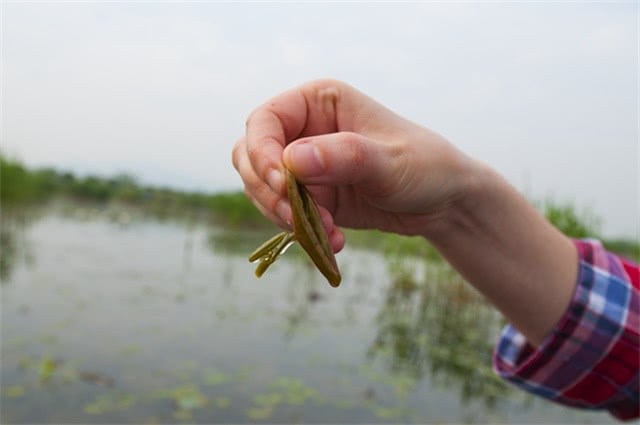
The wild vegetable to be discussed today is called water shield (Brasenia schreberi), an edible wild plant that grows in water. What we eat are its tender stems and leaves, and one must pick only those tender stems and leaves that have not yet unfurled. Water shield can grow from April all the way to around October, and during this period it can be harvested. Because water shield grows rather quickly, the tender stems must be picked once every three to five days; if they are not picked within these few days, the tender stems will grow old and no longer be edible, and one can only wait for the next round of new tender stems to grow. The water shield we usually eat consists of the still-unfurled, curled tender stems.
The entire growth cycle of water shield has very high requirements for water quality, because only in a clean water environment can water shield secrete a mucus-like gelatinous substance that wraps around it. If the water in which water shield grows becomes polluted, it cannot secrete this gelatinous substance, and then its roots will rot in the water and the plant will die. So the reason water shield tastes so slippery and smooth when we eat it is that its surface is wrapped in this layer of gelatinous substance; the tender stems in particular contain the most abundant gelatinous material, which is why they taste so good. Wrapped in this gelatinous substance, water shield differs from other wild vegetables in both flavor and texture, and this is one of the reasons many people enjoy eating it.
Besides tasting good, water shield is also extremely high in nutritional value. Having long grown in a clean water environment and absorbed nutrients from the water, water shield contains very high levels of gelatinous protein and various vitamins. Moreover, water shield has not only edible value but also great medicinal value, with diuretic and detoxifying effects. In addition, water shield is very high in zinc, arguably the highest among wild vegetables, and is popularly known among the people as the "king of zinc," making it especially suitable for children. Because zinc promotes intellectual development, regularly eating water shield is beneficial to children's intellectual development.
Nowadays many people highly favor water shield because of its taste and value, but due to pollution of the water environment, the amount of wild water shield is decreasing, and most of what is sold on the market is cultivated water shield, which is also very nutritious. Picking water shield is a skilled job: you have to lie flat on the water surface to pick it, which is extremely tiring.