Fertilize generously during garlic planting season, but never apply fertilizer haphazardly
Summary: Garlic has a high fertilizer demand, and fertilizing this way helps achieve high yields
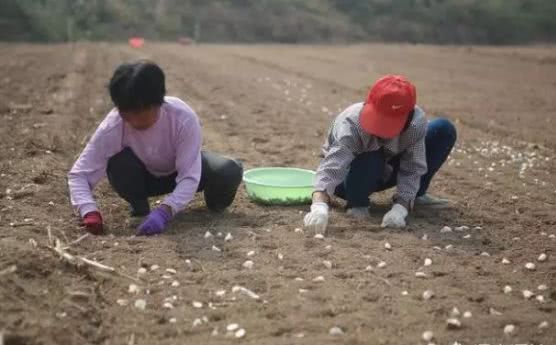
The weather is gradually turning cooler now, and garlic-growing areas across the country have begun planting garlic one after another. Although this year's garlic prices are far from ideal, garlic, as a common everyday seasoning, can be said to be purchased by every household, so there are still many farmers planting garlic at present.
What fertilizer is good for garlic?
If you want garlic to grow well and yield high, you naturally cannot do without rational fertilization. What fertilizer is good for garlic? Before solving this problem, we must understand the fertilizer requirements during garlic growth, as well as the local growing environment and the garlic variety. All these issues need to be taken into consideration.
Garlic's fertilizer requirements
First, let us look at the fertilizer requirements during garlic growth. Garlic is a crop with a relatively high fertilizer demand, and its fertilizer needs differ at different growth stages. Overall, during garlic growth, the demand for nitrogen fertilizer is the greatest, followed by potassium fertilizer, then phosphorus fertilizer, calcium fertilizer, magnesium fertilizer and other fertilizers. The absorption ratio of nitrogen, phosphorus, potassium and calcium is generally 1 to (0.25 to 0.35) to (0.85 to 0.95) to (0.5 to 0.75). Moreover, at different stages of garlic growth, the demand for fertilizers with different elements also differs.
How to fertilize garlic?
First, let us look at the issue of applying base fertilizer to garlic
The quality of the base fertilizer for garlic affects its later growth and its overwintering condition. Therefore, applying base fertilizer well is the first step to successful garlic planting. For garlic base fertilizer, barnyard manure, chicken manure, pen manure, compost and so on can generally be used. If barnyard manure is chosen as pen manure, generally 2500 to 3000 kg per mu is needed; if barnyard manure is chosen, the amount needed is generally about 4500 kg per mu. In addition, about 30 kg of garlic-specific compound fertilizer and about 30 kg of superphosphate need to be applied per mu.
Points to note when topdressing garlic
Garlic is generally topdressed two to three times according to its growth condition. The first is topdressing before garlic overwinters, when garlic has generally grown to about 25 cm and has five leaves. At this time, overwintering fertilizer should be applied in a timely manner to help garlic overwinter safely. Generally, nitrogen fertilizer is applied, with about 15 kg of urea fertilizer per mu according to the soil condition.
The second topdressing is generally carried out after garlic turns green again, usually around the Spring Equinox, when the average temperature is already above 7 degrees. Generally, about 10 kg of nitrogen fertilizer is applied per mu. If the garlic is growing well and overwintering fertilizer has already been applied, less or no fertilizer can be applied at this time.
The third is topdressing during the garlic scape growth period. This stage is a critical period for garlic growth, and topdressing must be carried out in a timely manner to promote garlic growth. Generally, in the middle of May, about 30 kg of a 15-15-15 potassium sulfate compound fertilizer is applied, along with about 10 kg of urea.
The fourth is topdressing after the garlic scapes are harvested. During this period, the nutrients in garlic begin to move downward, and it is the most critical period for garlic bulb growth. Generally, about 15 kg of a 15-15-15 potassium sulfate compound fertilizer is applied per mu according to the growth condition. (3)
This is Science Agriculture, welcome to add a follow, and let us grow knowledge together. The article is original and the copyright belongs to the Science Agriculture account; infringement will be pursued.