Pigeons are not born as pairs, so does that count as inbreeding?
Summary: Animals generally avoid inbreeding, so how can they be born as pairs?
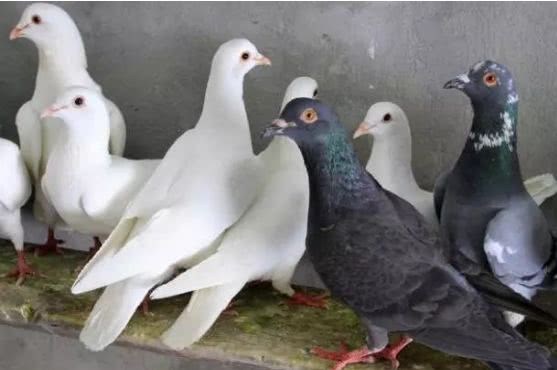
Pigeons are birds that mate for life; once they choose a partner, they stay loyal and are inseparable. If they unfortunately lose their mate, a long time passes before they pair again. How to pair pigeons and improve their quality therefore becomes especially important.
First of all, pigeons are not born as pairs; rather, there is just a higher probability of one male and one female.
Pigeons generally lay two eggs per clutch and then begin incubating. Those two eggs can be combined in three ways: one male and one female, two males, or two females. The probability of each egg being male or female is 1/2, so the probability of two males or two females is 1/4 each, while the probability of one male and one female is 1/2. So the probability of one male and one female in a clutch is very high and quite common. Although two males or two females is rare, it still occurs, so pigeons are not born as pairs.
So can pigeons breed with close relatives? The answer is yes, but it is not recommended.
As long as one male and one female pigeon are together, they can breed, and close relatives such as siblings from the same clutch can also breed. However, as is well known, inbreeding is not good, mainly because it makes undesirable genes homozygous; compared with crossbreeding, the offspring have lower immunity and are prone to illness and deformities, and it can even cause population decline. Crossbreeding, by contrast, can complement the strengths and weaknesses of both the male and female, eliminating defects through complementary qualities, producing higher-quality pigeons and culling defective ones.
Choose inbreeding or crossbreeding according to your own needs.
Just as mixed-race children inherit the strengths of both parents and become better looking, crossbred pigeons are generally of better quality and more suitable for racing pigeon competitions, allowing the selection of superior breeding pigeons. Generally, first observe the characteristics of your own pigeons, identify what is lacking and purposefully make up for it, and select pigeons with complementary traits for pairing; this greatly increases the chance of obtaining pigeons with the desired qualities.
Some breeds of pigeons are award-winning champions or very valuable breeds. To ensure bloodline purity and pass on the excellent and unique qualities of the breed, inbreeding is chosen for purification. Some pigeons are meat pigeons raised for food, and for these there is no need to consider whether to use inbreeding or crossbreeding; whichever breeding method better produces high-quality meat pigeons is the one to choose.
This is Science and Agriculture; you are welcome to follow, and we will learn together.