Clematis vines overwintering outdoors on a northern balcony, fine at minus 20 degrees
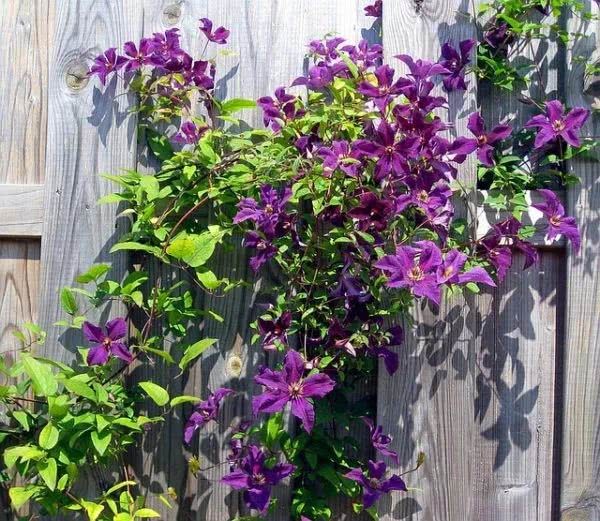
Many northern friends don't know what climbing flowers to plant on an outdoor balcony or in a yard, and clematis is a great choice. It has some very cold-hardy varieties that can be kept outdoors in winter without any problem. It grows relatively easily and comes in different flower colors. You can plant it in a pot, set up a support for it, or let it climb along a fence.
You can combine different clematis varieties. Most of them bloom from early spring to late autumn, and some varieties bloom in winter. It is known as the queen of climbing flowers, and not without reason: its flowers are very brilliant, its colors are rich, and some even carry a captivating fragrance.
The most critical thing when growing clematis is the soil. It does not like acidic or neutral soil; use slightly alkaline, fertile, loose and well-drained soil. The soil must not only be alkaline but also drain well, avoiding waterlogged soil, otherwise the roots and stems rot easily.
Beginners can grow some easy varieties, such as the common Jackmanii, General Sikorski, Henry, Arabella, Polar Queen and Andromeda.
Before planting, you need to understand what kind of environment this clematis variety likes, whether it is an early-flowering or late-flowering type, and whether the flowers are single or double.
The spot where you grow clematis needs to be tall enough for it to climb, with a support about three meters high for it to climb on. It is best kept on a balcony or in a yard with plenty of sunlight.
Clematis takes several years to go from seedling to flowering maturity, so you must be patient during care. When buying, it is best to buy plants at least two years old, and choose robust-growing varieties.
The best spot for planting clematis has plenty of light every day. Only a few clematis can bloom in partial shade, such as the common Henry. The vast majority of clematis varieties need more than six hours of direct sunlight every day.
Clematis likes fertile, loose soil with good drainage. If your soil is acidic, add limestone or a little plant ash regularly to improve the soil's pH and make it suitable for clematis growth.
Another key point in clematis care is that the base of its roots and stems must stay cool and in partial shade, avoiding scorching sun or long periods of direct sunlight, while its branches and leaves need more light in order to bloom.
Clematis cannot climb up a wall by itself. It needs to cling to relatively thin sticks or a support in order to twine upward, so it is best to set up a grid-like support.