What to do when balcony vegetables grow thinner and thinner? A few simple methods to make the seedlings fill the pot
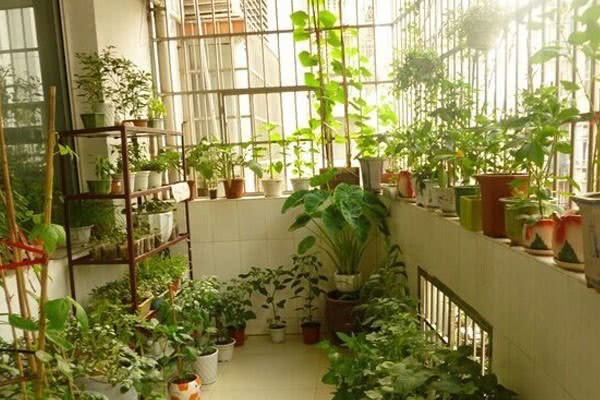
In today's society, the balcony at home is no longer just a place for drying clothes. Many people choose to grow some flowers and plants on the balcony to enjoy every day, and many gardening enthusiasts even grow vegetables and melons directly on the balcony, which is not only convenient for harvesting but also guarantees health and hygiene.
However, sometimes growing vegetables and fruits is just like growing flowers, and all kinds of problems can arise. The most annoying one is probably when the seeds have already sprouted and you are joyfully looking forward to their growth, only to find that these seedlings are growing thinner and thinner. After asking an experienced neighbor aunt who grows vegetables, Huahua learned that when growing vegetables on the balcony, you need to pay attention to these points in order for them to grow vigorously!
1. Pay attention to sowing spacing
Generally, when we grow vegetables on the balcony, we choose dedicated containers for planting, but because space is limited, we need to decide how much to sow according to the size of the flower pot or container. Generally, for a flower pot with a diameter of about 20 cm or a container about 50 cm long, we should keep the number of seeds sown at around twenty, so that the growing space for the vegetables is evenly distributed and there will be no problem of insufficient nutrients.
On the contrary, if we sow too densely, then not only will the nutrients be insufficient, but during the growth period there will also be no light penetration and the air circulation will not be ideal either, which will cause the vegetable seedlings to grow thinner and thinner. If too many seeds sprout, we can sacrifice the small ones to protect the large ones, remove some seedlings that look weak, and let the others grow strong and healthy.
2. Pay attention to light
The nutrients provided by sunlight cannot be replaced by any fertilizer. Generally, the more sufficient the sunlight, the more vigorously the vegetable seedlings will grow. However, if they are newly sprouted vegetable seedlings, it is best not to let them receive too much light at this time. Just keep a little weak scattered light in the morning and evening, because sometimes when the light is too strong, yellowing and withering can also occur.
3. Pay attention to the amount of watering
Many vegetable plants do not grow more vigorously the more you water them, as we might think. On the contrary, we need to judge the amount of watering according to the actual situation. Generally, after the seedlings are watered once in the early stage of growth, there is no need to water a large amount, otherwise water accumulation will cause root rot. Wait until the seedlings grow bigger and develop leaves, then you can appropriately increase the amount of watering, and this way the balcony vegetables will grow better!
4. Pay attention to the intensity of fertilizing
Generally, during the small seedling stage, fertilizing is not advocated. Wait until the vegetables grow larger leaves, then you can appropriately apply some diluted fertilizer water to promote growth. If you can avoid using chemical fertilizers, try to avoid them, because applying chemical fertilizers to some soils can easily cause compaction.
Pay attention to the above points and you don't need to worry about not being able to grow vegetables on your home balcony. Gardening enthusiasts who like it should hurry up and give it a try!