How to rescue a Chinese hackberry (Celtis sinensis) collected stump that won't sprout? Dad's trick works remarkably well
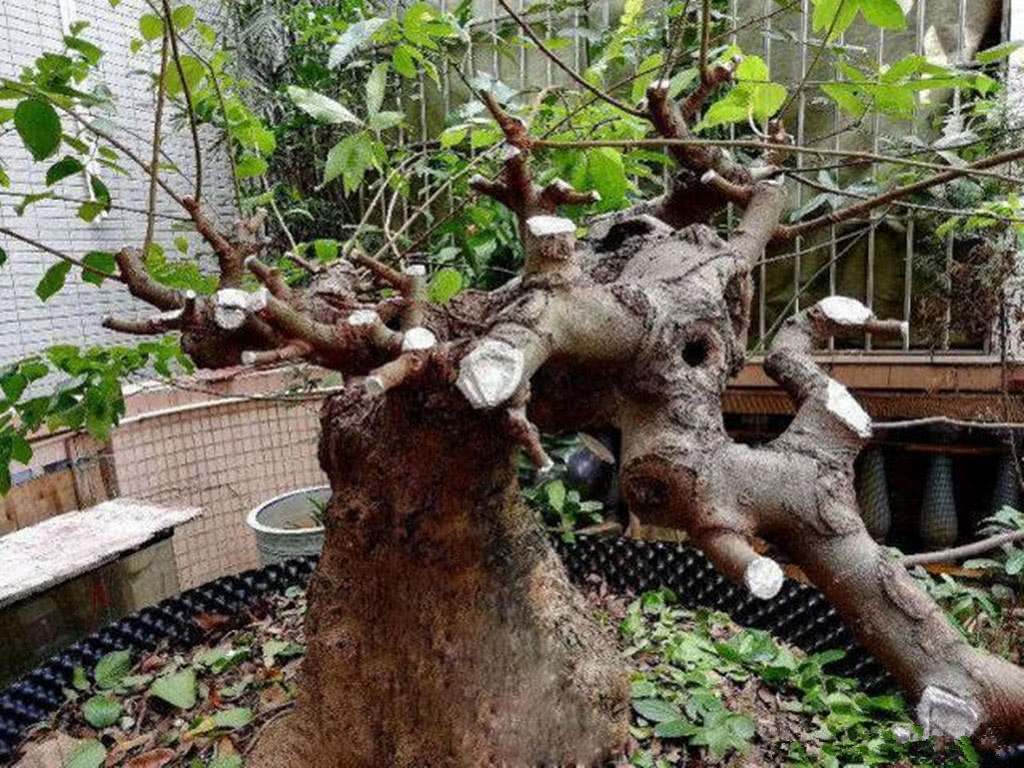
When a Chinese hackberry (Celtis sinensis) collected stump won't sprout, Dad used this method to rescue it, and the results are obvious!
Nowadays, with material life fully guaranteed, enjoyment has become the ideal goal we pursue. This has also led many people to find their own fun; some choose to travel on vacation, enjoying the mountains and waters. Some choose to keep pets, and some choose to play chess or cards in their spare time to pass the time. All of these are things that make people comfortable and happy in real life.
However, this way of passing time is worth learning from, namely caring for flowers and plants, which can not only purify the air environment but also enrich your spare time and cultivate your character. Just like Dad, who has a special affection for Chinese hackberry (Celtis sinensis). Why say so? The growth of the Chinese hackberry collected stump he cares for speaks for itself: lush branches and leaves, a unique shape, one could say distinctly characteristic, and looking at it makes you want to carry a pot home.
But when it comes to growing Chinese hackberry collected stump, achieving such success still took him time and effort. Take the problem you encounter when caring for Chinese hackberry; in his view, it can also be effectively remedied, and the effect is quite good! In fact, this problem is a common one in our care of Chinese hackberry, namely that a potted Chinese hackberry that has been planted for a long time will not sprout, as if it is sulking.
Dad says this situation can be remedied like this: graft the Chinese hackberry. The specific method is to choose one or two spots around the cut of the Chinese hackberry, use a knife or a saw to make an opening, take the prepared young Chinese hackberry twigs and join them to the cut, then fill and seal the cut with cow dung. Finally, wrap it well with plastic film and place it in a relatively dimly lit place to recuperate for a period. After it passes the adaptation period, carry out normal daily care.
The reason for using grafting to cultivate the Chinese hackberry stump is that the bark of Chinese hackberry is relatively thick, the bud points cannot grow out, and photosynthesis cannot occur; moreover, at this time the Chinese hackberry contains a large amount of water in its body, which causes the Chinese hackberry to become waterlogged.
Therefore, grafting can effectively promote the release of water from within the Chinese hackberry, so that the Chinese hackberry can carry out photosynthesis better. As for how to prune and shape it, that can only be done after the branches of the Chinese hackberry are fixed and growing well. I wonder, are you clear about this method?