Keep 1 pot of this flower on the balcony, and its fragrance fills the air, leaving no odor at home 24 hours a day
When growing flowers, grow some fragrant ones. Put a pot on the balcony, and the whole home will smell sweet all day! So which easy-to-grow and beautiful flowers can you choose? Let's take a look!
“
Fragrant and pleasant"
-Sweet alyssum-
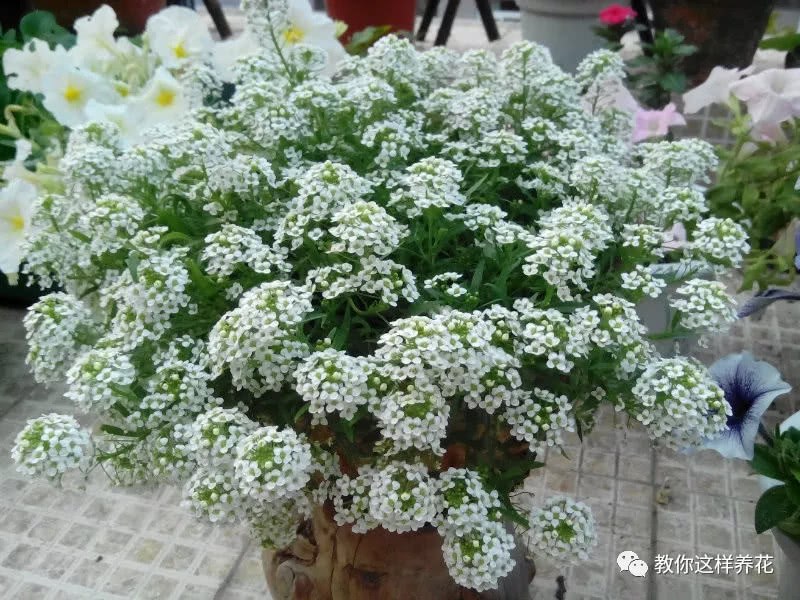
Sweet alyssum, also known as carpet rockcress, little white flower, and jade butterfly ball, is called "snowball" because its flowers cluster together into a ball shape and are mostly white. Just as its name tells us, it can give off waves of floral fragrance. Outdoors, it can attract butterflies and bees around it, and it is very beautiful. Sweet alyssum blooms from March to June every year, so what can be done to make it bloom more?
1. Maintain a good supply of soil, fertilizer, and water
The flowering period of sweet alyssum is relatively long, so it needs to be provided with sufficient nutrients. Generally, fertilize once every half month, and a thin liquid fertilizer is the first choice. For watering, just meet its basic needs; do not water too much.
2. Pruning during the flowering period
When it is blooming, cut off spent flowers together with 2-3 leaves, which can extend the flowering period.
3. Care after flowering
In the hot summer, it grows poorly and its flowers decrease accordingly. At this time, cut off the flower branches that have already bloomed, and with proper fertilizing and watering, it can bloom another wave in autumn.
-Jasmine-
When jasmine is mentioned, I believe everyone is familiar with it. It also has many "nicknames" such as yushe, moli, and tea flower. A song called "Jasmine Flower" has been sung across the country, and to this day, when jasmine is mentioned, I believe the melody of "Jasmine Flower" can still echo in everyone's mind. Just as the lyrics say, "No flower in the whole garden is as fragrant as it," it can indeed "make a whole room fragrant with a single plant," winning over batch after batch of flower lovers with its floral scent.
1. Purchasing
When buying jasmine, pay attention to the season. It generally blooms from June to September. Note that if you see flowers blooming delightfully, you should also calculate how much longer it can bloom before you take it home, otherwise after it blooms for a while, you will have to wait another year. When selecting, choose shorter, stronger ones with many branches, many buds, and some already blooming.
2. Care
Potted jasmine should be placed in an area with sufficient light and good ventilation, and the soil should be kept moist. Jasmine likes fertilizer, especially during the flowering period when it needs more fertilizer, so apply more fertilizer. Loosening the soil after each fertilizing will give better results.
-Gardenia-
The fragrance of gardenia is a very attractive kind of aroma. Every time I see a gardenia, I cannot help but lean in to smell it. It is a plant with green leaves and white flowers, and whether viewed from afar or up close, it is very elegant. It symbolizes "purity," "leisure and elegance," "cleanliness," and so on. It is cultivated in various parts of our country. The flowering period of gardenia is from June to August, and its management is relatively simple.
1. Soil
Gardenia is a typical acid-loving flower. When potting, use pine needle soil or leaf mold, garden soil, sand, and alum fertilizer water residue mixed in a 4:3:2:2 ratio to prepare the growing soil. It is best to pot it around Qingming.
2. Watering
Pay attention to watering gardenia at the seedling stage; during the growing period, just keep the soil moist. It is better to water with rainwater or fermented rice washing water. In summer, when the temperature is too high and the air is dry, spray water around the leaves to keep them moist.
3. Fertilizing
During the growing season, apply more decomposed thin liquid fertilizer, which can prevent yellowing of leaves and also supplement iron. Before flower buds appear, apply more phosphorus and potassium fertilizer, which can promote flowering. After flower buds appear, fertilize less to avoid excessive growth and bud drop.
-Rosemary-
Rosemary is an ingredient in chili sauce and is native to the Mediterranean coast. It blooms from May to June and has many colors such as light purple, light pink, and white. Because the aroma of rosemary can enhance brain activity and improve memory and concentration, it is also called "the scholar's herb."
Rosemary has calming and mind-refreshing effects. You can steep rosemary leaves in boiling water, and after using it, it can treat insomnia, palpitations, headaches, indigestion, and many other conditions.
If you like roasting food, rosemary is also a very good seasoning. For foods such as steak, potatoes, and fish, adding a little rosemary gives a fresh, sweet aroma with a pine-like scent.
1. Sowing rosemary
Sow in warm spring. Evenly scatter the seeds on the soil in a flower pot, then soak the pot in water until, when it grows to 3-4 cm, it still absorbs water from the bottom of the pot. Place the seeds in a warm shaded place until they sprout, and after sprouting, place them in the light.
2. Rosemary care
Rosemary is fairly cold-tolerant. In winter, as long as the temperature does not drop below -5°C, it will not die. In summer, when the temperature is high, move it to a cool, ventilated place for care. When watering, watch the soil; generally, when the soil turns somewhat white, you can water. Rosemary grows relatively slowly, so prune carefully.
-Lily-
As early as the 4th century BC, people were already eating lilies. Lily flowers have an elegant posture, clear and graceful green leaves, and upright stems, and are a very important cut flower variety. Lilies give off a pleasant fragrance. If smelled for too long, their scent can make people overly excited and easily lead to insomnia. It is best not to place them in the bedroom; you can place more of them on the balcony or in the study.
Lilies are generally grown from bulbs. Cut off some old roots and dead roots, and disinfect with carbendazim. Plant them in well-drained potted soil, with the bud tip exposed about 0.5 cm above the soil surface. Do not fill the pot completely with soil, and water thoroughly.
The suitable growing temperature for lilies is between 16-24°C. Early summer is suitable for lily growth and flowering. When the temperature gradually rises, they enter a dormant period, and dead stems and leaves should be cut off in time. Water less at the initial stage of planting, gradually increase watering after leaves grow and during the growing period, water more during the flowering period from April to May, and after flowers fall and they enter dormancy, generally do not water. Lilies do not have high fertilizer requirements, but they need relatively large amounts of nitrogen and potassium fertilizer, so fertilize once every 10-15 days.
These flowers are all beautiful and easy to grow
They also have waves of quiet, elegant fragrance
Making people love them too much to let go
If you like them too, then grow a pot
Show this to flower friends who need it!