For autumn flower growing, choose this one: it blooms all year round and is even easier to care for than a spider plant
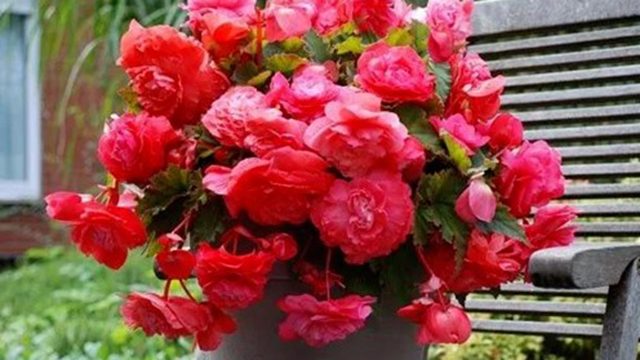
When it comes to what flowers are best to grow in autumn, Huahua asked all kinds of seasoned flower growers and got plenty of recommendations, and one of them really hit the spot. It is called begonia acetosa (maple-leaf begonia), and it truly overturns Huahua's long-standing impression that begonias are hard to grow, because this maple-leaf begonia not only has a long flowering period, but is really easier to grow than a spider plant!
1. Light
Like many sun-loving plants, the maple-leaf begonia likes to grow in plenty of sunlight. Generally speaking, the more sunlight there is, the more vigorously the buds of the maple-leaf begonia will open. Apart from summer, when it needs a little shading during direct sunlight, the maple-leaf begonia can take full sun during other periods. If it is grown in a dark place, the maple-leaf begonia will show yellowing leaves and dropping buds.
2. Watering
The maple-leaf begonia grows relatively fast, so water must keep up with it. Just maintain a normal water supply, and do not let the potting soil become too dry or too wet. Spring and autumn are the peak growing seasons for the maple-leaf begonia, so at this time you can appropriately increase the amount of watering a little. In summer and winter its growth slows down, so remember not to water too much, to avoid waterlogging and root rot.
3. Fertilizing
If you want to grow the maple-leaf begonia well, then fertilizer is an indispensable part. Before planting, you need to apply enough base fertilizer at the bottom of the flower pot, and then add soil. When it is in vigorous growth, it needs fertilizing once a week to ensure nutrients, and you can choose a relatively dilute fertilizer solution. Stop fertilizing after winter, as the maple-leaf begonia grows slowly at this time and it is easy to cause excess nutrients. There is one more thing to remember: the maple-leaf begonia must definitely be fertilized after it drops its leaves, and you must never just go through the motions.
4. Temperature
This flower, the maple-leaf begonia, is itself relatively tough and not too afraid of cold winters, but do not leave it outdoors for care either. In winter it can generally withstand low temperatures of minus five degrees, and compared with other begonias it really can be called a "hero among women." However, although it is cold-resistant, that does not mean it grows more vigorously in cold conditions, so it is still best to keep it in a relatively warm environment as much as possible.
Finally, if you want the maple-leaf begonia to grow well, we need to prune its branches regularly. When you find diseased or damaged branches, you must prune them off without hesitation, otherwise they will absorb extra nutrients and cause slow growth. So, seeing this beautiful maple-leaf begonia, are you tempted? Hurry and get a pot while the weather is cool; placed at home it really is very pleasing to look at! If you flower lovers have any better recommendations, leave a message for Huahua!