What to do when the stems of succulents start to wither after repotting
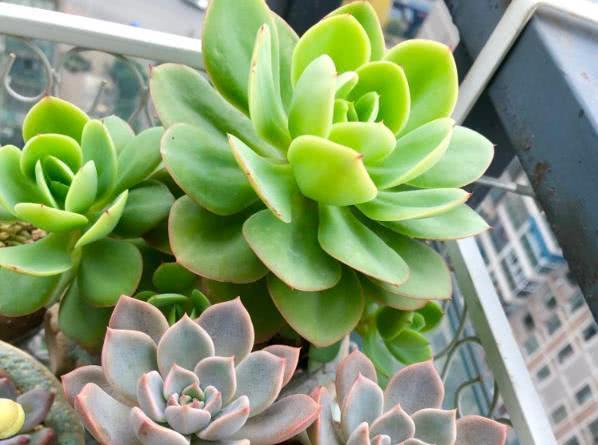
What should you do when this happens after repotting succulents? It is recommended to change the soil and take cuttings again. Remember: the knife must be disinfected with alcohol or liquor, and the cuttings should be left to dry for two days before planting. For compact-growing succulents, the principle of stem cuttings is the same. Just find a suitable spot to make the cut. After a year of growth, the stem of a typical plant will gradually become fibrous from the base to the tip. The closer to the tip, the more tender the stem. Cuttings that are too tender are not easy to root and tend to dehydrate.
They are also vulnerable to bacterial attack, and the stem softens before the wound has healed. Find a spot that is slightly hardened and cut there. Leave some leaves on the mother plant below so it can continue to grow new small plants (also called pupping). For this Echeveria 'Lola', the spot to behead should be at one third of the way up the whole plant. It is enough to leave one ring of leaves on the mother plant. For the beheaded succulent, do not let the wound touch anything, and wait for the wound to heal naturally.
You can also wash the roots of the plant. Make sure the soil clinging to the roots is basically rinsed off. This is because it very likely contains large amounts of insect eggs and bacteria. Be gentle when washing. Some root damage is unavoidable, but keep it to a minimum. You can hold the roots in a basin of water and shake them back and forth. It is recommended not to turn on the faucet and rinse with a very strong stream of water, as this will break off a large number of roots. Shake and soak repeatedly a few times like this, until the white main roots are visible.
As for the soil, I mainly use akadama. I spread pot-bottom stones on the bottom of the pot, then add some large-grain kanuma soil for better airflow, and then cover the top with akadama. In fact, in the past I mostly used the most ordinary peat mixed with a little vermiculite and so on, and germination was no problem at all; it is just not as clean as akadama. After preparing the soil, leaf cuttings have requirements for the moisture of the potting soil. Too wet and the leaves rot easily; completely dry is not good for rooting, and after rooting it is also not good for root growth. So the potting soil must not be too wet, but it should still be kept relatively moist, especially the surface soil. Therefore, before planting, I usually use a spray bottle to moisten the surface soil.
For angled insertion, you do not need to insert very deep. Just make sure the leaf can stand at an angle on the soil surface. Do not press it too firmly, otherwise it may affect the new shoots emerging from the soil. Also, do not insert the base of the leaf directly into the medium, as that easily damages the base. You should know that rooting and sprouting come from the leaf base. You can use a small wooden stick to make a shallow angled hole, then place the leaf into it.
If you are doing leaf cuttings on a large scale, you can make furrows like a cultivated field, divide them into ridges and trenches, and place the leaves into the trenches. Isn't that simple? Depending on the plant, season and environment, rooting and sprouting will begin in about 15 days. If you are lucky, a single leaf will produce double-headed or even multi-headed plants. After rooting, water promptly to ensure the roots take up water, and as the little lives poke out, gradually expose them to light.
This is a gathering place for succulent lovers, sharing succulent care tips. You are welcome to follow and join the discussion.