What kind of soil should be used to propagate succulents at home so they can take root and sprout?
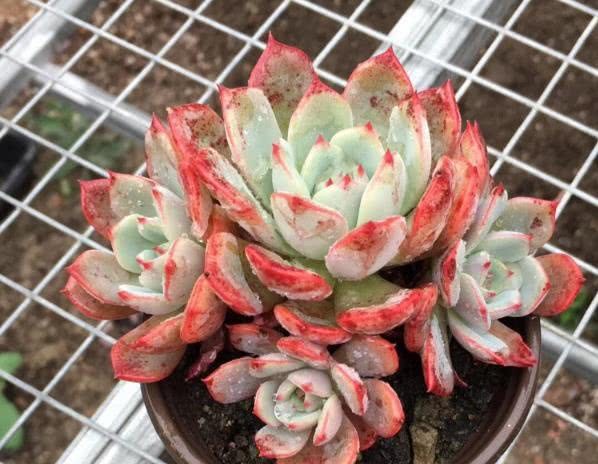
For sowing succulents, peat soil can be used. Many gardening enthusiasts have shifted from buying succulent seedlings to sowing their own. Sowing succulents not only yields a large number of seedlings but also adds a sense of achievement. Below is a common sowing tutorial for seeds of Crassulaceae and Aizoaceae, for fellow gardeners' reference.
Before sowing, the soil must be soaked with water and kept moist at all times. The best method is to use a double-pot setup, with a tray underneath that can hold water, and never let the water run out. Air humidity should be maintained with a transparent lid or cling film. The lid needs a few ventilation holes and should not be completely sealed. Once most seeds have germinated, just remove the lid.
Sowing temperature: the range of 10-30°C is fine. The highest germination rate occurs in the range of 25-30°C during the day and 10-15°C at night. Germination is the combined effect of temperature and humidity. Whenever you can meet the germination requirements in any season, you can let the seeds germinate at any time.
Seedlings may die from the following situations: the first is dying of thirst. Until the seedlings grow to the size of a thumbnail, do not stop bottom-watering. After that, up to six months old, basically do not cut off water. Do not let the soil dry out for too long. Until they grow to adult plant size, the watering frequency should be slightly higher than that of adult plants. Seedlings do not go dormant in their first year and can be kept watered continuously in both winter and summer! (Not continuously below zero, but it is also not recommended to keep seedlings in an environment below zero; a nighttime minimum above 5°C is more suitable.)
Before germination, use diffused light, then gradually transition to natural direct light. In summer, shade is needed. Seedlings are not afraid of etiolation; as long as they stay alive, they can recover later, but if they are sunburned to death, there is no way to save them. Transplant seedlings early. Generally, after a pair of cotyledons has unfolded, they can be transplanted for the first time. At this point they have not developed many roots, and once settled in, they are actually less likely to die from transplanting. After transplanting, apply a top dressing, which is good for supporting the seedlings and preventing fungus gnats. After that, transplant whenever they become crowded; otherwise, the seedlings compete for nutrients, soil and light, which is not good for growth. After transplanting, the spacing between seedlings should not be too large; a spacing of one finger's width is fine. A moderate amount of competition is not without benefit. When they grow larger, they can be transplanted into plug trays, one per cell.
For sowing, use peat or a homemade loose sandy soil. For sowing, generally choose soil with a particle size of 1-3mm. Akadama (recommended), kanuma soil, hyuga pumice, or vermiculite are all fine. Of course, using only a Fafard sowing peat mix is also acceptable. I do not like spot sowing, although spot sowing may make management easier after germination, so that they do not all crowd together after sprouting. But spot sowing is really too tiring. Of course, gardeners who sow only a small amount can use the spot sowing method.
This is a gathering place for succulent lovers, sharing succulent care tips. Welcome to follow and exchange ideas.