In September, Aunt Wang used "this water" to grow gardenias, and the flower buds kept popping out, and the neighbors all came to watch.
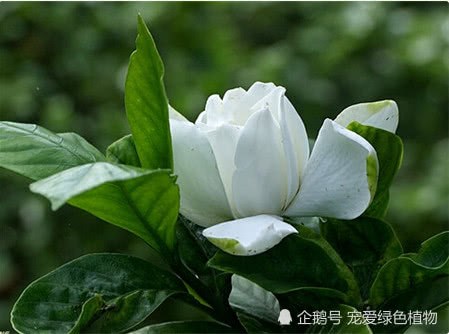
In September, Aunt Wang used "this water" to grow gardenias, and the flower buds kept "popping" out, and the flowers kept blooming nonstop!
Nowadays, more and more people like to grow flowers. This can not only cultivate character, nurture the mind, and beautify the home, but also purify the air and absorb formaldehyde. For example, the common gardenia is deeply favored by people!
The gardenia's leaves stay evergreen all year round, and its flowers are fragrant and elegantly simple, with green leaves and white flowers. It endures wind and frost without withering, and is especially clear, beautiful, and lovely. Although many flower lovers like gardenias, they always fail to care for them well. Both are flower growers, so why do the gardenias grown by Aunt Wang give people a fresh and elegant feeling? Moreover, her gardenia flowers are pure white and flawless, fresh and elegant, and the flower buds keep popping out nonstop, attracting countless neighbors to watch.
So today we will share today's topic: how Aunt Wang grows gardenias so well. Don't rush, read carefully to the end, and the answer you want is below.
In September, Aunt Wang used "this water" to grow gardenias, and the flower buds kept "popping" out, and the neighbors all came to watch!
The water mentioned above is water from fermented soybeans, because soybeans contain a large amount of protein and a lot of vegetable oil. After fermentation, it is mainly a compound fertilizer containing nitrogen and phosphorus, especially suitable for the growth of gardenias. Used to care for gardenias, it helps the gardenia have green leaves and bright flowers, and can also provide a large amount of nutrients to the gardenia.
The method is actually very simple. Let's learn it together!
How to use: Soak the prepared soybeans in water for several hours (the time is not fixed). When you see the soybean skins begin to wrinkle and swell, and you can pinch them with a fingernail, then it is ready. At this point, put the soybeans in a pot and boil them. When the soybeans can be crushed with one press of a spoon, turn off the heat and let them cool.
Then prepare a clean plastic bottle, put the cooled soybeans and the water used to boil them into the plastic bottle, and cover it with a lid. To prevent an odd smell during soybean fermentation, you can add a little orange peel. Note that the bottle must not be filled too full, because the contents in the bottle need to ferment. If it is too full, the fertilizer water will overflow. Then put the bottle in a cool, ventilated place to ferment.
The fermentation time is not fixed. After roughly seeing the beans in the bottle become lighter in color and whitish, about one month later (the time can be determined according to the temperature; when the temperature is high, more than ten days is enough, and when the temperature is low, it needs more time), you can take the upper clear liquid to water flowers. But this clear liquid is rather concentrated and cannot be used directly to water gardenias. It must be diluted with clean water before watering.
The proportion of clean water added depends on the concentration after soybean fermentation. If the concentration is high, add more; if the concentration is low, add a little less. In this way, after the gardenia absorbs the nutrients from the fermented soybeans, the flower buds will start popping out nonstop!
Many people ask why Aunt Wang does not just buy flower fertilizer. I think her answer is very sharp. She said: Using flower fertilizer to water flowers over the long term is simple and convenient, but after a long time, the gardenia's soil easily becomes compacted, or the soil's looseness and air permeability will become worse, so she chooses to make homemade nutrient water for flowers to water them!
Actually, if you learn it carefully, the method is not difficult either. Flower lovers who are interested may as well give it a try. Growing flowers requires constantly looking for flower-growing tips, and skills never weigh you down, so the more the better. Today's sharing ends here. See you next time!