Clivia leaves stay glossy green all year but refuse to bloom? Turns out three pitfalls were triggered
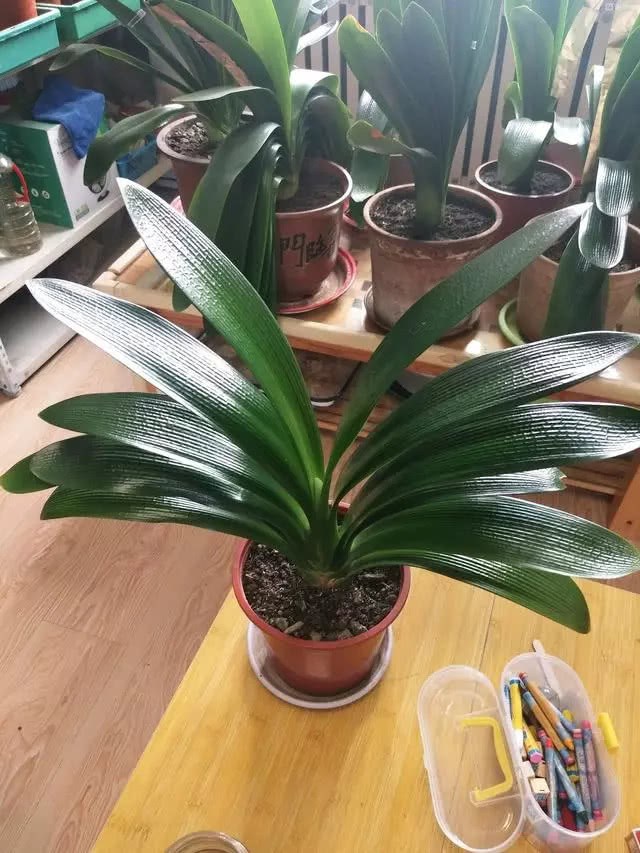
Speaking of Clivia, many friends are surely familiar with it. It not only has an elegant bearing, quite like a gentleman, but also has a powerful air-purifying ability. Add to that its charming, lovely flowers and high ornamental value, and many plant lovers like to grow a few pots of Clivia at home. Recently, a plant lover from Nanning left a message saying that the Clivia at home was growing very pleasingly, with thick, glossy green leaves, but after several years not a single flower had appeared, so it was kept only as foliage.
Clivia is an evergreen perennial herbaceous plant with strong shade tolerance, thick large leaves and dark green color. It can survive under harsh conditions such as lack of water, lack of fertilizer and lack of sunlight, and is called the "life flower" for its tenacious vitality. Many plant lovers grow Clivia as a foliage plant, and it looks quite nice staying glossy green all year, without even knowing that it can also bloom.
This Clivia owner in Nanning is one who has never seen it flower. He has long liked to give the Clivia homemade soybean organic fertilizer, and waters it rather frequently. By rights, growing it this way is not wrong; soybean water organic fertilizer is rich in nitrogen, which can promote leaf growth. But if we want to see Clivia bloom, we still need to do 3 steps well to help flower buds break through the soil.
Step one: The main reason Clivia does not bloom may be a lack of phosphorus fertilizer, because phosphorus is an important material basis of life and can promote root growth, flowering, and the growth and development of seeds and fruits. When phosphorus is deficient, Clivia cannot form flower buds, and without flower buds Clivia cannot bloom.
When it is close to Clivia's flowering period, we can use a special organic nutrient solution for promoting flowers, made from sugarcane bagasse fermented through microbial technology, rich in phosphorus, and easily absorbed by the roots. During the flowering period, use it once every 10 days, evenly pouring it onto the Clivia's potting soil. Once the Clivia has sufficient nutrients, flower buds will shoot out rapidly.
Step two: Control water before flowering to promote blooming. Clivia is a moisture-loving plant and has relatively high requirements for the humidity of its growing environment. Its fleshy roots have a strong water-storage function and strong resistance to drought. So before flowering, we can appropriately control water, leaving the Clivia in a hungry and thirsty state to stimulate the sprouting of flower buds.
The watering principle for Clivia is: watch for wetness and dryness, do not water when not dry, and water thoroughly when watering. When watering during the flowering period, use the method of pouring water into the pot to prevent water from entering the leaf tips and causing heart rot. For plant lovers who do not know how to control watering and humidity, a plant and flower detector can be used as an aid. Just insert the detector into the potting soil, and you can check the potting soil's moisture, fertilizer, humidity and temperature through your phone, simple and convenient.
Step three: Increase light. When Clivia is kept in a dark place for a long time, it cannot carry out photosynthesis, so there is not enough nutrient transport to provide for the growth of flower buds, and without flower buds it naturally will not bloom. Therefore, in autumn, be sure to move the Clivia outdoors to strengthen light exposure and carry out photosynthesis to produce more nutrients.
If you want to see Clivia burst into bloom, do these steps well and it will bring you a surprise.