This flower is a hundred times more beautiful than kalanchoe, loved by everyone and easy to grow
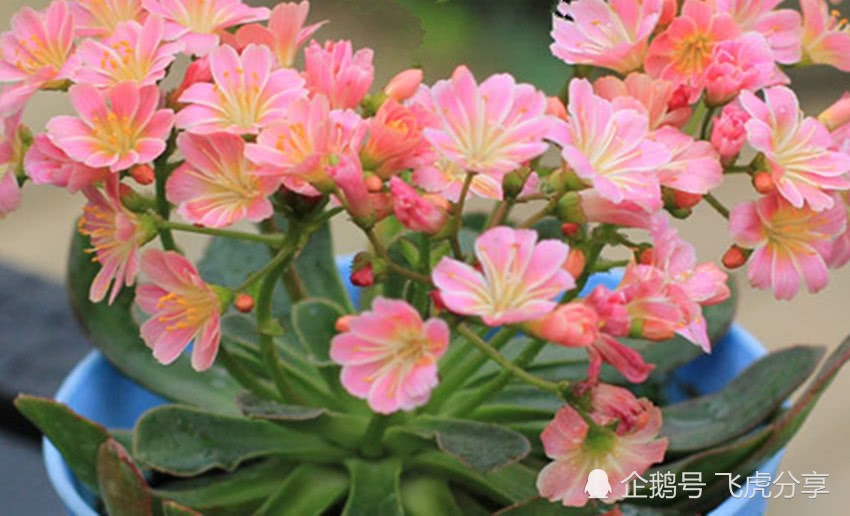
Lewisia can be used as an accent in flower borders or as a potted plant. Its leaves are succulent in nature; when not in bloom, the plant forms a basal rosette that can be appreciated as a succulent; when in bloom, the flower shape is unusual, like a spinning flower wheel in a kaleidoscope, very eye-catching.
As long as care methods are appropriate, Lewisia grows very quickly, and as long as the temperature reaches the minimum requirement, it can bloom continuously year-round. Compared with other conventional potted flowers, Lewisia has succulent roots and is more drought-tolerant; when placed indoors, it can grow well even with very little management. Its plant form is short and compact, preferring humid springs and dry summers; in humid climate regions, full sunlight is advisable, and fertile, deep sandy soil should be used for cultivation.
During care, too much rain should be avoided, otherwise it easily causes root and stem rot. Full sun in winter can bring earlier flower spikes in early spring, and yellow leaves at the base should be removed in time to avoid rot and mildew in hot and humid environments. Lewisia dislikes muggy heat and avoids heavy watering; keep it on the dry side, and you can refer to the methods for geraniums or succulents, reducing the amount of watering, providing shade and shelter from rain, ensuring a little sunlight or scattered light every day, and keeping the environment ventilated and airy.
When growing Lewisia, the following points also need attention. First, Lewisia needs certain nutritional conditions, otherwise it will grow poorly and its ornamental traits will perform badly. Second, soil improvement: it is best to use low-nitrogen, high-phosphorus fertilizer or organic matter. Third, be sure to avoid excessive fertilization, because doing so will only benefit weed growth and will also cause Lewisia to grow only leaves and bloom less. In the hot summer season, the potting soil should be on the dry side and avoid wetness to prevent root rot. The plant sometimes drops its leaves, and new leaves will grow again the following spring.