What to Do About Root Rot in Succulents? Just a Few Steps to Save Them Easily
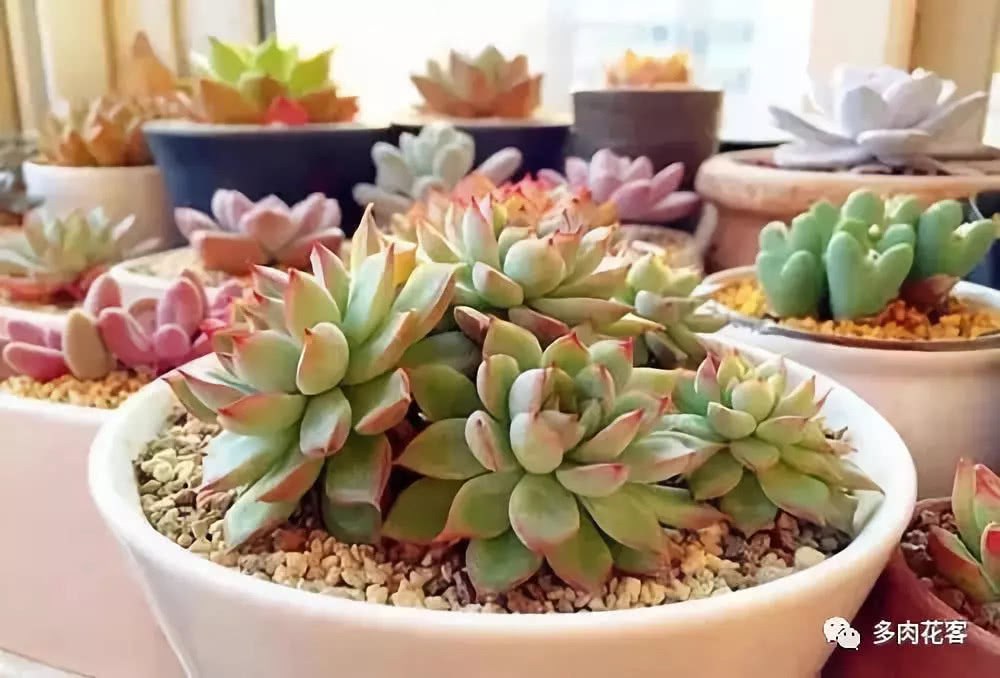
Fellow succulent lovers, have you ever encountered root rot in your succulents? This is probably the most frustrating problem in growing succulents - if you're not careful, a plant you've tended for a long time can rot. So what causes succulent root rot? And how should you deal with it when it happens?
Succulents are plants with a strong water-storage capacity, adapted to arid growing environments, so you should not water them too much in daily care. Follow the principle of "better dry than wet" and avoid water accumulating in the pot. Once waterlogging occurs, succulents are prone to root rot. In winter, strictly control watering; if the potting soil stays moist all the time, the succulent can easily suffer cold damage and root rot.
Many plants often die from root rot, and succulents are no exception. But generally, as long as you discover it in time and handle it properly, you can successfully save them. Let's take a look at how to deal with succulent root rot!
1. How to handle mild root rot
Overwatering is the main cause of succulent root rot. To save the succulent, you first need to quickly control the water and improve ventilation. Move the succulent to a well-ventilated flower rack so the water can drain out as quickly as possible. If there is no ventilated spot at home, you can use a small fan to blow air at the succulent, but be careful not to do this for too long.
Once the surface of the potting soil is dry, use a flower trowel to loosen the soil deeply. Check whether the soil is still damp. If it is still damp, keep it on the ventilated flower rack or use a small fan to blow air at it until the potting soil is completely dry and its moisture level has dropped to the minimum.
2. How to handle severe root rot
Step one: Pull the succulent out, wash the roots clean, and use a sterilized blade to cut away all the moldy and rotten parts of the roots, leaving not even a little behind.
Step two: Apply carbendazim to the wound, and place it in a cool place to dry.
Step three: Set the treated succulent on the mouth of a bottle with water below, but do not let it touch the roots; this can encourage root growth. You can also replant the succulent in granular soil, such as akadama, kanuma, and so on.
Step four: Place the planted succulent, or the one on the bottle mouth, in a cool place with indirect light. Remember that it must not be exposed to direct sunlight, and also make sure there is good ventilation. If nothing unexpected happens, the succulent will re-root and grow in 1-3 weeks.
3. How to handle complete root rot
Many kinds of succulents can be propagated by leaf cuttings. If the roots of the succulent have completely rotted but the stem is still fine and the leaves are unaffected, you can use intact leaves for cuttings. Because different succulent varieties root and sprout at different speeds, and leaf quality and environmental factors such as temperature also affect the time and success rate of rooting and sprouting, you need to be patient when doing leaf cuttings, and be careful not to water frequently. Some should not be watered at all, otherwise the leaves will rot and cannot root.
Succulent root rot is not scary. As long as you master the methods and deal with it in time, there is still time to save them.