What to do if your kalanchoe does not bloom in autumn? Pay attention to these care points
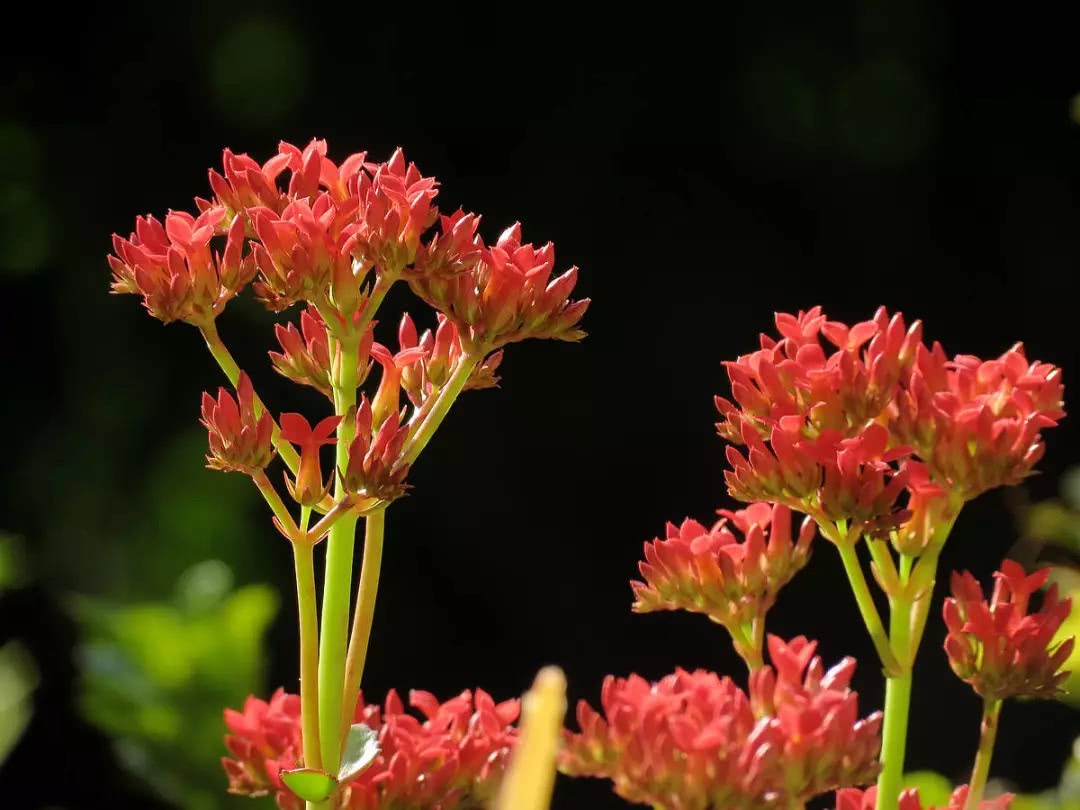
When autumn comes, many flower lovers do not know how to care for their kalanchoe. Just do the following points well.
If you want your kalanchoe to bloom in winter and spring, you need to place it somewhere with plenty of direct light, give it about six hours of light each day, and take it outside in the morning or evening to get some sun.
When watering, let the soil dry out completely and then water it thoroughly. Once the surrounding temperature starts to drop, be careful to reduce watering, and you can water according to how dry or moist the potting soil is.
In autumn, applying some fertilizer to your kalanchoe at the right time can promote its flower bud differentiation and also replenish the nutrients it needs.
Apply monopotassium phosphate once or twice a month to promote its flower bud differentiation, and it can also prevent its flower buds from dropping, making the flowers bloom more beautifully.
The optimal growing temperature for kalanchoe is between 15 and 25 degrees. In autumn and winter, keep the indoor temperature between 12 and 15 degrees; at around 15 degrees, it will bloom continuously.
If your kalanchoe at home has become leggy, you need to prune it. If you do not prune it, its growth will be inhibited and your kalanchoe will not be able to bloom.
After your kalanchoe blooms, you should appropriately reduce its light, as this can make its flowers last longer, and you should also reduce watering to avoid root rot.