Can the aloe grown as a potted plant at home be applied to the face? Differences and benefits of several aloe species
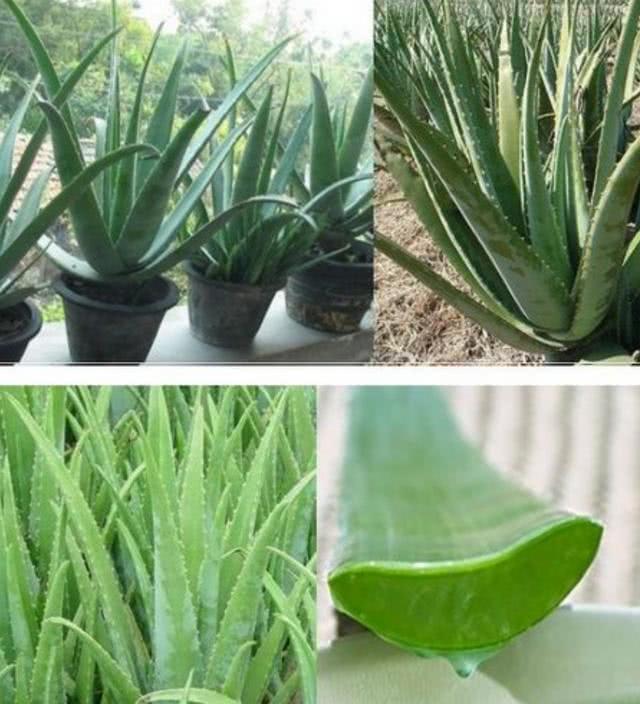
Many gardening enthusiasts only know that aloe can be used for beauty, but do not know that not every kind of aloe has beauty benefits. Recently, a gardening enthusiast asked: can the potted aloe grown at home be used on the face? What issues need attention? How to distinguish several different aloe species and their benefits?
There are more than 300 varieties of aloe, the most common being Aloe vera (Curaçao aloe), Chinese aloe, Aloe arborescens (tree aloe), Aloe ferox (Cape aloe), Aloe nobilis (gold-toothed aloe), and soap aloe. Among all aloe varieties, only Aloe vera, Chinese aloe and Aloe arborescens have beauty benefits. Among them, Aloe vera has wide, thick, juicy leaves with a high gel content, and can be used both for beauty and as food. It can be applied directly to the face and has the benefits of tightening, softening, moisturizing, reducing inflammation and whitening the skin. It also improves keratin and scars, can prevent fine wrinkles, eye bags and sagging skin, keeps the skin moist and delicate, and at the same time can treat skin inflammation, with good effects on acne, freckles and pimples.
Specific steps for applying Aloe vera to the face: 1. Pick the aloe, wash it clean, cut off the sharp spines on both sides with a knife, then cut along the green skin of the aloe to take out the aloe gel. 2. Rinse the aloe gel in clean water for 30 seconds to remove aloin. 3. Take out the washed aloe gel and scrape the raw juice back and forth with a clean wooden or plastic knife. 4. Apply directly to the face as a mask. Aloe arborescens, also called Japanese aloe, contains less gel, but can be eaten raw and used in cooking, and is also often used in medical and food research and development; its medicinal value is extremely high, and its roots and stems are slightly toxic. The Aloe arborescens plant is relatively large, with a longer stem, and has no spots.
Chinese aloe, also called China aloe, has a shorter stem and a shorter plant. The biggest difference from Aloe vera is that Chinese aloe has white markings on its leaves. Chinese aloe can be eaten and is slightly bitter, but its medicinal value is not as good as that of Aloe arborescens and Aloe vera. Its beauty effect is the same as that of Aloe vera, and stronger than that of Aloe arborescens.
Aloe ferox (Cape aloe) is similar to Aloe arborescens, but its leaves are slightly wider and shorter, the plant is shorter than Aloe nobilis, and the color is darker. Its medicinal value is relatively high. Aloe ferox resembles Aloe nobilis, but Aloe ferox has no side branches, and the plant is larger than Aloe nobilis.
Aloe nobilis is the most common ornamental aloe, with short and wide leaves and obvious serrated teeth. Its medicinal value is low, it has almost no beauty value, and it is only for ornamental purposes.
Soap aloe has large leaves and obvious markings, and is highly ornamental. It is bitter, not recommended for eating, but has medicinal value, and its beauty effect is average.