Stop growing spider plants. These flowers can survive from a single branch and will bloom all over the wall in a year.
Just looking at green plants all the time gets a bit monotonous. If they could be covered in flowers, that would be perfect! A pothos grown into a waterfall is nice to look at, but not stunning. Better to grow a few climbing plants that are easy to keep alive and have beautiful blooms, so you can get a wall of flowers in just one year! Let's take a look!
“
Flower wall
”
Rosa banksiae (Lady Banks' rose)
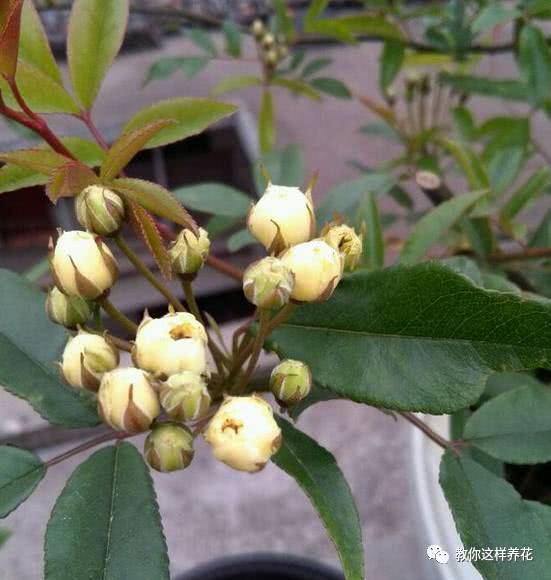
The costus used in traditional Chinese medicine and the Rosa banksiae we are talking about are not the same plant. Rosa banksiae is a traditional Chinese flower. In late spring and early summer each year, pure white or cream-yellow flowers nestle among the green leaves, giving off a rich fragrance that is endlessly memorable. In summer, its dense branches and leaves block the scorching sun and bring cool shade. Besides being grown for viewing, Rosa banksiae has a pure fragrance, and the half-open flowers can be picked to scent tea. After being preserved with white sugar, it can be made into Rosa banksiae sugar cake, which can rival rose sugar cake.
To grow Rosa banksiae in a pot, choose a relatively large pot, use loose, breathable, fairly fertile soil with good drainage, and apply some base fertilizer at the bottom.
Rosa banksiae likes a growing environment with plenty of sunlight. During the growing season, keep the soil moist and avoid waterlogging. After budding in spring, apply a compound fertilizer once or twice to encourage larger, more fragrant flowers. After winter begins, dig a trench around its root and apply decomposed organic fertilizer, then water thoroughly.
In winter or early spring, prune the plant once, cutting off leggy branches, dead branches, diseased branches and overly dense branches to improve ventilation and light penetration inside the plant.
Rosa banksiae has strong adaptability. Generally, it can bloom 2-3 years after planting, and its branches can extend to more than 6 m. Plant a few and they can grow into a flower wall!
Rosa banksiae is generally propagated mainly by cuttings and layering, though some people also grow it from seed. Layering has a higher survival rate, while cuttings are more convenient. Each has its pros and cons.
For Rosa banksiae cuttings, use hardwood before and after spring budding, or semi-hardwood before and after flowering, and they root very easily. Use river sand, perlite or akadama as the cutting medium, put it into a plastic cup with holes in the bottom, insert the trimmed branches with buds into it, place the plastic cup on a tray, make sure there is water in the tray, and keep it in a bright place. After roots grow, transplant it.
Layering mostly uses the air layering method. In the growing season, select robust branches, wound the lower part at a node, wrap it into a bag shape with plastic film, fill it with soil, water it, then tie the bag opening tightly and keep the soil moist. The survival rate is very high.
(Rosa banksiae forum, zhu at minus 3 degrees)
Firecracker vine (Pyrostegia venusta)
Firecracker vine is everywhere in Guangdong and Fujian. Since it is not cold-tolerant, it is better to plant it in the open ground in the south, while in the north it must be brought indoors to overwinter. It is generally planted around courtyard buildings and climbs on pergolas. It blooms in early summer, with red-orange flowers in dense clusters, as passionate as firecrackers, which is why it is called firecracker vine. It really blooms passionately and explosively!
Water firecracker vine by the principle of seeing dry and seeing wet, and never let water accumulate in the pot. During the bud and flowering period, water a little more appropriately. In summer, when temperatures are high, water sufficiently, and at the same time sprinkle water on the ground near the pot to increase air humidity. In autumn, it begins to enter the flower bud differentiation stage. At this time, water a little less appropriately in order to control vegetative growth and promote flower bud differentiation.
During the growing season, generally apply a dilute liquid fertilizer combining nitrogen and phosphorus once about every 2 weeks. During the bud stage, apply 1-2 additional quick-acting liquid fertilizers mainly based on phosphorus. After the flowers fade, apply 1 liquid fertilizer mainly based on nitrogen to benefit flowering and plant growth.
Firecracker vine is not cold-tolerant. In northern regions, it must be moved indoors to overwinter after winter begins. During overwintering, place it indoors in a spot with plenty of sunlight, control watering and stop fertilizing, and keep the room temperature above 10°C. Generally, from mid-to-late December, the room temperature needs to be gradually raised a little, while watering and fertilizing appropriately. By February to March, it can form buds and bloom.
Firecracker vine is mainly propagated by cuttings, generally after flowering in spring and summer, and under greenhouse conditions it can be done year-round. For spring cuttings, they generally begin to root successively about 3 weeks after insertion, and can bloom in the same year.
For cuttings, choose branches that are robust and free of pests and diseases, preferably about 10 cm long. Each cutting needs 3~4 nodes and 2 buds. Cut at 0.5 cm below a node to encourage rooting. For the cutting medium, clean fine river sand, or a mixed medium of vermiculite and perlite, can be used. The insertion depth is generally preferably 1/3 of the cutting. Water thoroughly, then spray the leaves with water once every 1~2 days to keep them moist.
Japanese honeysuckle (Lonicera japonica)
Growing Japanese honeysuckle at home not only lets you enjoy the flowers, but also use it as traditional Chinese medicine. Since ancient times, Japanese honeysuckle has been praised as a good medicine for clearing heat and detoxifying. Picking a little yourself to brew tea is as delightful as can be!
It is sweet in nature, cold in property, aromatic, clears heat without harming the stomach, and its aroma penetrates and can also dispel pathogenic factors. Japanese honeysuckle can both disperse wind-heat and is good at clearing and resolving blood toxins. It is used for various heat diseases, such as body heat, rash, macules, heat-toxin sores and abscesses, and sore throat, with remarkable effects. Brewing tea with Japanese honeysuckle can inhibit and kill pathogenic bacteria in the throat, and has anti-cold and anti-infection effects for the elderly and children.
Japanese honeysuckle has strong adaptability. It likes sunlight and also tolerates shade. It is cold-tolerant and also tolerates drought and waterlogging. It is not strict about soil requirements and can adapt to both acidic and alkaline soil, but moist, fertile, deep sandy loam is best. Its root system is well developed and its sprouting ability is strong. Its stems and vines root at every node where they touch the ground. Building a trellis helps it climb and grow.
There is also a kind called Lonicera x heckrottii 'Goldflame'. Lonicera x heckrottii 'Goldflame', like Japanese honeysuckle, also belongs to the genus Lonicera, but the Chinese Pharmacopoeia divides Japanese honeysuckle into four kinds: Lonicera japonica, Lonicera hypoglauca, Lonicera confusa and Lonicera dasystyla, and does not include Lonicera x heckrottii 'Goldflame'. So its medicinal effects differ somewhat from Japanese honeysuckle. Everyone, do not drink it carelessly.
Lonicera x heckrottii 'Goldflame' has a two-whorled corolla; the outer whorl is rose-red, and the inner whorl is yellow and fragrant. The flowering period is April to June.
Lonicera x heckrottii 'Goldflame' likes plenty of sunlight and tolerates partial shade, drought and cold. During the growing period, water and fertilize fully, and set up a support to help it climb. Deep, fertile sandy soil is preferable. It has strong adaptability and is not strict about climate and soil requirements.
Japanese honeysuckle has very strong adaptability and is not strict in its choice of soil and climate. Propagation can use methods such as sowing, cuttings and root division. For home growing, cuttings are used more often.
Japanese honeysuckle is generally propagated by cuttings more often in spring and autumn. For the branches, choose robust, straight branches of the current year with slightly wider spacing between leaves. Each cutting generally keeps two to three nodes, leaving only the two leaves on the upper node, and cutting off the other leaves. Insert the trimmed branch diagonally into the soil, with a depth of 1/2 of the branch, and press it slightly firm.
Water thoroughly, keep the soil moist, and place it in a ventilated place without direct sunlight. After about half a month it can root. After rooting, promptly place it outdoors for normal care, and transplant it as the situation requires.
Bougainvillea
Bougainvillea can be seen everywhere in provinces such as Fujian, Guangdong, Guangxi and Yunnan. Like firecracker vine, bougainvillea is also relatively sensitive to temperature, and in the north it will definitely freeze to death in winter if not brought indoors. Many flower lovers also grow it at home, pruning it into a bonsai, or letting it grow freely and cover half a house, full of tropical charm. If you have seen it, you will never forget it.
It likes a warm, humid environment with plenty of sunlight, and is not cold-tolerant. In China, except for the southern regions where it can be grown in the open ground and overwinter, other regions all require pot culture and greenhouse cultivation. Sandy loam with good drainage is most suitable for the soil.
Bougainvillea is commonly propagated by cuttings, and raising seedlings is easy. In May and June, cut mature woody branches 20 cm long, insert them into a sand pot, cover with glass, and keep moist. They can root in about one month, and can bloom after two years of cultivation.
(Bougainvillea forum, Lingnan Xiaoxian'er)
The flowering period of the whole plant is very long, up to three or four months. During the flowering period there are many fallen flowers and fallen leaves, which need to be cleared away promptly to keep it fresh and beautiful.
Climbing roses
Bougainvillea and firecracker vine are both flowers that can overwinter in the open ground in the south, so the choices in the north are somewhat fewer. Climbing roses are a very good option. Climbing roses have brilliant flower colors, large and fragrant flowers, and a long flowering period. They also have many varieties and a full range of colors, including red, pink, yellow, white, orange, purple, edged colors, solid colors, bicolor front and back, and so on, very rich indeed. Flower shapes include cup-shaped, spherical, flat and high-centered. Grow some climbing roses at home, and no neighbor who sees them will fail to envy them!
Climbing roses themselves have no climbing organs, so they need artificial trellising or tying and training upward, and can reach 3~4 m tall. When planting, several varieties can be planted together. When they bloom, the flower shapes differ and the colors are diverse, making them especially beautiful! Climbing roses have a relatively long flowering period and can bloom in three seasons, and when the clustered flowers open they give off a strong fragrance.
Climbing roses have strong adaptability, are cold-tolerant and drought-tolerant, and like an environment with plenty of sunlight, air circulation, good drainage and shelter from wind. They require slightly acidic soil rich in organic matter, fertile and loose, but their range of adaptability to soil is fairly wide. The relative air humidity is preferably 75%~80%, but slightly drier or slightly wetter is also acceptable. They have the characteristic of continuous flowering.
For most varieties, the most suitable temperature is 15~26°C during the day and 10~15°C at night. When the winter temperature is lower than 5°C, they enter dormancy. Most varieties can tolerate a low temperature of -15°C. If the summer high temperature persists above 30°C, most varieties bloom less and quality declines, entering a semi-dormant state.
Select rose cuttings of moderate age that are robust and have already bloomed in the current year. Cut the bottom diagonally, keep 2 buds, preferably with a heel, and retain 2-4 leaves. Soak in carbendazim for disinfection. Expose river sand to the sun in advance for disinfection and set aside. Insert the branch into the sand about 1 cm, then place it in a larger water-holding container (the hit-the-wall 2.0 method).
(Rose forum, hanwym)
Clematis
In the north, besides roses, clematis is also a good choice. Clematis is relatively cold-tolerant, and in China (except the northeast and northwest regions), it can mostly overwinter in the open ground. Clematis seems naturally suited to roses. Clematis, whose main colors are cool tones such as blue-purple and white, combined with roses, whose main colors are warm tones such as red, pink and yellow, complement each other in warm and cool colors, leaving no blank spots in the courtyard's color palette. Therefore, courtyards with roses mostly add a few clematis to set them off.
Clematis is called the queen of climbing flowers and is deeply loved by everyone. It likes fertile, well-drained alkaline loam, and avoids waterlogged soil, or soil that dries out in summer and cannot retain water. Clematis needs more than 6 h of direct light each day, which is very beneficial to its growth, but the root area is better shaded.
Generally during the growing period, water thoroughly once every 3-4 days. Water when the medium has dried through but the plant has not yet wilted. During dormancy, simply keep the medium moist. The most suitable temperature for growth is 15~17°C at night and 21~25°C during the day. In summer, provide appropriate shade. Clematis has strong cold tolerance and can withstand a low temperature of -20°C.
Star jasmine (Trachelospermum jasminoides)
Star jasmine is also called wanzi jasmine. Each small flower looks like a little white pinwheel, very cute. When a clear breeze blows, it seems they will all spin with a whir.
Star jasmine has strong creeping and climbing ability and can be used in combination for color-band and color-block landscaping. April to May is the full flowering period, when almost the whole plant is a sheet of white. After that it keeps blooming until November, lasting as long as half a year, hence the praise "not jasmine, yet better than jasmine."
Star jasmine likes a warm, humid, partially shaded environment, tolerates drought and also tolerates moisture, and fears the north's fierce winds and scorching sun. It has a certain cold tolerance and can overwinter in the open ground in the southern part of North China. It is not strict about soil requirements, but performs better when cultivated in loose, fertile, moist loam, and sandy loam with good drainage is most suitable.
For propagating star jasmine, the preferred method is layering. Especially in the plum rain season, its tender stems very easily grow aerial roots. Taking advantage of this characteristic, use the continuous layering method on its tender stems, then cut them apart from the middle in autumn to obtain a large number of young plants. Or, in the plum rain season, cut tender stems that have aerial roots, insert them into plain soil, and place them in partial shade. The survival rate is very high, but the survival rate of cuttings from old stems is low.
Growing a wall of flowers
may be the most fulfilling thing of all!
Let's pick some flowers and plants that are easy to keep alive and easy to succeed with
and grow them!
Show this to the flower lovers who need it!