How do you care for pothos and spider plants? Learn 2 little tricks and the leaves will grow like crazy and turn glossy green
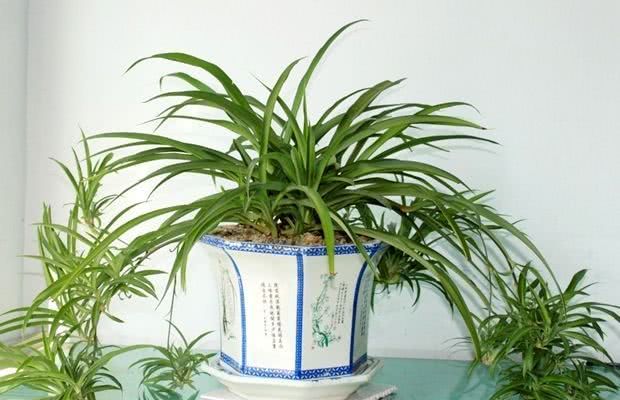
Pothos and spider plants, these two kinds of flowers, both belong to very typical foliage plants, and of course are also the plants most commonly grown by flower lovers. The reason so many people grow pothos and spider plants is mainly two things: first, they are easy to grow and easy to manage; second, they are both plants with purifying ability, and if grown properly, they will stay glossy green all year round. However, saying these two plants are easy to grow comes with the premise that you must know how to grow them. Growing them well actually also requires some knowledge and tricks. It is now autumn, a good time for pothos and spider plants to grow. Next, I will share "2 kinds" of little care tricks to make them grow more and more vigorously.
The first little trick for growing flowers: learn to water flowers with household wastewater
Among all flower knowledge, watering flowers is the most common, and of course it is also the most important. After all, flower lovers all know the saying "growing flowers is three parts fertilizer, seven parts water." When watering pothos and spider plants, you must learn to use household wastewater. Because household waste, when thrown away, has no value at all, but when put to use for growing flowers, it can turn waste into treasure and be reused. For example, household wastewater includes: rice-washing water, vegetable-washing water, overnight tea, expired milk, soybean milk, and so on. There may also be quite a few flower lovers who have always used them to water flowers, but I should remind flower lovers, especially beginners. Using these kinds of wastewater to water flowers also has its particular requirements. One of them must be kept firmly in mind. That is, no matter which kind of household wastewater it is, remember to "ferment" it first; only fermented wastewater is good for the growth of flowers.
The second little trick for growing flowers: learn to make your own fertilizer for growing flowers
Whether it is pothos or spider plants, or even most flowering plants, the importance of fertilizing is self-evident. It is said that only when the soil in the flower pot has enough nutrients will they be absorbed by the roots of the potted plant, and then used to promote lush branches and leaves. So how should fertilizer for growing flowers be chosen? Generally speaking, flower fertilizer can be divided into two kinds: one is inorganic fertilizer, that is, chemical fertilizer; the other is organic fertilizer, such as barnyard manure, chicken and duck manure, and so on. Each has its own advantages and disadvantages. Long-term use of chemical fertilizer for growing flowers, although various trace elements are supplied in place, easily causes the potting soil to compact, requiring repotting from time to time. If using organic fertilizers such as barnyard manure, to be honest, the odor is rather strong. In response to this situation, what should we do? We cannot just not fertilize!
Making flower fertilizer yourself is very simple; you can make it with soybeans and fruit peels
Soybeans are indispensable in life. They contain a large amount of nitrogen, so they are very suitable as a nitrogen fertilizer for flowers. The role of nitrogen fertilizer is to promote sturdy branches and leaves and strong growth in flowering plants. Soybeans, after being boiled, fermented and stored, can be used as organic nitrogen fertilizer to grow flowers such as pothos and spider plants. In addition, the peels of various fruits, placed together in a bottle, filled with water and left for half a month, can also be used to grow flowers. After all, the surfaces of various fruit peels contain many trace elements. The little tricks for growing flowers are, of course, not limited to the ones above; more still depends on flower lovers constantly trying and discovering. In short, growing flowers "with care" will surely make them grow more and more vigorously.
That is all for sharing the knowledge about growing flowers. Thank you for reading!
Remember to like and share~