Can fallen succulent leaves survive just by touching soil? Learn the basics of care
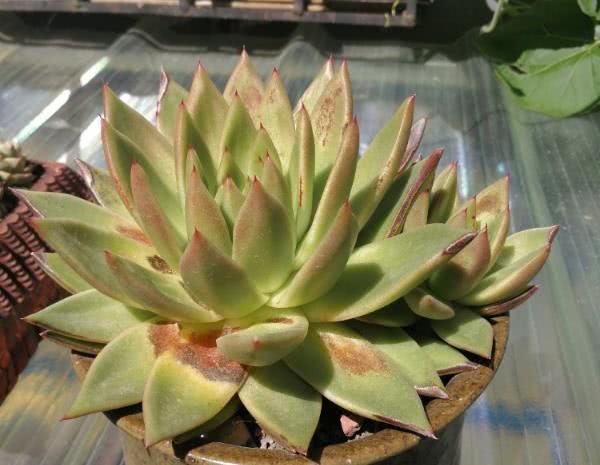
Because of the unique way succulent leaves store water, even after being separated from the mother plant for a long time, the leaf remains fresh and alive. Once it touches soil, the succulent's regenerative cells spring into action, growing roots and new leaves to form a new plant. That is why succulents are called "drop-and-root" plants by people. We generally call this leaf-cutting propagation: simply place a leaf on the soil and it can take root and sprout.
Succulents are a category of plants in which a certain part of a vegetative organ, such as the stem, leaf or root (a few species have two or more such parts), has well-developed parenchyma tissue for storing water, making them appear thick and juicy in appearance. Most of them grow in arid regions or areas with a dry period during the year, where the roots cannot absorb water for a long time each year, and they sustain life only on the water stored within their bodies.
As for the speed of sprouting, the first factor is health condition, the second is the variety, and the third is the acquired environment. If the leaf itself is not very healthy, it will almost never produce seedlings and will only grow root hairs, then dry up once its nutrients are exhausted; or it may turn to water or suffer black rot before even producing roots. Based on my experience with leaf cuttings, thick leaves are generally a bit faster, such as Pachyphytum 'Amethyst' (peach egg), Echeveria 'Allen', Graptoveria 'Titubans' (white peony), Echeveria 'Tia', Pachyveria 'Clavifolia' (winter beauty), Sedum rubrotinctum (jelly bean), Sedum pachyphyllum (baby finger) and the like. Thin leaves are slower, such as Echeveria 'Moon Goddess', Echeveria glauca (blue stone lotus), Pachyphytum 'Blue Bird', Echeveria 'Blue Light' and the like. The succulent Sempervivum tectorum (hen and chicks) can also be propagated by leaf cuttings, but it is very difficult to succeed.
Besides leaf-cutting propagation, succulents can also be propagated by sowing. Generally speaking, sowing is mostly done in spring and autumn. The reason these two seasons are suitable is that the best sowing temperature for succulents is between 20°C and 25°C. If the temperature is too high, the seeds easily rot, and even if they germinate, the seedlings easily turn to water.
Of course, people today are very capable of changing the environment. If a constant temperature can be provided, then it does not matter what season you sow in. If it cannot, then the sowing season still needs to be considered. Of course, the range of succulents is very broad. We said earlier that Crassulaceae are the main focus; if a gardening enthusiast is sowing cacti and the like, they can also sow in summer.
Finally, there is the dormant season of succulents. During this period, the main goal is maintenance. Due to temperature and other reasons, succulents enter a self-protective state, the root system stops most of its activity, and a considerable portion of the fine roots have already disappeared. At this time there is no need to worry about maintaining root hairs. Since the water-absorbing function is lost, excess water is not only ineffective but will instead cause the fine roots to rot, which then affects the main root of the succulent. If you are unlucky, the rot will continue all the way into the stem tissue.
This is a gathering place for succulent enthusiasts, sharing succulent care tips. Welcome to follow and exchange ideas.