What material is more visually appealing for a glass fish tank?
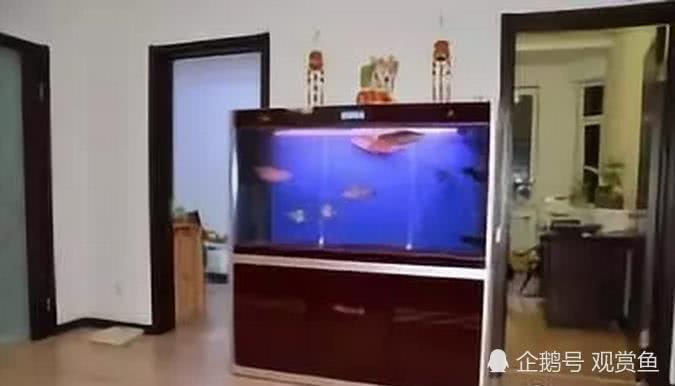
There are many kinds of glass materials for aquariums, and each material not only differs in price, but also shows great differences in durability and visual appeal, so today let's talk about exactly where the differences lie among several common fish tank glass types!
Acrylic tanks, namely organic glass
Commonly used for aquariums.
Advantages:Good light transmission, relatively light weight, and can be formed in one piece, which means the aquariums we commonly see are seamless and integrated, without a second bonded seam interface. Safe, and not easy to break.
Disadvantages:Easily scratched, low wear resistance.
Generally, acrylic materials cannot withstand the "wear and tear of time," and after a long time fine scratches will appear. Although at the beginning it is very beautiful and very light, in the end there will be more or less minor damage, affecting the beauty of the view. And once bottom sand is used, it will likewise wear the bottom of the fish tank. (Of course, high-grade imported acrylic is another matter.) Composite acrylic withstands high temperatures up to about 90 degrees, and pure acrylic withstands high temperatures of 120 degrees. Therefore, if a cigarette butt accidentally comes into contact with the tank body, it will damage the fish tank, because the temperature of a cigarette butt from the surface layer to the center is 200 degrees to 800 degrees. The reason aquariums are expensive is directly related to their material, namely aquariums made of acrylic material. In addition, aquariums are generally equipped with a base cabinet, so the price is many times higher than ordinary fish tanks.
Float glass
Needless to say, the glass we commonly see has decent transparency, though of course not as good as acrylic. When applied to fish tanks, it is a traditional commonly used material.
Advantages:It can still resist the temperature of a cigarette butt, has high hardness, and can effectively prevent scratches.
Disadvantages:Easily broken. Relatively heavy, not easy to move around.
As a traditional fish tank material, it is the first choice for people who prioritize economy. Because it is cheap and durable. Although it is very heavy, once it is moved into place, it generally stays in the same spot for many years. Actually, even an acrylic fish tank, as long as it is filled with water, is likewise impossible to carry away.
Ultra-clear tanks are actually also glass
Namely low-iron glass, which has become a relatively popular common choice for fish tanks in recent years and belongs to high-end fish tank materials. The price is also relatively expensive.
Advantages:Very high transparency (much higher than ordinary glass), looking crystal clear, noble and elegant. The cross-section of an ordinary glass tank appears green, while an ultra-clear tank appears blue. There is a saying that if you look through one end cross-section of ultra-clear glass at text on the other end cross-section, you can see it clearly. This shows how high the transparency is.
Disadvantages:The price is likewise relatively expensive, and the weight is relatively heavy.
As for choosing, it depends on personal economic conditions. My personal suggestion is that if you pursue a beautiful aquarium design, you can choose an aquarium, but for the material it is best to choose low-iron glass rather than acrylic. But be mentally prepared for the price, it is very expensive. If your economic conditions are not wealthy but still acceptable, and you still want to increase the beauty of the room, then a square tank made of ultra-clear glass (namely low-iron glass) is quite good, with high clarity, and from a design perspective, square and upright things look more professional, more imposing, more stylish, and more modern than things with rounded corners. If your budget is average, you are a working office employee, and you still want something pleasing to the eye, then just buy a square tank made of ordinary glass material. The transparency is decent, and although there is the contrast mentioned above, the gap is acceptable. It is the first choice for people who prioritize economy.
One more point, this is purely a personal idea: although an aquarium's configuration looks more integrated and its appearance is beautiful, I prefer a base cabinet, square tank, and filtration system, oxygen system and other equipment that I assemble myself. Matched together, it is really not inferior to an aquarium, and it is more professional and more stylish than an aquarium. And there is a saying that aquariums are for people who are not very good at keeping fish, as they are easier to start with and you do not need to learn about the relevant equipment yourself (such as filtration systems, oxygen systems, etc.), while seemingly professional people with some fish-keeping knowledge all choose suitable equipment and aquascaping themselves. Hehe, it is a matter of opinion. If you can design according to your own fish-keeping expertise plus an overall feeling for the appearance, then it would be perfect.
That is all for the above content. I hope it can help everyone. If there are any shortcomings, I still hope the seniors can give guidance.
Search the WeChat mini program: Hangtai Aquarium Service. After logging in, you can see more fish-keeping knowledge articles and aquarium equipment, fish tank devices, and so on.