How cold-tolerant are wild-collected orchids from the mountains? Last year's experimental data finally comes in handy
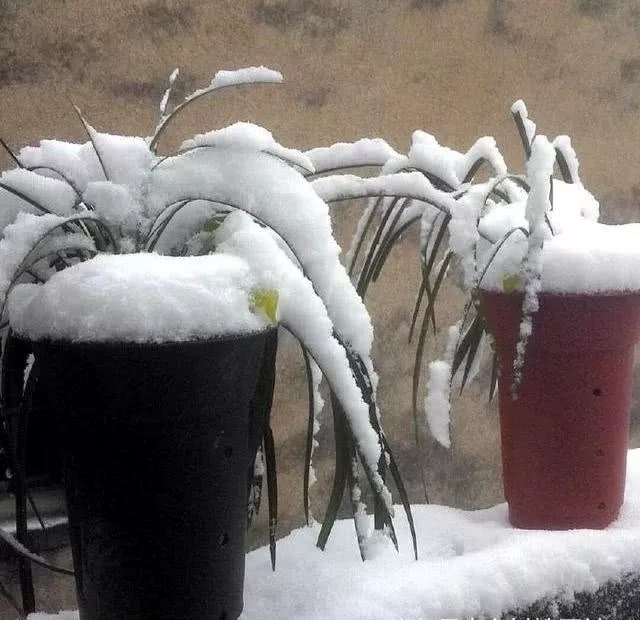
Autumn has arrived, can winter be far behind? Friends who grow orchids are starting to worry about their orchids overwintering. What they care about is exactly what low temperatures orchids can survive, and how to protect orchids from cold damage in winter. Haoshe Farmer has always put experiments first and articles second. Only in this way is there solid evidence and persuasiveness, so that orchid growers do not fall into the pitfalls of orchid care.
In the winter of 2017 (already January on the Gregorian calendar), Haoshe Farmer's hometown experienced heavy snow and low temperatures rarely seen in many years. Snow began falling on January 25, 2018, and continued for a week. Of course, we all know that snowy days are actually not that cold. What is truly cold is the period of snowmelt after the snow.
Haoshe Farmer placed 20 pots of orchids outdoors, including 8 pots of Cymbidium faberi and 12 pots of Cymbidium goeringii, all wild orchids collected from the mountains and acclimated that same year. No special moisture-retention measures were taken on the pots. Only one pot was wrapped in foam cotton, to test the condition of outdoor orchids with insulated roots.
On January 31, 2018, the weather began to clear. Snowmelt weather is the coldest, with the daily low reaching minus 10 degrees and 3 degrees at noon. The water from melted snow at noon froze into ice by the afternoon, so the orchid pots were basically a block of ice for 20 hours a day. At that time, the orchid leaves were not seriously damaged, even though every day a layer of ice formed on the leaves like freezing rain.
After the severe cold, the orchid flower buds clearly showed cold damage, gradually turning black and soft. By then the ice in the orchid pots had also melted, and overall the orchid leaves still looked vibrant and lively. But cold-damaged orchids cannot be discovered right away. This is also why Haoshe Farmer only truly understood what cold damage is two months later.
At the end of March, Haoshe Farmer sorted through and recorded these orchids. He found that a small number of orchid seedlings had begun to rot from the leaf center, and only then realized that cold damage actually took so long to show itself. Its scheming is really too deep! So all 20 pots of orchids were unpotted to check the roots. Except for the orchid whose roots had been wrapped in foam cotton, which were still fairly normal, all the other orchid roots had suffered cold damage, just to varying degrees.
After some trimming, they were repotted. Another two months passed. May is the peak season for new orchid seedlings, but only 7 pots of these orchids produced new seedlings (including the one with protected roots). In other words, the death rate from freezing among the 20 pots in the entire experiment was as high as 70%.
Afterward, Haoshe Farmer summed it up: orchids are not afraid of cold. If it is occasional frost or freezing, even minus 5 degrees is no problem. But continuous freezing weather will freeze the potting medium and orchid roots in the pots into blocks of ice. Cold damage like this is a catastrophic disaster for orchids.