How do you tell when a succulent has gone dormant? Pay attention to the leaves
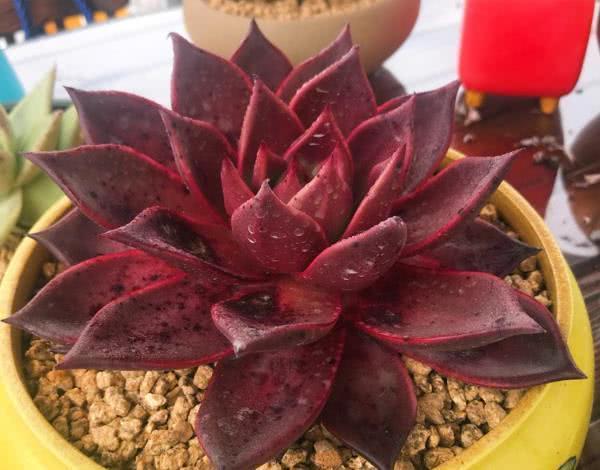
Dormancy in succulents is part of their life cycle. When light and temperature are no longer suitable for them to be active, they need to rest in order to stay healthy. And your job is to accompany them through this period. The first sign that a plant has entered dormancy is that it stops growing. Then the leaves quickly turn yellow and drop off, and the rosette closes up. Some types of succulents (such as those in the Aizoaceae) pull their entire body down into the soil and grow a papery outer skin to protect themselves.
How do you tell whether a succulent has entered dormancy? Dormancy in succulents simply means there is no visible growth: after watering, the leaves do not plump back up, and the leaves close in and feel soft. Caudiciform or bulbous succulents, such as Dioscorea elephantipes, drop their leaves during dormancy. Succulents in the Aizoaceae are wrapped in a dry, hard skin during dormancy.
Succulents that go dormant in winter and grow in summer are often called summer-growing types. They grow in the Northern Hemisphere and are dormant from November until February of the following year. But during the hottest part of summer, they also enter a false dormancy, which usually lasts several weeks, and then they put on another big burst of growth in September and October. For example: Adenium, Agave, Alluaudia, Ceropegia, Echeveria, Euphorbia, Frithia, Lithops, Pachypodium, Pseudolithos, Stapelia, Tillandsia, and Trichodiadema.
If the succulents in your home have entered their dormant period, how should you care for them? Keep dormant succulents in a cool, ventilated spot and avoid scorching sun. Dormant succulents need very little water; if you water too much, the succulent's roots will sit in water. Still, try not to cut off water entirely: if you do not water for a whole summer, the succulent will easily rot at the roots by autumn. Individual growing conditions often differ, and the state of dormancy differs too. A plant that is dormant in the north is often still growing in the south; ventilation and cooling or warming and added humidity can also keep a plant from going dormant. During dormancy, you have to rely on constantly feeling your way along in cultivation and building up your growing experience.
Generally speaking, when the temperature rises above or falls below the limit at which a plant can grow and tolerate conditions, it needs to go dormant. This is also one of the reasons to understand some basic knowledge about succulents and their classification. For example, the place of origin and the environment can tell us about the differences in our cultivation environment. When the environment and climate change, pay attention to how the plants change, so as to judge their dormant period.
This is a gathering place for succulent lovers, sharing succulent care tips. You are welcome to follow and join the conversation.