Is the landscape too serene? Add curves for more dynamism
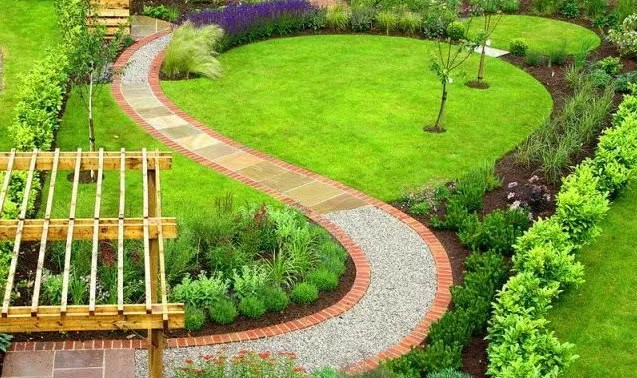
The winding curves of mountain ranges, the lingering curves of flowing water, the surprising twists and turns of roads, the arched curves of covered bridges, the winding curves of corridors, and so on, all demonstrate the charm of curves in natural landscapes. Through the beauty of curves, artificial landscapes are created to provide ecological services for urban residents, and these artificial landscapes that emphasize natural beauty can also serve to enlighten urban residents in their appreciation of natural aesthetics.
A winding path leads to a secluded spot
Paths have a guiding quality, because a path brings people a sense of anticipation and longing. The composition of curves is formed by the continuous connection of peaks and troughs, so the guiding quality of curved paths has a more profound and tranquil character, with opening and closing changes in spatial relationships.
In water landscapes, utilizing the fluidity of curves can not only achieve the transitional integration between land and water, but also give visitors a sense of moving with the water as they stroll along the riverside, with rich visual changes, diverse layers, and strong overall continuity.
Curved water for floating wine cups
Curved water for floating wine cups, as presented in modern landscapes, is both a tribute to the tradition of Chinese garden design and a showcase of the new face of Chinese landscape design. The flowing water, with its delicate and smooth curve combinations, the dynamic momentum of its linear flow direction, and its graceful variations in vertical space, is full of vitality, making it the greatest highlight.