Add a little of this to the orchid pot, side shoots sprout in 30 days, and it blooms in early winter with a fragrant scent
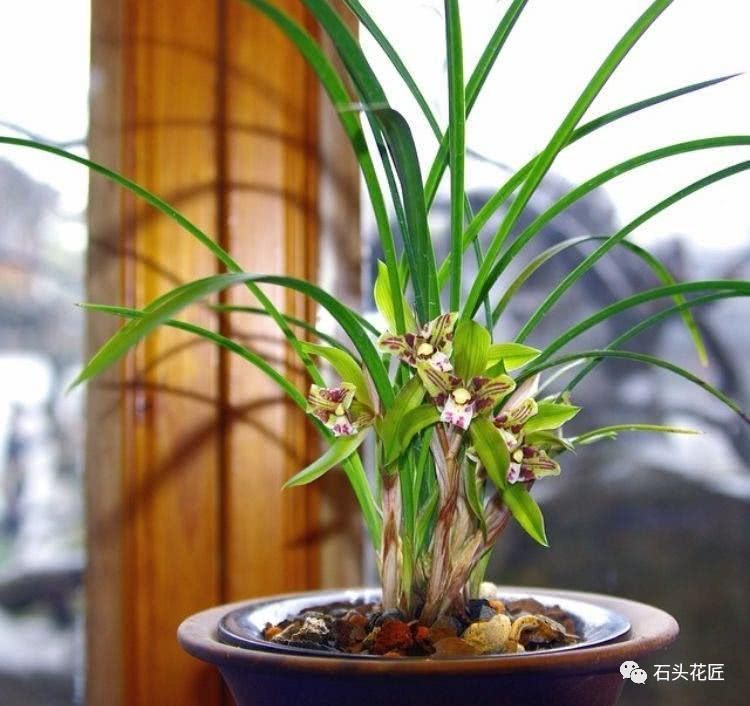
Orchids are the representative plant of scholars and literary figures, extremely elegant, and many flower lovers adore orchids. Of course, there are also many orchid varieties, such as Jianlan (Cymbidium ensifolium), Molan (Cymbidium sinense), Huilan (Cymbidium faberi) and other orchid varieties. Although orchids are widely loved, many people are unwilling to try growing orchids, because orchids are really hard to grow.
Actually, growing flowers is also a branch of knowledge, so cultivating any flowering potted plant requires mastering certain knowledge and skills. The first thing is to understand the growth habits of the plant; if you do not understand these, it is easy to grow the flowers thin and weak with yellow leaves. For growing orchids, you also need to understand them, and you need to master some small tricks for growing orchids.
So today I will share with you some small knowledge and tips about growing orchids. Today's theme is:
Add a little "of it" to the orchid pot, side shoots emerge in 30 days, and it "blooms" in early winter with a fragrant scent
The growth habits of orchids
Many orchid varieties in the southwestern region of our country grow in forests or wild fields, so orchids like to grow in humid environments and are not tolerant of strong light; they like to grow in environments that drain and breathe well, and at different growth stages they need different fertilizers to supply the plant's absorption.
So when growing orchids indoors, it is best to place the potted orchid on a balcony that is ventilated, breathable and has scattered light. Each time you water, do it when dry and let it dry out between waterings; generally keep the soil slightly moist, do not let water accumulate in the pot, and root rot will not occur. Growing orchids requires repotting and changing the soil once a year, so that there are sufficient nutrients.
Adding peanut shells and worm castings to the soil for growing orchids not only makes it breathable and well-draining, but it is also rich in nutrients
According to the growth habits of orchids, they need to be grown in soil that drains and breathes well, so generally the soil for growing orchids needs to be mixed yourself. Peanut shells are a very good growing medium for orchids: two parts peanut shells, two parts humus soil, one part garden soil, one part sand. After full fermentation, the soil is not only well-draining and breathable, but the peanut shells and humus soil are also rich in nutrients, which can satisfy the growth of orchids. Of course, you can also add worm castings to the fermented mixed soil, because worm castings are called the most natural organic fertilizer, rich in nitrogen, phosphorus, potassium, calcium and other elements and 18 trace elements. Add it to the soil for growing orchids, and you need not worry that the orchid will not sprout or bloom.
Generally, growing orchids indoors requires repotting and changing the soil once a year; each time just use your own mixed humus soil, and then basically there is no need to fertilize the plant again during the year. When growing orchids in summer, the leaf tips are prone to drying out and turning yellow, especially in the high-temperature summer; you need to place the orchid in a shaded spot indoors, avoid direct sunlight, and spray water on the leaf surface once a day, which can effectively avoid and alleviate the yellowing of leaf tips.
Of course, it is autumn right now, so you can also add some of the soil fermented with peanut shells and worm castings to the orchid's pot, which can effectively supplement nutrients for the plant so that the flowering period arrives normally.
Regarding these small tips for growing orchids, if you find them useful, please like, follow, and forward below to more friends!
I am [Stone Gardener], and I share small flower-growing knowledge every day. Remember to follow me.