Orchid care requires attention: with this type of orchid plant, you must never fertilize, otherwise you will lose more than you gain
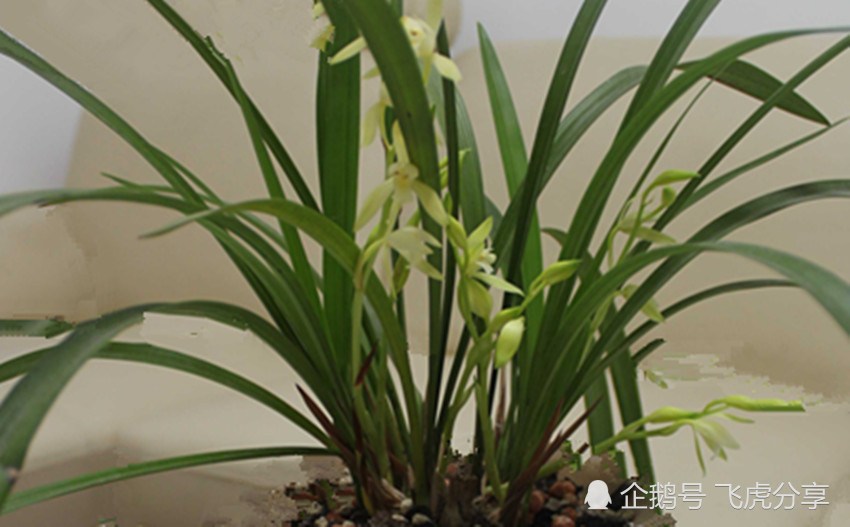
Many people are eager to grow orchids well, wanting them to thrive and bloom abundantly, so they feed the orchids all kinds of fertilizer, only to get the opposite result. No plant can grow without nutrients, but there are several situations in which you absolutely must not fertilize. Most people overlook this point, and often because of fertilizing, they leave their orchids half-dead. In the following situations, you must not fertilize.
1. Orchids that have just been potted should not be fertilized. A newly transplanted orchid has weak vitality and resistance, and its roots have not yet merged with the potting medium, so it has no ability to absorb nutrients. Fertilizing at this time makes it highly prone to viral infection, causing root rot and bud rot. 2. Orchids that are growing weakly should not be fertilized. A weak orchid plant indicates a problem with the roots or symptoms of rot. At this time, you must absolutely not fertilize; instead, place it in a cool, airy spot and observe it for a period, frequently spraying the leaves with a dilute foliar fertilizer. If it still cannot recover to normal, then it needs to be repotted with fresh soil.
3. Do not fertilize in high-temperature weather. In high temperatures, orchids grow very slowly or have already entered a semi-dormant state, and the roots are paused or half-paused in growth, unable to absorb nutrients from the potting medium, so fertilizing at this time very easily causes fertilizer burn. 4. Do not fertilize in winter. In winter, orchids have entered dormancy or semi-dormancy, and the orchid plant has basically stopped growing, so in winter you cannot fertilize orchids.
5. Do not fertilize before the orchid plant has sprouted. In spring or autumn, orchids generally send out a few small shoots, which shows the orchid is growing normally. If you see no sprouting throughout the year, do not rush to fertilize. Because not sprouting for a long time means this orchid has a problem, mostly weak roots or too few roots, and fertilizing at this time will do great harm to the orchid. 6. When fertilizing orchids, always remember to prefer too little rather than too much. Do not assume that poor growth means a lack of fertilizer. Although an orchid that is not fertilized may grow a little worse, it will not suffer root rot or death. If you fertilize even slightly too much, it not only fails to help the orchid grow but also very easily damages the orchid roots and seedlings.