Why a Gardenia Doesn't Bloom for Years After Being Bought Home, and How to Fix It
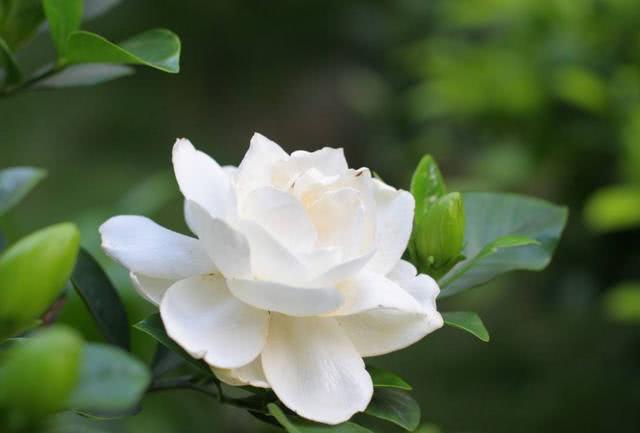
Gardenia flowers are pure white with an intense fragrance, making them deeply loved by the gardening public. Gardenia varieties include large-leaf gardenia, small-leaf gardenia, yellow gardenia, variegated-leaf gardenia, water gardenia, and four-season gardenia, among which the four-season gardenia can propagate all year round and blooms fairly frequently; with suitable temperatures, it can bloom in all four seasons. Our most common large-leaf gardenia can also bloom twice a year, in spring and autumn, if cared for properly. If a gardenia has been home for several years without blooming, then something in its care must have gone wrong. There are many reasons a gardenia fails to bloom; below we analyze in detail what causes a gardenia not to bloom.
1. Insufficient light.Gardenias love light. Apart from avoiding intense direct sunlight during the high-temperature period of summer, they should be given plenty of light in the other seasons. If you have a small yard at home, it is best to place it in a spot with abundant light. If you grow it on a balcony, also place it outside the window in a position with good ventilation and light.
2. Unsuitable soil.Gardenia is a southern flower and prefers loose, breathable, well-draining, slightly acidic soil. A mix of leaf mold, pine needle soil plus a small amount of garden soil and coarse sand can meet its growing needs. If a gardenia has been grown for several years without blooming, check whether the soil is the cause; if the potting soil has become compacted, repot it promptly. Gardeners in the north can use a 1:2000 ferrous sulfate solution to drench the roots of the plant once a month, promoting chlorophyll synthesis and preventing iron-deficiency yellowing of the leaves.
3. Unreasonable fertilizing.Applying too much nitrogen fertilizer and too little phosphorus and potassium fertilizer over a long period will cause a gardenia to grow only leaves and no flowers. Some gardeners growing gardenias only water them without fertilizing, which is also a main cause of failure to bloom. Each year in early spring, during the gardenia's budding period, apply once a compound fertilizer with a full range of nitrogen, phosphorus, and potassium, then apply nitrogen fertilizer twice to promote lush branches and leaves, with about 10 days between each application. Spring and summer each year are the gardenia's blooming period, so apply more phosphorus and potassium fertilizer and reduce nitrogen input. You can apply a fermented alum fertilizer water once a week, which both keeps the soil slightly acidic and helps flower bud differentiation. You can also drench the roots with a monopotassium phosphate solution every 10 days, combined with foliar spraying, to promote flower bud formation. In the high-temperature season of midsummer, to prevent fertilizer from burning the roots, switch to a dilute organic liquid fertilizer.
4. Failure to prune in time.Pruning a gardenia is actually very simple. If it has not bloomed for a long time, you can cut away all at once the leggy branches, diseased branches, weak branches, and overly dense branches, to encourage more new shoots to sprout and a fuller plant shape, and at the same time apply once a compound fertilizer with a full range of nitrogen, phosphorus, and potassium. After the new shoots grow out, switch to a fertilizer mainly based on phosphorus and potassium, combined with sufficient light, to promote bud formation and blooming.