The best time and key points to remember when repotting succulents - learn them and your plants will grow nonstop
The "best" time and key points to remember when repotting succulents - master them and your succulents will grow nonstop!
Spring and autumn are the best times to transplant succulents. While transplanting, take the opportunity to check the leaves for pests. If the leaves are withered or damaged, they must be removed. But if your succulents show the following conditions, it is a reminder that it is time to transplant and repot them.
The roots of the succulent have problems, such as root rot or dead roots; after growing for some time, the succulent has become too large and the original pot can no longer provide enough growing space for the plant; the succulent shows obvious growth problems, that is, it stops growing; succulents that have not been repotted for a long time, whose bottom roots have become too developed and have never been root-pruned.
The fine root tissue of succulents is very fragile and cannot withstand a big operation like repotting. Even if retained, it will automatically die back (age and die, and it is very hard to keep it alive). That is why succulents generally need root pruning about once every two years. The newly grown roots are healthier.
Secondly, repotting will more or less damage the root system, and this is hard to avoid. So air-drying the roots is a necessary safety process; it serves as insurance.
When repotting, be careful to handle the plant gently and do not damage the roots or the succulent leaves. The former can easily cause the plant to die, while the latter affects its appearance. If your new pot has holes, it should be fine. If it is a porcelain cup or a container without drainage holes, it is recommended to first lay a layer of expanded clay pebbles or perlite at the bottom of the container.
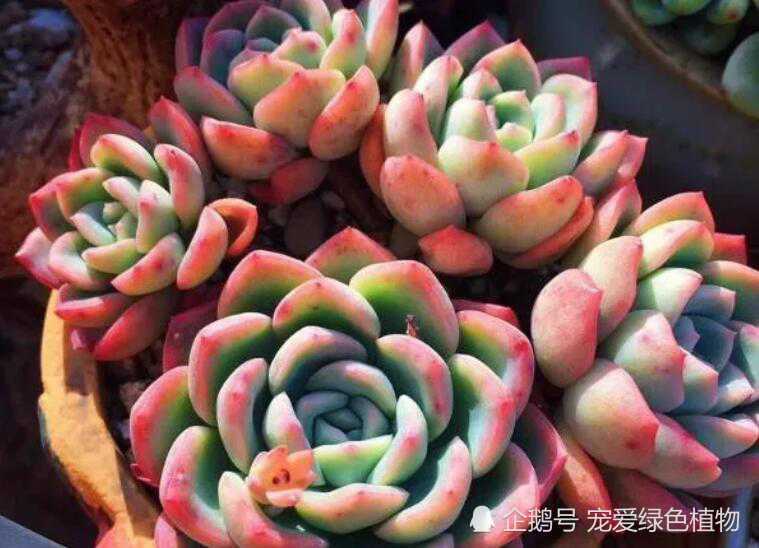
Take my Echeveria 'Pulidonis' and Echeveria 'Daehwa' as examples. After transplanting is completed, I do not dare to water heavily in a small pot, so I just spray once with a spray bottle to make the soil moist.
Stop watering 3 to 5 days before repotting. When repotting, first take the plant out of the pot and shake the soil off the roots clean. Cut off all old roots, rotten roots and hollow roots, and keep the robust, plump roots with good absorption capacity.
However, for varieties with thick fleshy roots, such as those in the cactus family Ariocarpus and Lophophora, it is not easy to prune the roots excessively, because these fleshy roots store rich nutrients. Excessive pruning will affect growth, and in severe cases can even cause root rot and the death of the whole plant.
When planting a new plant, place a layer of gauze over the drainage hole at the bottom of the pot to prevent pests, then cover the gauze with a piece of broken tile to help drainage.
Different varieties of succulents are planted with different potting mixes. Coarse-grained soil should be placed at the bottom of the pot, then fine-grained soil. Hold the plant upright while adding soil, and lift the plant slightly as you add soil so the roots spread out. Do not fill the soil too full, to make watering easier later.