8 easy-care indoor potted succulents that even gardening beginners can grow well
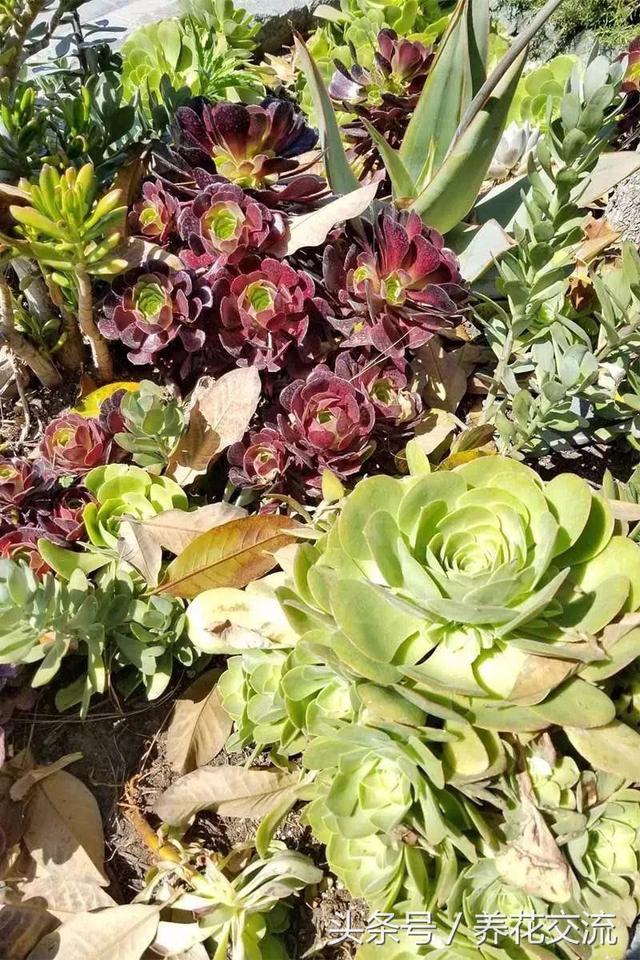
There are a great many varieties of succulents, and their forms are all different, with rich textures and colors, and they can also produce brilliant flowers. You can plant them in flower pots, or you can plant them in the yard to form a succulent landscape.
Although there are a great many varieties of succulents, they also share some common traits: they are all very drought-tolerant and have extremely strong water-retention ability, and some have fleshy leaves and stems with very little demand for water.
I like to choose some of the smaller varieties; they can be planted in a small container, and when it is colder in winter, you can move them indoors to avoid freezing.
Succulents are suitable for sowing and propagation in spring and autumn. You can wait until the temperature stays steadily above 15 degrees before cultivating them, and when it is hot in summer it is not suitable for sowing.
Of course, you can also buy potted succulents. When the temperature in autumn is no longer so scorching hot, you can order them online directly, or buy them at a garden store. The following eight succulents are all very easy to grow and also very good for ornamental value.
1. Aeonium 'Sunburst' (Aeonium decorum 'Sunburst')
Aeonium 'Sunburst' has a rose-like form, and its stem can keep becoming woody; some can even grow to over one meter tall. As long as the place is warm year-round, it can be kept outdoors all the time.
As long as Aeonium 'Sunburst' is cared for properly, it can produce white or pale yellow flowers in late spring and early summer. Their flower stalks are very tall, and the flower spikes come in strings.
2. Aloe
Aloe is a common medicinal plant. It likes a warm and dry environment year-round, and the care location should maintain a ventilated and well-lit environment year-round.
They can produce fascinating yellow flowers in summer. They are suitable for growing in a place with plenty of light every day. Apart from summer, when they should be shaded appropriately, they should be given as much light as possible in other seasons so they can grow well. During the growing period, be sure to avoid frequent watering; add water only after the soil has completely dried out. If you grow succulents indoors, they will find it extremely hard to flower.
3. Jade plant
The jade plant is a common succulent, especially easy to grow, and is a very popular indoor succulent. It can tolerate all kinds of soil as long as good drainage is maintained. It likes to grow in a place with plenty of light, and it can also grow well in a bright spot. The potting soil should maintain good drainage. In daily care, be sure not to water too much; water thoroughly only after the soil has completely dried out. In winter, avoid freezing, and keep the minimum care temperature above five degrees.
4. Echeveria runyonii
Echeveria runyonii is the most common succulent in the genus Echeveria. It is very suitable for potted care, and can also be planted in the yard. It likes loose, breathable, well-drained soil. During the growing period, be sure to avoid waterlogging in the soil. Add enough river sand or perlite to the growing soil to maintain breathability and drainage.
5. Graptopetalum paraguayense
Graptopetalum paraguayense is a perennial succulent that can grow well in various environments. It likes ample light. If there is a large temperature difference, its leaves can even show a faint pink color. If there is less light, its leaves will turn grayish-green.
6. Haworthia fasciata
Haworthia fasciata looks very much like aloe. Its leaves are very hard, its drought tolerance is extremely strong, and its demand for water is very low. Its biggest feature is the zebra-like striping on its leaves, which looks very unique, and the plant is relatively small. As long as you avoid frequent watering, keep the care environment ventilated and well-lit, and keep the temperature above five degrees year-round, it can grow well.
7. Living stone
Living stone is originally a succulent that grows in the desert regions of Africa. Most of its roots and stems grow below the soil, and its form looks especially like a stone. This is also its natural hidden state, in order to avoid being eaten by animals.
Living stone is suitable for growing in a relatively shallow container. The soil must be a loose, breathable, well-drained sandy soil. You can put some larger granular stones into the soil, such as the common akadama and coal cinders.
Living stone has extremely low demand for water. Watering should be controlled both during the high heat of summer and the low temperatures of winter. In other seasons, also water thoroughly only after the soil has completely dried out, and do not pour water on the leaves.
8. Rhodiola
Rhodiola is a very spectacular succulent. It can grow to over 60 cm, and in autumn it can produce fascinating pink flowers, blooming in late summer and autumn.