If a rose (Rosa chinensis) grows a big basal shoot, does it necessarily mean big flowers? Do this one thing well to get a bursting pot of blooms
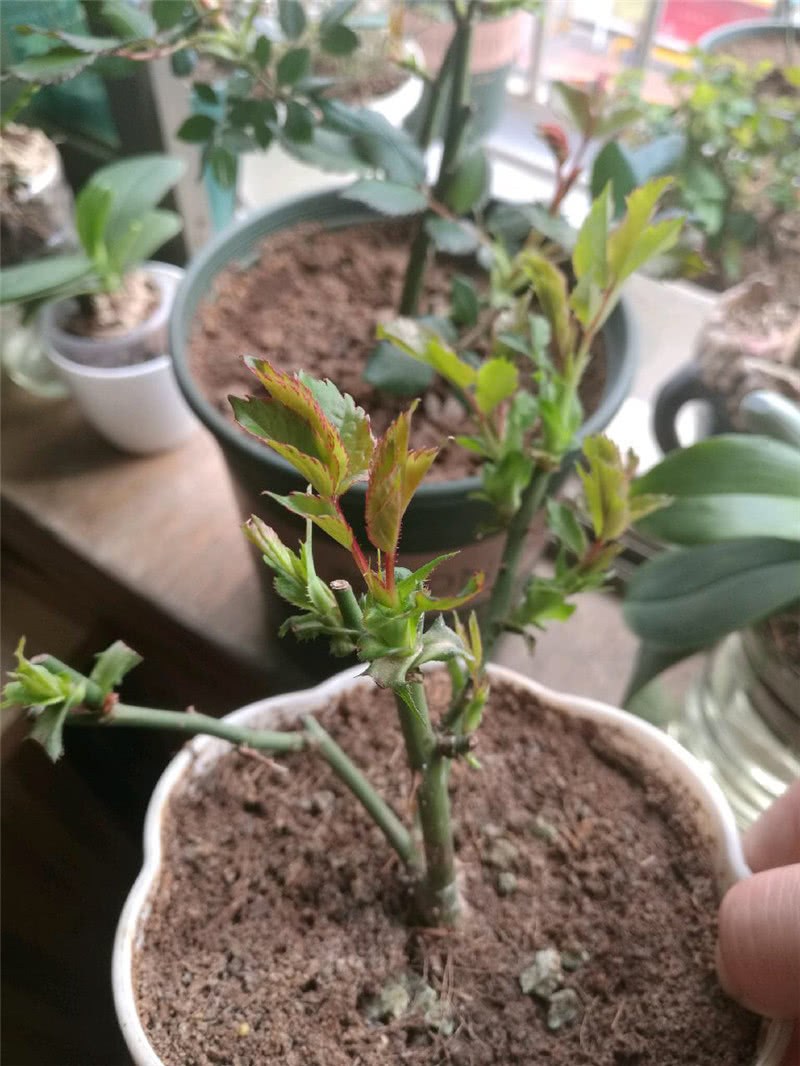
Growers of roses may often hear a little saying: "When a rose puts out a big basal shoot, big flowers are sure to follow." So many growers put a large part of their care efforts into encouraging basal shoots. But can big flowers really come from just having lots of basal shoots and thick, strong basal shoots? Not at all. Only basal shoots that have gone through "processing" are the flower-making machine of the rose.
1. To grow roses, the basal shoots must be grown well
Lots of basal shoots and thick, strong basal shoots are of course the standard requirement for roses to bloom, but if this basal shoot thing grows too many, yet not strong, then it gets tricky. Weak basal shoots sprout slowly and have poor flowering ability. If you are a rather "picky" rose grower, seeing one strong basal shoot standing out alone and ruining the plant's shape is also not good, so we have to learn to "strengthen basal shoots and prune basal shoots."
2. To strengthen basal shoots, amend the soil and add fertilizer
To strengthen basal shoots, the method is actually very simple. First, choose soil with relatively good air permeability. For mixing rose soil, everyone can use more coconut coir soil; this little gardener really likes this kind of soil, but in the south I always mix in some granules. Second, choose organic fertilizer for strong seedlings, and choose plant-fermented organic nutrient solution to fertilize the young plants. This is a necessary process for strengthening basal shoots. Of course, young plants should avoid heavy fertilizer, so we must strictly follow the instructions.
3. To prune basal shoots, there is an objective basis
To prune basal shoots, how should we do it? Actually, many growers do not know when the newly emerged basal shoots of a rose can be pruned. This little gardener did not know at first either, until I asked a senior grower. The senior said that rose basal shoots are usually red at first, and only when at least 1/3 of the leaves have turned green can you start pruning the basal shoots.
For the pruning height, there is actually no requirement. We can see where more branches can be sent out and where the overall shape can look better, and just prune with both of these in mind, because not long after basal shoots grow, they are the main force for timely blooming. So before flower bud differentiation, we should use an organic nutrient solution that promotes flowering and preserves blooms, preferably plant-fermented organic fertilizer, to ensure the rose blooms while also safeguarding the family's health.
Fertilizing and pruning can help us grow the basal shoots strong. Only basal shoots with good growth are the "main force" for blooming. Rose growers, autumn is a good time to grow basal shoots. Are you ready for the care work?