Growing ai-yu at low altitudes is no simple matter: the ai-yu fig wasp is hard to keep, and mass production still requires effort
The ai-yu jelly eaten so often in summer used to come from wild ai-yu fruit (Ficus pumila var. awkeotsang) growing at mid-to-high altitudes. Later, the Miaoli District Agricultural Research and Extension Station (abbreviated as "Miaoli Station") bred ai-yu varieties "Miaoli No. 1" and "Miaoli No. 2" that can be cultivated at low-to-mid altitudes, attracting many farmers eager to try. But after farmers who received the technology transfer planted them, they found that yields fell far short of expectations. On top of that, ai-yu depends on the unique ai-yu fig wasp for pollination, and how to attract the wasps to stay is an even bigger challenge.
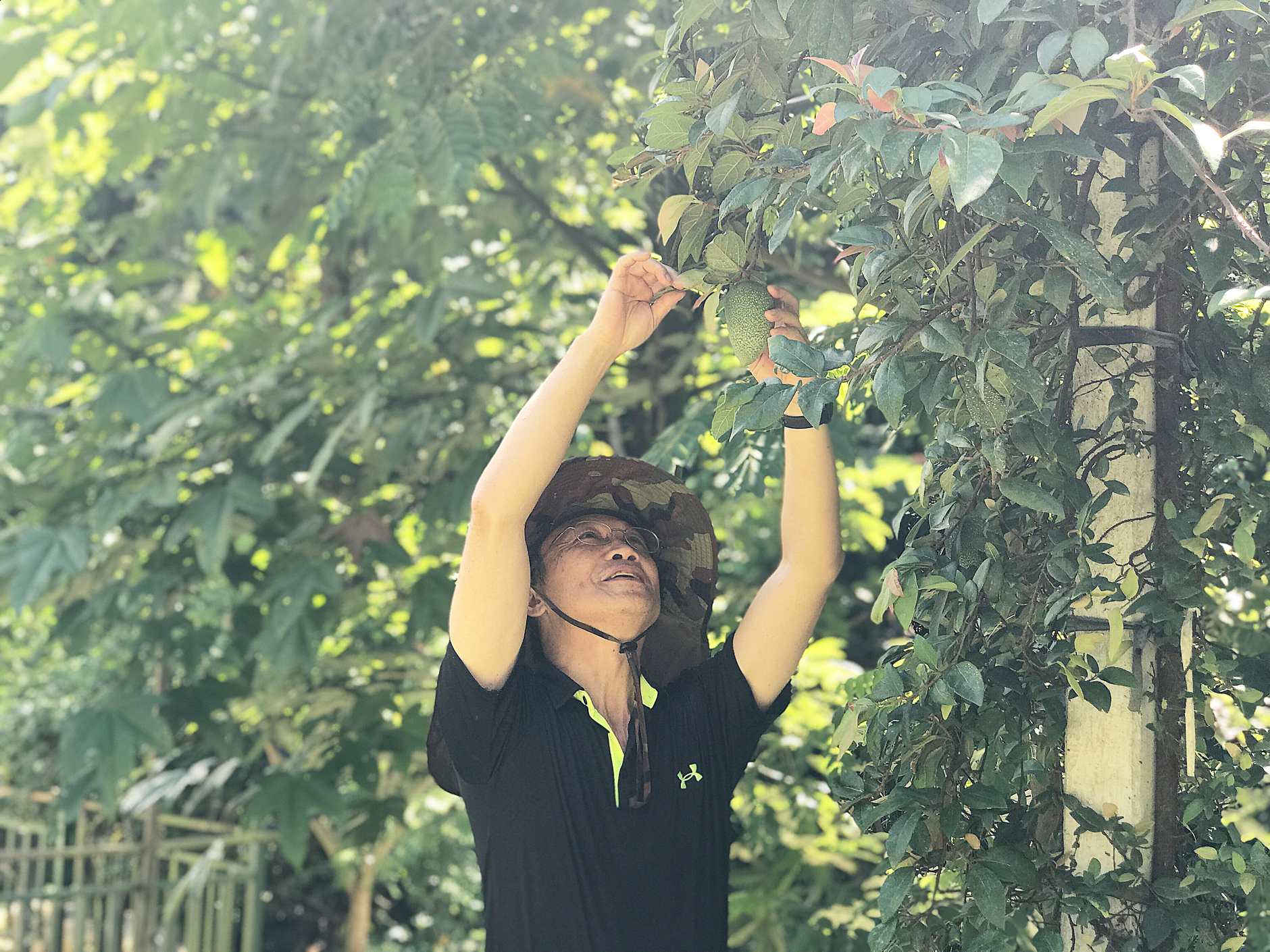
Farmer Lin Jian-wen pointed out that growing ai-yu involves three key techniques, none of which can be missing: establishing a stable system of male plants, seizing the right moment to harvest ripe fruit, and cultivating a sufficient number of wasps. The ai-yu fig wasp in particular is very afraid of heat, so it is necessary to plant many large trees, regulate the temperature of the orchard, and create a comfortable living environment for the wasps. Fan Zhen-hai, the earliest farmer in the country to start growing organic ai-yu, remains optimistic: "Nothing goes smoothly all the time, and farming can never be easy," he stressed, noting that responding to climate change, managing soil fertility and maintaining natural ecosystems are all key.
Farmers say the technology transfer contract is unreasonable; Miaoli Station: we assist research and development and invest technology
In addition, Lin Meng-jun pointed out that a high rate of fruit drop in the first year of ai-yu plants is normal: "The ai-yu is still adapting to the climate, just like having a first child - you are bound to feel at a loss, and you need to slowly nurse your body back to health." As for farmers' request to increase the number of times wasps are introduced, she said that introducing wasps must match a certain timing: "It is not that frequent introductions are right; you have to wait until all the young fruit have set in the orchard before you can start introducing wasps, otherwise if there is no young fruit, the wasps will die as soon as they go in." She stressed that both the number of introductions and the size of the wasp colony for each introduction must be adjusted according to the local growing environment and conditions.
However, the ai-yu fig wasp still cannot be artificially reared and can only be introduced from outdoors, "which is indeed a limitation," Miaoli Station said, adding that in the future it will study pollinating insects that can replace the ai-yu fig wasp, hoping to increase the pollination success rate of ai-yu.
In addition, some farmers reported that the technology transfer contract requires renewal every five years, and farmers have to pay Miaoli Station another fee, which is unreasonable: "It is only in the fifth year of the technology transfer that we finally get a harvest, yet we have to renew the contract again. It is not that paying is unacceptable, but they need to tell us what the fees are for, since ours is a non-exclusive technology transfer and we cannot sell seedlings on our own privately."
In response, Lin Meng-jun explained that the renewal fee is mainly used to maintain variety rights, help staff continue research and development and invest in new technology, and that staff visit production areas every year to actually guide farmers, including expenses such as consultation fees, advisory and service fees. She also stressed that most crop variety technology transfer contracts are renewed every five years and all require another payment.