A single seedling a friend gave me was tossed aside casually and then grew out of control into a disaster
Many gardening friends complain that flowers and plants are hard to grow. In fact, many people nowadays live in commercial housing with small balconies, so they can only grow plants in pots, which brings many limitations in watering, light and other aspects. Quite a few plants have extremely strong survival and reproduction abilities and can easily spread out of control and become a disaster. Many gardening friends have experienced this firsthand: a friend gave them a single small seedling, and in the end the whole balcony or yard was full of it. Let's take a look!
“
"Spreading out of control into a disaster"
- Pennywort -
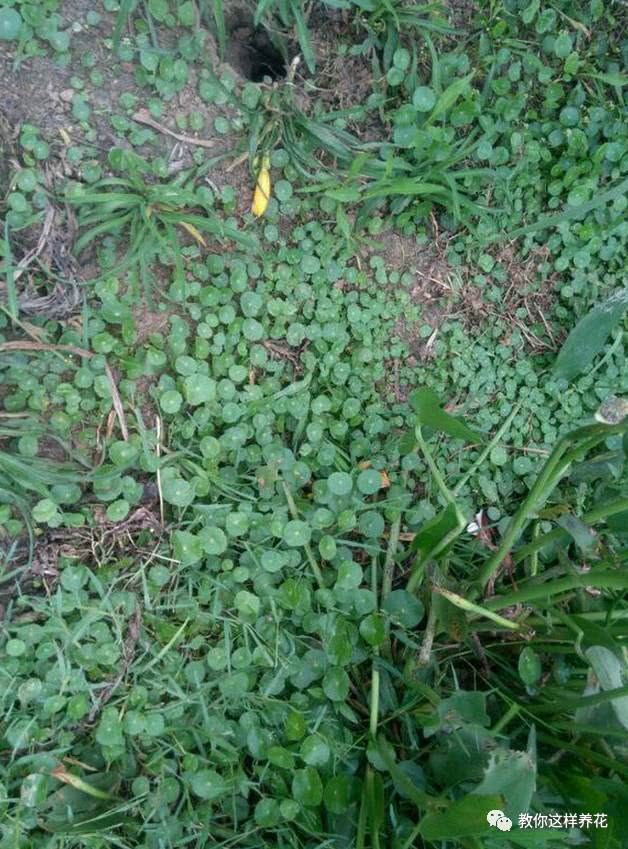
Pennywort has extremely strong survival ability. If it is beside a small stream or river where water is plentiful, it quickly grows into a large patch. One gardening friend tossed a few stems into the yard, and in the end they grew into a big patch.
As long as it is not especially short of water, pennywort seems able to grow just about anywhere, so it easily overruns a yard. If you grow pennywort in a pot, it is best to keep it half water and half soil. Put a layer of garden soil about 2cm high at the bottom of the pot, then add water, then add a few clay pebbles to hold it in place. Normally give it plenty of sun and light, and it will fill out in 1 month! Apply a little thin fertilizer about once a month, and it will soon be a big patch of pennywort.
- Showy Evening Primrose -
Showy evening primrose has beautiful flower colors and large blooms, like little flower butterflies flying in the air and dancing gracefully. Showy evening primrose has especially strong reproductive ability. Scatter a few seeds and it can self-sow every year. If you plant a few seedlings, they will soon bloom, flowering from May to November, and they look especially beautiful.
Showy evening primrose can be sown in spring. After sowing, the soil must be kept moist, and it can germinate in about 10-15 days.
Showy evening primrose is very easy to care for and has low soil requirements; ordinary garden soil is fine. If it rains a bit normally, showy evening primrose does not even need watering. For potted plants, just water after the soil dries out. Showy evening primrose is fairly drought tolerant, and overly wet potting soil makes it prone to disease. Apply fertilizer 1-2 times during the growing season, and it will produce more flowers.
- Water Hyacinth -
Water hyacinth, also called water hyacinth, is probably very familiar to gardening friends in rural areas. It was originally introduced to treat river pollution, and some was also used as duck feed and pig feed. It grew so fast that it clogged river channels and became an invasive alien species. This shows just how fast water hyacinth grows.
The center of the water hyacinth petal has a yellow spot, just like a phoenix eye, or like the flower spot at the end of a peacock feather. Gardening friends with a small yard can plant it in a small pond and enclose it with a bamboo frame for a quiet, wild charm.
Water hyacinth is very easy to propagate. Gardening friends in the city still have to spend money to buy it, while gardening friends in the countryside can just pick a few plants from the river, cut the creeping stolons into several sections, and put them in water to naturally take root.
Water hyacinth is very easy to care for; just keep it in clean water. Normally there is no need to fertilize, but you can add a little potassium dihydrogen phosphate before the flowering period to make the flowers more vivid. If it is a small pond in a small yard, adding a bit of river silt or garden soil will make it fill out even faster.
- Mint -
Everyone knows the benefits of mint, and many people also grow mint at home. Mint is the kind of flower that grows super well; a single stem can be cut and rooted into a large pot. If planted in the ground, it will fill out in 2 months.
Some gardening friends cannot bear to pull it out, but if they do not, it takes over the whole yard, which is really a headache. In Huahua's opinion, you should still bring out the foodie nature of our people and keep the rampant mint under control by using it to make tea or as a seasoning.
For potted mint, apply fertilizer once a month, mainly nitrogen fertilizer. Watering can keep it slightly moist; water again when the surface of the potting soil is dry, and the mint will grow very quickly. Normally place it in a spot with plenty of light, which is more favorable for mint growth. If the mint is planted in the ground, just supplement a little water in summer.
- Moss Rose -
Moss rose is also called "cannot die"; toss in a stem and it will grow into a big patch. It blooms in a wide range of colors with graceful flower shapes, has very low requirements for soil conditions, and has extremely tenacious vitality. Even if the stems and roots are broken and it is severely dehydrated, it can still be rooted and survive. Moss rose has two types, needle-leaved and broad-leaved. The broad-leaved type has stronger survival ability and grows in large patches like weeds; many of them are broad-leaved varieties.
Moss rose likes warm, sunny environments and grows poorly in dark, damp places. It is extremely tolerant of poor soil, can adapt to ordinary soil, and is especially fond of well-drained sandy soil. Moss rose loves sun, so give it more light; the optimum temperature is around 20°C, and for winter it should stay above 5°C. Simply put, give it more sun, supplement a little water in summer, and in the other seasons it has low water requirements. When planted in the ground, it can almost survive and grow on rainwater alone.
Many gardening friends complain it grows too much and even have to pull some out.
When it grows into a patch, it is actually very beautiful, and the flowering period is long too, making it feel as if it is always blooming.
- Showy Stonecrop -
Showy stonecrop is a type of succulent and one of the easiest succulents in the Crassulaceae family to grow. Moreover, showy stonecrop blooms especially beautifully, producing pink or red flowers every summer like little flower balls, very vivid and gorgeous. Showy stonecrop has strong adaptability and is easy to care for, so it is used as an ornamental landscaping plant in many places. Showy stonecrop is also very cold hardy, and in winter it can survive at minimum temperatures around minus 20°C, so even planting it in Northeast China is no problem.
Showy stonecrop should be grown in a spot with plenty of light, keeping at least 6 hours of light per day and maintaining a ventilated environment. The potting soil should be loose and breathable and must not hold water. For potted plants, generally water thoroughly after the soil dries out; for ground-planted ones, almost no watering is needed. Apply fertilizer once a month and it will grow very well. It can be said to be a flower that needs little care.
It really grows far too well
If you cannot grow flowers well
Try these, and they will fill out on their own without any care
Show this to gardening friends who need it!