What are some tips for sowing succulents at home?
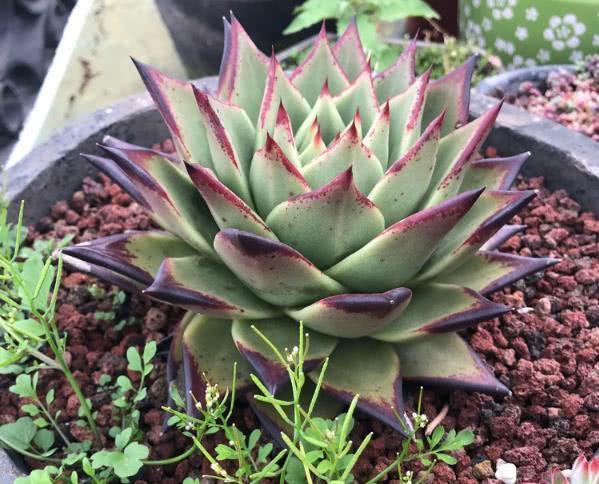
When should succulents be sown? In fact, when to sow succulents cannot be determined simply by month or season, because our country is vast, the climate differs greatly between north and south, and the sowing environment is subject to a great deal of human intervention, so the sowing time generally has to be decided according to the local climate and temperature. Many plant lovers rush to sow as soon as they buy succulent seeds, and give up when the seeds do not sprout for a month after being scattered, without giving any thought to the sowing temperature.
Before sowing succulents, the soil must be soaked through with water and kept moist at all times; the best method is to use a double-pot setup, with a tray underneath that can hold water, and never let the water run out. Air humidity should be maintained with a transparent lid or cling film. The lid needs a few ventilation holes; do not seal it completely. Once most of the seeds have germinated, just remove the lid.
Some people sow Crassulaceae seeds at over 30 degrees; sowing when the temperature is unsuitable often results in a low germination rate or no germination at all. 10-25 degrees is fairly suitable, and a certain day-night temperature difference is needed. Humidity: relatively high soil moisture and air humidity are needed. After sowing succulents, should the tray be filled with water? If yours are seeds, yes; if they are already grown, then no.
Time: taking the common Crassulaceae genera Echeveria, Pachyphytum, Graptopetalum and Dudleya as examples, those that can sprout generally all sprout within 3 days to 2 weeks. Other genera have not been sown, and some need longer. Sufficient diffused light is needed; no direct light, and not complete darkness. Diffused light before germination, then gradually transition to natural direct light, with shading in summer. Seedlings are not afraid of becoming leggy; as long as they are alive they can recover later, but once scorched to death there is no way to save them.
Next comes the matter of transplanting succulent seedlings. Generally, once a pair of cotyledons has opened, the first transplant can be done; at this point they have barely rooted, and once settled in they are actually less likely to die from transplanting. After transplanting, spread a top dressing, which is good for propping up the seedlings and for preventing and controlling fungus gnats. After that, transplant whenever they get crowded, otherwise the seedlings compete for nutrients, soil and light, which is not good for their growth; after transplanting, the spacing between seedlings should not be too large either, a finger's width of spacing is fine. A moderate amount of competition is not without benefit. When they grow bigger, they can be transplanted into plug trays with individual cells.
Let us expand the knowledge a bit more, the key points of succulent cultivation: the growing medium requires soil that is loose and airy, well draining, but with a certain water-holding capacity, and neutral or slightly acidic. High-altitude globular types (the genera Aztekium, Obregonia and Strombocactus) and the genus Ariocarpus can have a little more rice-hull ash and small-grained weathered rock added. Tall columnar types can be mixed with coarse quartz sand to anchor the plant.
This is a gathering place for succulent lovers, sharing succulent care tips; you are welcome to follow and join the discussion.