Have you been growing Cymbidium faberi in vain all these years? It would be a real shame not to understand the planting differences between Cymbidium goeringii and Cymbidium faberi.
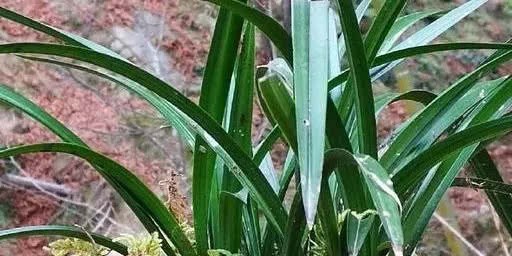
Cymbidium faberi is commonly known as Jiutoulan or Jiuzilan, and is a treasure among orchids. Most friends who love growing orchids will keep one or two pots of Cymbidium faberi. Recently, some orchid growers have reported that Cymbidium faberi is difficult to grow and does not bloom for two years, while the Cymbidium goeringii grown at the same time blooms well every year. Why is that? After a detailed exchange with the orchid grower, Haoshe Nongfu learned that he had made some small mistakes in planting and managing Cymbidium goeringii and Cymbidium faberi, and these are mistakes commonly made by novice orchid growers.
There are differences in the growth habits of Cymbidium goeringii and Cymbidium faberi, which can be seen from wild orchids. Wild Cymbidium faberi mostly grows on the upper half of hillsides, and some even grow on hilltops, all in locations with good ventilation and relatively dry soil. Wild Cymbidium goeringii on the same mountain mostly grows at mid-slope, on slopes near small streams and ditches, where the micro-environment is relatively moist and the light is weaker.
The flowering period of Cymbidium faberi is usually two months later than that of Cymbidium goeringii (based on orchids produced in the same orchid-producing region). Haoshe Nongfu often sees on the mountain that long after Cymbidium goeringii flowers have faded and set seed pods, Cymbidium faberi has only just sent up its flower spikes. So they are also out of step in sending up new shoots after flowering, including the time difference in sprouting flower buds after autumn. If they are managed together, Cymbidium goeringii needs water control to promote flower buds, while Cymbidium faberi needs moisture to grow new shoots. Controlling water at the same time will affect the growth of Cymbidium faberi's new shoots that year, and even affect the next year's flowering.
Cymbidium faberi plants are tall with well-developed root systems, and it is common for them to be two or three times larger than Cymbidium goeringii, so Cymbidium faberi needs more nutrients than Cymbidium goeringii. If given the same pot, potting medium, water and fertilizer, then Cymbidium faberi will not get enough nutrients, causing the plant to visibly decline and weaken, which is also one of the reasons affecting flowering. Therefore, Haoshe Nongfu suggests that when planting Cymbidium faberi, you need to consider whether the potting medium has enough nutrients, whether ordinary fertilization can meet its growth needs, and whether the orchid pot is large enough for the growth of Cymbidium faberi's root system.
Cymbidium faberi needs more light than Cymbidium goeringii. Haoshe Nongfu once took a video on a hilltop: that wild Cymbidium faberi still grew very vigorously even when exposed to the sun in summer. Compared with Cymbidium goeringii, Cymbidium faberi is more tolerant of low temperatures and also prefers low temperatures, which can be seen from the hillside positions where they grow. In Haoshe Nongfu's hometown, the extreme low temperature in winter is around minus 8°C, and in 2017 it even reached minus 10°C for more than ten consecutive days. When spring came, the wild Cymbidium faberi still bloomed on the hilltop. You should know that in mountain areas in winter, there is a 5-6°C difference in temperature between the hilltop and mid-slope.
Therefore, when Cymbidium goeringii has completed vernalization and is moved indoors to bloom, Cymbidium faberi cannot be brought inside together with it. Haoshe Nongfu has done experiments and found that as long as the orchid pot soil does not freeze into a solid popsicle, Cymbidium faberi will not be damaged or killed by freezing. So Haoshe Nongfu suggests that orchid growers pay close attention to the weather forecast in winter, and unless extreme low temperatures arrive, do not move Cymbidium faberi indoors.
Only Cymbidium faberi that has undergone sufficient vernalization will produce good flowers. Of course, this is for the local wild orchids where Haoshe Nongfu lives, and other varieties still need more exchange among orchid growers.