What types of stump bonsai are worth promoting?
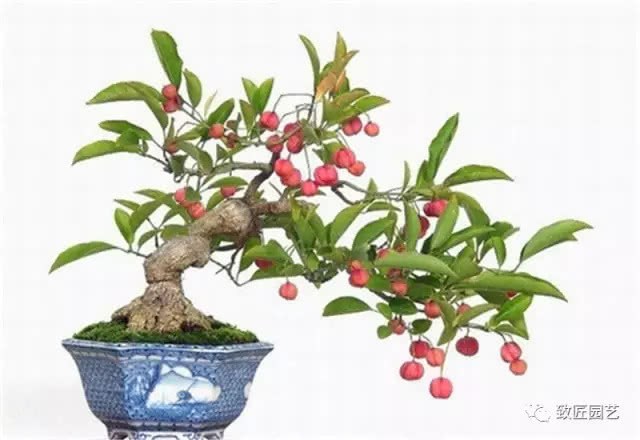
There are many types and forms of stump bonsai, and quite a few innovative types are being born and developed. The wind-swept style and the inkstone style are innovative forms. Among the many forms there are quite a few outstanding ones, with characteristics of high difficulty, strong ornamental appeal, unusual morphology, extremely long time, enormous variation, and deeper implied meaning. For example, tree-mountain style, forest style, cliff style, rock-attached style, tree-rock style, wind-swept style, inkstone style, large-tree style, waterside style, etc. These types are more popular with people and are worth vigorously promoting in the development, utilization, selection, production and creation of stump sources. Especially when selecting stumps in the wild, pay attention to choosing such stumps for creation; during the process of evaluating stumps, do not easily alter stumps, turning valuable stumps into mediocre ones. In production, pay attention to producing more stumps of these types.
These types of stumps are seldom formed naturally in the wild. After they have been evaluated, greater patience, more skill and more investment are needed to create them, so as to give full play to their appreciation value, value-increasing role, collection role and heirloom role.
Bonsai should innovate, and bonsai is also difficult to innovate, but there are quite a few stump bonsai with innovative significance and forms that have also gained recognition. The wind-swept style, inkstone style and landscape-basin method are innovative forms and have gained recognition.
The water-and-land style creates rich scenery, with large scenes and deep scenes; in the eyes of some people it is an innovative form combining rock, water and trees. But water-and-land bonsai existed long ago in history, and ancient poems already recorded it; it was merely not popularized enough in the past for various reasons. Mr. Zhao Qingquan promoted and applied it, and is the pioneer who promoted it most vigorously.
In terms of the way scenery is created, the inkstone style and the landscape-basin method have relatively complete innovative forms. They perfectly and naturally combine the basin and the scenery: scenery on the basin, scenery growing from the basin, combined with trees, with a relatively strong expressive capacity. In practice they are welcomed by ordinary people and also praised by professionals. The inkstone style has great application value for vigorous promotion in the way scenery is created. Innovations in the way tree species are used include Tianshan juniper, small chrysanthemum shaping, etc. Using tree species for innovation is not very difficult, but combining technical innovation with tree-species innovation has a certain novelty. For example, grafting to change the species can expand the range of use of fine tree species and form a broad way of utilizing resources; it cannot be said that it has no innovative significance technically. Its earlier use was grafting plum onto peach and grafting five-needle pine onto mountain pine.
The wind-swept style is an innovation in shaping on the branches. It breaks the traditional compositional method of branches distributed on both sides of the trunk, and expresses the action of natural forces and life's struggle and adaptation fully and vividly, which is inspiring.
Innovation in the shaping method of branches and trunks requires a very long time before the innovative thinking can be expressed. For example, once there is a clear shaping method for viewing the skeleton through the leaves, it takes several years to achieve success in creating and expressing it, at least seven or eight years, and at most several decades. Polarized shaping, which is planned innovation on the trunk and branches, requires even longer time before its innovation can be expressed and recognized by everyone.
The tree-mountain style also has a certain innovation, shown in its shaping and way of creating scenery. The tree-mountain style expresses trees as mountains, shaping the branches as large trees on the mountain, changing the stump into a mountain, changing branches into trees, and changing upper branching into overall branching, enhancing the perspective, three-dimensionality and depth of the scene, which is different from the expressive methods of other forms. The stump's freehand expression stands in for mountains, handled as a distant scene, which differs from the handling of middle and near scenes, changing the stump's tree flavor into a mountain flavor. Trees can be arranged on the mountaintop, at the mountain foot and on the mountainside; trees can also be arranged as appropriate in front of and behind the mountain, composing near and distant trees to express depth of scene. The trees on one mountain can be expressed in many forms such as straight trunk, slanting trunk, curved trunk, cliff, twisted, wind-swept and forest, becoming a museum of tree forms and branch forms.
There is also innovation in the way of appreciation. Removing the clothing to view the bones and change the scene is an innovation in the way of appreciation; viewing the bones through the leaves and viewing leaves and bones together is both an innovation in the way of appreciation and an innovation in the shaping method.
Exciting content