Wild animals: 18 years ago, dozens were caught in one go; today they are nearly extinct, and farmed ones cost 30 yuan each
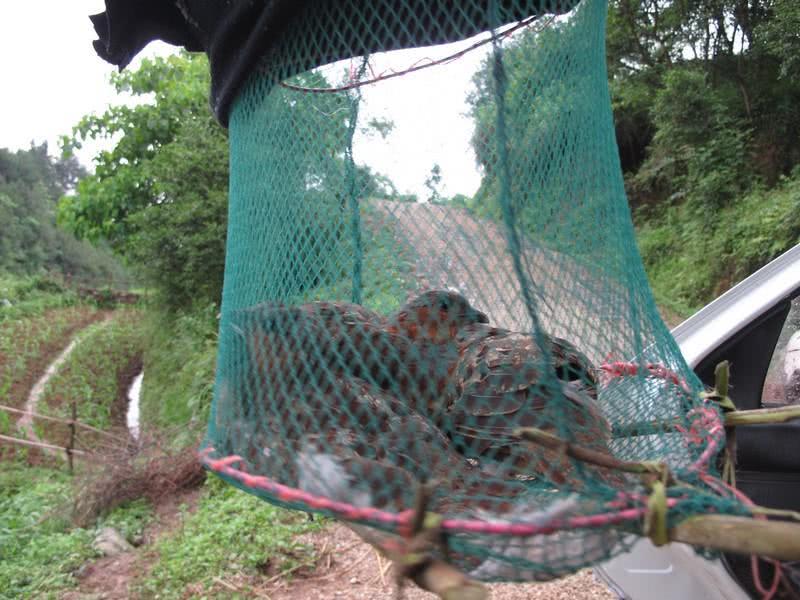
Our country is vast in territory and rich in resources, and a wide variety of wild animals live across its broad lands. A few decades ago, many wild animals could be seen in the mountain forests of rural areas, such as pheasants, hares, and even wild boars. Many people of Grandpa's generation went into the mountains to hunt wild game, and most of that wild game was edible at the time. Later, as more and more people became interested in wild game, the wild animals that could be seen in the mountain forests were nearly all caught to extinction. On top of that, the state issued many regulations on protecting wild animals, so nowadays even if you want to eat them you cannot, and people can only pin their hopes on some farmed animals.
In the mountain bamboo forests south of the Yangtze River in China lives a very special kind of wild animal. It looks like a bird, but often walks on the ground, and its habits are very similar to those of domestic chickens, so this animal is named the bamboo partridge. Generally, bamboo partridges like to appear in flocks. Eighteen years ago, wild bamboo partridges were not yet a protected animal, and at that time many people were skilled at catching them. Because this creature is aggressive, as long as someone imitates the crow of a rooster, it will call back in response, and the hunter only needs to follow the sound to find many bamboo partridges. Thus the harvest was also quite plentiful, with dozens caught in one go.
Before 2000, bamboo partridges were the target of frenzied hunting by people, because the bamboo partridge has long had the reputation of being the "crown of mountain delicacies." Its flavor is delicious and it also has certain nourishing effects, and its price was also very expensive. Wild bamboo partridges generally sold for fifty or sixty yuan each, were sold to wild game restaurants, and were even sold in farmers' markets. Driven by such a high economic incentive, many people made catching bamboo partridges a side business and hunted them on a large scale, causing the number of wild bamboo partridges to drop sharply and bringing about a series of ecological problems. Because bamboo partridges live by eating termites, locusts and other pests, a decrease in their numbers means an increase in the number of pests, and the impact of this on agricultural development and the ecological environment is extremely negative.
As bamboo partridges were included in 2000 on the list of protected wild animals of the State Forestry Administration, the capture of wild bamboo partridges was prohibited, but their numbers were already not many, and now they are very hard to see in rural bamboo forests. However, the market for bamboo partridges has not cooled down. In order to meet market demand, artificial farming of bamboo partridges has also appeared, and now people in many southern regions raise them. Bamboo partridges are generally raised free-range, with poultry houses built, and the requirements for raising them are somewhat higher than for raising chickens. From hatching to growing into an adult chicken takes about 3 months, and the market price is 30 yuan each, giving them relatively high economic value.
Besides selling finished bamboo partridges, bamboo partridge eggs are also a source of income. Farming carries risks, and if you do not understand it you still need to be cautious.