Detailed Guide to Making Pomegranate Bonsai, Beginners Can Do It at a Glance
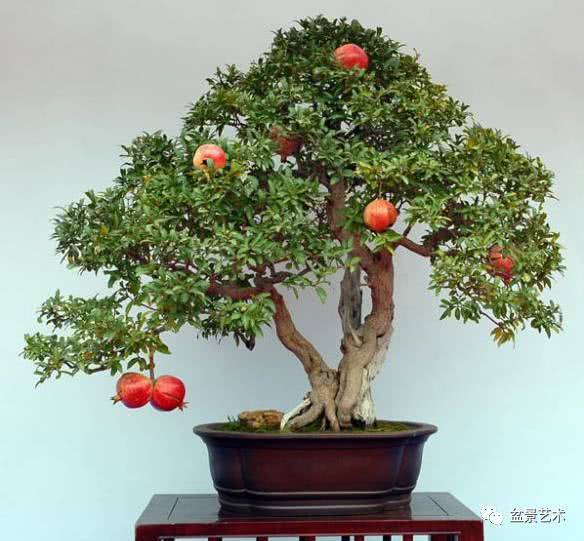
Whether for enjoying the flowers or the fruit, the pomegranate is an excellent choice for potted cultivation. Pomegranate flowers come in single-petaled and double-petaled varieties; flower colors include bright red, crimson, yellow-white, and red-and-white mixed; fruits come in large-fruited and small-fruited types. For making pomegranate bonsai for ornamental display, it is generally best to choose red varieties with double petals and large flowers, as well as red varieties that bloom in all three seasons.
The pomegranate is not demanding about potting soil; neutral soil or slightly acidic or slightly alkaline soil all work, but sandy loam rich in organic matter is best. It can be made from river mud and mountain soil mixed with an appropriate amount of fine sand, or by mixing nine parts sandy loam with one part decomposed compost soil, then mixing in one percent superphosphate or bone meal. The best time to pot up or repot a pomegranate is when the buds are just beginning to sprout. If repotting in other seasons or during the flowering and fruiting periods, it is best to keep the root ball intact to ensure survival. Pomegranate bonsai generally need repotting once every two to three years.
The pomegranate is extremely drought-tolerant, so watering should follow the principle of "alternating dry and wet, preferring dry over wet," and especially during the flowering and fruiting period, even more attention should be paid to controlling the amount of water. When watering, be careful to prevent water from touching the flowers to avoid rot. The pomegranate relatively likes fertilizer, but the amount applied each time should not be too large; you can "apply thin fertilizer frequently." From spring to autumn, generally apply decomposed organic fertilizer once a week or every ten days. You can also apply foliar fertilizer in summer by spraying a 0.2 percent potassium dihydrogen phosphate solution. During the leaf-unfolding, flowering, and fruit-setting stages, the plant needs additional phosphorus and potassium fertilizer to promote flowering, promote fruiting, and retain fruit. The pomegranate likes warmth, and potted pomegranates are not tolerant of severe cold in winter, so attention should be paid to frost protection, and they can be moved indoors for care.
Pruning of pomegranate bonsai is generally done after the flowers fade. If it is a non-fruiting flowering pomegranate, generally remove the spent flowers after they fade and appropriately shorten the branches. At the same time, combine pruning with fertilization to encourage it to sprout new branches and bloom again. Because the pomegranate grows vigorously and readily produces suckering branches, these messy branches that affect the ornamental effect should be removed frequently to avoid wasting nutrients. In routine care, weak branches, diseased branches, and dead branches should also be removed promptly. For the flowering branches of the pomegranate, generally renew them about once every three years; after leaf drop in winter, cut away dead branches, dense branches, and tangled branches to maintain and develop the tree shape. In early spring, generally carry out light pruning; at this time, be sure not to cut the branch tips or damage the terminal buds, because the terminal buds of pomegranate branch tips generally develop into flower-and-fruit branches.
The pomegranate is a tree species that requires strong light, requiring full sun during the growing season; only when placed in a sunny spot can it form flower buds, bloom, and bear fruit. If there is insufficient light, it will only grow leaves and not bloom, so the intensity of light directly affects the flowering of the pomegranate. Because the pomegranate likes light and can tolerate high-temperature and dry environments, it is a good tree species for beautifying residential balconies.