Dusty miller is especially suited to cool autumn cultivation, as if touched by frost
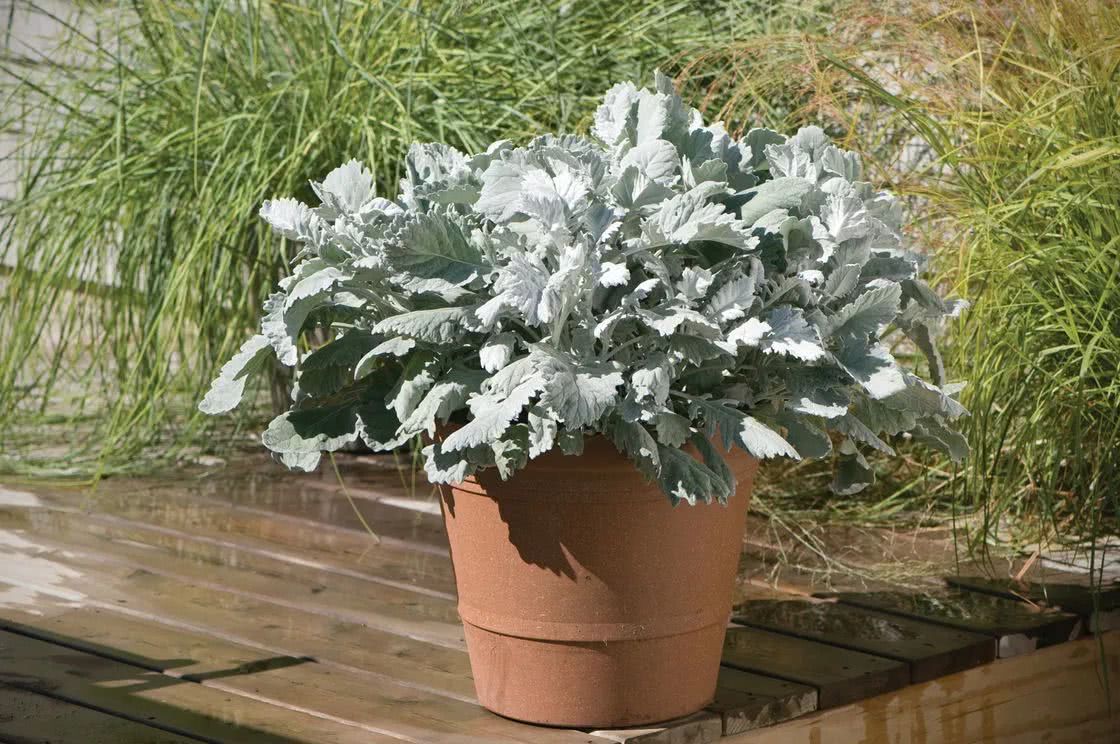
If you want to plant some particularly lovely plants in autumn, dusty miller is a good choice. It likes plenty of light, is very drought-tolerant, and loves a cool environment. It grows well on balconies and terraces, and you can also plant it in a semi-shaded courtyard.
The most distinctive feature of dusty miller is its silvery-white leaves, which look a bit as if they have been coated in frost. It is very suitable for growing in flower pots, and can also be planted together with other flowers, such as sturdy marigolds, French marigolds, pansies and black-eyed Susans.
The reason dusty miller's leaves look silvery-white is that its leaves are covered with many tiny silvery-white hairs, which feel very soft and pleasant to the touch.
Dusty miller fears hot, humid summers and prefers cool, dry autumns. It has little demand for water and a certain degree of cold tolerance, making it especially suitable for autumn cultivation.
Dusty miller is a perennial herbaceous plant with excellent ornamental value, offering a strong decorative effect, and can also be used as a filler flower to decorate bouquets.
Dusty miller is originally a silvery plant native to the Mediterranean region. Do not confuse it with dusty miller (Senecio cineraria); its leaves are very deeply divided, looking a bit like an enlarged snowflake.
Dusty miller is very suitable for planting in the courtyard, paired with different flowers. The photo above shows it paired with pink and white wax begonias, along with some purple heucheras.
Dusty miller grows well in a sunny spot. It likes well-drained soil and does not need frequent watering. It has strong cold tolerance. If the soil stays wet for a long time, or if water is often poured onto the leaves, it can easily lead to root rot or leaf spot disease.
Dusty miller can be kept in a sunny position, and can also grow in semi-shade, but do not keep it in complete darkness, otherwise its silvery sheen will fade and the leaves will turn green.
In summer, be sure to avoid frequent watering of dusty miller. If a hot environment is combined with moisture, it can easily die. In summer, maintain good ventilation and control water appropriately. After it cools down slightly in autumn, resume regular watering, and do not pour water onto the leaves when watering.
For dusty miller grown in pots, add plenty of river sand or perlite to the soil to keep it well drained, and avoid the soil staying wet or waterlogged for long periods.
Dusty miller can actually bloom too. Its flowers are small and yellow, and look especially delicate.
To propagate dusty miller, you can directly use stem cuttings, or you can try growing it from seed. Sowing is generally done six weeks before frost. You can also choose to cultivate it after spring warms up, but avoid excessively high temperatures.
During sowing, keep the soil moist and avoid waterlogging. The most suitable temperature is between 16 and 20 degrees.
If you propagate dusty miller from stem cuttings, you can dip the base of the stem in some rooting powder, which can promote better rooting and sprouting. If the cut stem has flowers, be sure to remove the flowers before taking the cutting, and also remove the leaves at the base of the stem.