How can flower arrangements stand out? Two methods to teach you
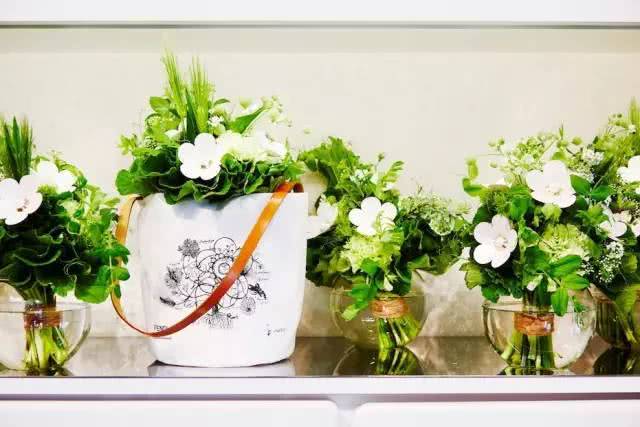
For many people who are "unaware of the truth," ikebana feels distant, a kind of lofty "refined art." It seems that unless you sit up straight, wear a serious face, and follow the rules rigidly, you cannot properly arrange a flower piece. In fact, arranging a vase of pleasing flowers is not difficult. Once you master a few small tips, as long as you have a heart that appreciates the beauty of flowers, you can confidently create your favorite works anytime and anywhere.
What flowers to arrange? Follow the four seasons and nature
Ikebana usually emphasizes following nature. Arranging flowers according to the season is a common method in ikebana. For example, in the current autumn and winter seasons, reddening Boston ivy, yellowed leaves, and fallen dry branches... these elements all suit the occasion very well.
Plants such as melons and fruits that symbolize the harvest season, and fruit-bearing flowers, can all respond well to the theme of the current season. Winter is the season for wintersweet, arrangements, and dry branches, while spring is inevitably tender green, enchanting, and full of pink blossoms.
Taking the changes of the four seasons as the theme, on the one hand, materials are easy to obtain; on the other hand, those who appreciate the flowers can feel a pace corresponding to nature; the seasonal changes revealed in the flowers make it easier for people to reflect on life and bring an indescribable sense of beauty.
Every plant and tree around you can be a flower
The so-called "ikebana" is not only about arranging "flowers." Not only can blooming flowers serve as the protagonist of an arrangement; buds about to open, those about to wither, and those yellowing and declining also have different kinds of beauty in different life states. In addition, the branches and leaves that serve as "supporting roles" can also become the main subject.
Of course, the plants that can be used for arranging flowers are not necessarily only those bought at the floral market. When out for an outing or climbing a mountain, fallen dead leaves and branches, wild grasses and wildflowers, and so on can all be used for arranging flowers. On the one hand, it helps nature do some "pruning," and on the other hand, it can create an alternative kind of beauty.
Flower arranging vessels are not limited to vases
The "flower" in flower arranging has a broad meaning, and the same principle applies to vases. What is used for arranging flowers is not necessarily a vase in the traditional sense; as long as it is a vessel, it can be used to present a floral work.
For example, tea bowls, teacups, plates, and other vessels. Sometimes a broken plate or old utensils can instead highlight the tenderness and vitality of the flowers, making the flower arrangement especially ingenious. Even non-vessels can also be used for arranging flowers. For example, pinning a string of flowers on a curtain or placing a dry branch on a coffee table are both places where beauty can be created.
--THE END--