Hydrangeas are perfect for growing at home, and every household deserves to have a pot.
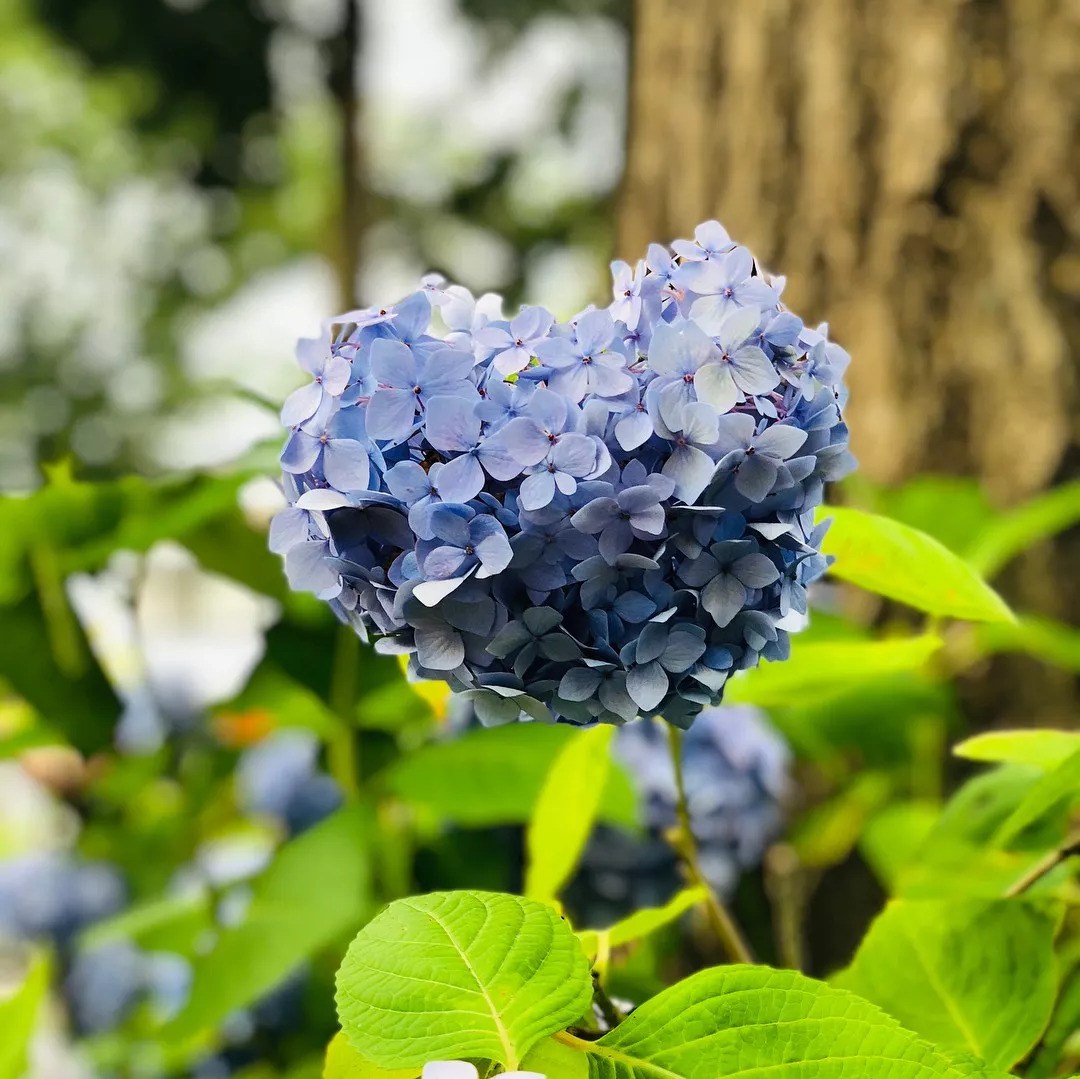
Hydrangea
Flower Picture Book (First Press Limited Edition)
Dew
00:00/06:07
BGM: Hydrangea
Fine is the plum rain, faint the morning breeze; leaning on the rail, one listens, and tears near soak the sleeves.
The pitter-patter, drip-drip of the plum rain makes the whole air damp and clammy, causing a vague restlessness.
Yet in this season, the beautiful hydrangeas quietly bloom, in great big clusters, blue, white, purple, pink.
As if they are all waiting to meet you, striking up a gorgeous yet tranquil charm.
Ancient temples in Japan love to plant hydrangeas. It is said that after World War II, times were hard and there was no money to build the approach paths, so the temple abbot decided to use flowers to mark the roads instead of buying wooden posts to pave them.
More importantly, he hoped the clear, pure flowers could comfort hearts wounded by the war.
Gradually there were more and more hydrangeas, and at last they created today's magnificent hydrangea scenery.
Meigetsu-in, Hase-dera and Joju-in in Kamakura are the three most famous places in Japan for enjoying hydrangeas.
Here, you can pass through the damp air and watch all kinds of hydrangeas blooming gloriously in the quiet, secluded temples.
In front of the temples there is a "temizuya" (purification font), where you must wash your hands and rinse your mouth before entering, symbolizing the washing away of worldly dust.
When the hydrangeas bloom, the purification font is filled with great big blooms of hydrangea, delighting the eyes and purifying the heart.
Riding the tram to view the flowers, your thoughts drift far away, and in a daze you hardly know where you are.
Hydrangeas bloom in sheets, forming a sea of flowers,
with the hazy beauty of mist shrouding cold water and moonlight shrouding sand,
and the letting-go of "a straw cloak in the misty rain, living out one's life."
Tourists come in droves, yet you can still hear your own inner whispers,
gradually filling up, light and cheerful.
Li Yu once said: "The craftsmanship of heaven reaches its limit with the blooming of the hydrangea." That is very apt.
However far human imagination reaches, how could one ever imagine that a single flower could bloom so huge, so intricate, yet so delicate and fine, so colorful and varied.
Now let me briefly introduce the classification of hydrangeas. Generally speaking, hydrangeas can be divided by flowering habit into four categories: bigleaf hydrangea, panicle hydrangea, smooth hydrangea, and oakleaf hydrangea.
The latter three are relatively fewer in number, and the ones we see most often at the flower market are the bigleaf hydrangeas.
If bigleaf hydrangea sounds a bit unfamiliar, then names like Endless Summer and Miss Saori may be more familiar - they are among the better-known varieties of bigleaf hydrangea.
Miss Saori
Most bigleaf hydrangeas can only bloom on old wood, but the Endless Summer variety is special - because besides blooming on old branches, it can also bloom on new branches, so its flowering period is relatively long, stretching across the entire summer, hence the name - Endless Summer.
Panicle hydrangea - I was won over by the picture below.
Let's take a look at how it performs.
Smooth hydrangea - the most widely known among them is probably Annabelle; tomorrow Tasha's Garden will also list it at the same time. Look how big its flower ball is - compare it with a face.
"Annabelle" is one of the most famous garden varieties of smooth hydrangea.
Its flowering period is extremely long, lasting from mid-to-late May all the way to October. The flower ball diameter is generally around 15-18cm, with the largest exceeding 30cm - incredibly stunning.
The petal-like sepals are pure white, delicate and refined; each small floret densely forms a loose flower ball, with a light, graceful and elegant posture.
Each small floret is delicate and light, like the pearl flowers on a bride's head.
After recommending so many hydrangeas to you, this time Tasha is finally letting you act on it.
Autumn is the most suitable season for planting hydrangeas.
After a season of autumn growth, next spring will reward you with a profusion of blooms.
Tomorrow morning at ten o'clock, Tasha will hold its first hydrangea group buy. We have selected 15 hydrangeas for everyone, and the seedling quality is naturally very good too.
So then, tomorrow morning, see you at Tasha's Garden.
Shall we also make a date for a summer of hydrangeas?
By next year, I'll treat you to tea, and you treat me to flower viewing.