What is the maximum temperature succulents can tolerate? Temperature tolerance varies by variety
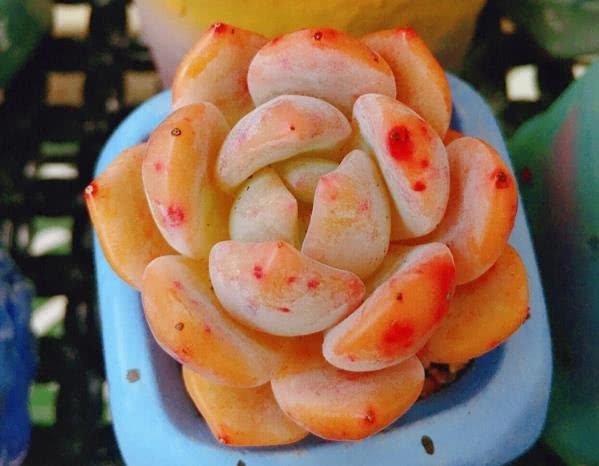
What is the maximum temperature succulents can tolerate still depends on the variety. Because there are so many succulent varieties, over ten thousand in total, their growing environments differ, and so does their resistance to high temperatures; the most heat-tolerant varieties can withstand temperatures around 50°C. For succulents, the most suitable growing temperature is 10°C-30°C. Of course, the temperature cannot be a constant value.
In summer, when it exceeds 35°C, some succulents will enter a dormant state, especially the "winter-growing type" (grows in winter). When the temperature reaches 40°C, almost all succulents will enter a dormant state; even the "summer-growing type" (grows in summer) will also enter a dormant state (no longer absorbing water).
In winter, when it is below 5°C, some succulents will enter a dormant state. 0°C is the freezing point, and water will slowly freeze. The leaves and stems of succulents are mostly water inside, so when it is below 0°C, the water inside the succulents will also slowly freeze, and the main body of the plant will certainly no longer grow. At this time, watering must be stopped completely.
By late spring and early summer, the old leaves of most varieties gradually become thinner, while new leaves gradually form inside the old leaves. After the weather turns cool in autumn, the new leaves grow further, burst through the old leaves, and emerge. During cultivation, rain and waterlogging must be avoided at all times, and during the growing season the plant should receive more sunlight, otherwise the plant will become leggy and fail to bloom.
In summer, when temperatures are high, the plant is in a dormant state and can be kept in a cool, ventilated place. Only when the soil is excessively dry should a small amount of water be given, or even no water at all, to prevent rot. When the weather turns cool in autumn, the plant begins to grow and produces beautiful flowers; it can then be moved to a bright place and watered appropriately. Vigorous plants can be given a thin, decomposed liquid fertilizer once a month, and when blooming, care should be taken to carry out hand pollination at the right time.
Succulent cultivation and care: use leaf mold mixed with one quarter vermiculite as the growing medium; the pot should be small and deep, with only a gauze screen and coarse sand and gravel at the bottom to facilitate drainage. In summer, provide shade and ventilation, and reduce watering appropriately. In winter, if 10°C or above can be maintained, watering can continue. In unheated greenhouses and polytunnels, it is best to overwinter them sealed inside a glass tank. In spring and autumn, water on schedule, but be extremely careful with fertilizing.
This is a gathering place for succulent lovers, sharing succulent care tips. You are welcome to follow and exchange ideas.