How to grow Yucca elephantipes? Growing methods and precautions
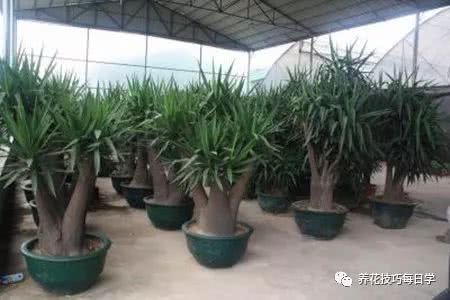
Yucca elephantipes is a common ornamental flowering plant for home pot cultivation. This plant is not difficult to grow, but many flower enthusiasts are not familiar with its growing methods, so what are the growing methods and precautions for Yucca elephantipes?
Growing soil
For potted Yucca elephantipes, garden soil, leaf mold and river sand mixed in equal amounts can be used as the growing medium. Yucca elephantipes has strong adaptability and is not demanding about soil, but it grows best in loose, fertile, slightly acidic soil with good drainage. It can be cultivated with loam rich in humus from under pine and cypress trees mixed with river sand, or with leaf mold mixed with river sand.
Growing humidity
During the growing season, just keep the potting soil moist; avoid overwatering, which causes waterlogging and makes the roots and stems rot. During the growing season, a certain air humidity needs to be maintained. For example, when the temperature is 20°C, a humidity of around 50% is sufficient; when the temperature is around 30°C, the humidity needs to be adjusted to around 70% to maintain good growth momentum.
Growing fertilizer
It has vigorous vitality and does not have high fertilizer requirements. During the vigorous growth period, applying liquid fertilizer 3-2 times per month is enough.
Growing light
Yucca elephantipes requires plenty of sunlight for growth. Apart from needing appropriate shading in the hot summer, it can grow in full sun in the other seasons.
Growing temperature
It likes sun and also tolerates shade, and can adapt to different light environments. However, it should not be too shaded, otherwise the newly grown leaves are often slow to harden and turn yellow, or it may cause leggy growth and the leaves become weak and droop. Yucca elephantipes grows at a moderate rate and has a wide temperature tolerance range. The optimal growing temperature is between 15-30°C, and in winter it should be kept above 2°C, which is most suitable; it is not tolerant of severe cold.
Disease control
Under conditions of high temperature and high humidity, Yucca elephantipes is highly prone to leaf spot disease. When it occurs, black-brown spots appear on the leaf tips and leaf margins, and in severe cases they spread to most of the leaf blade. It should be controlled promptly, and the fungicide used should be 800-1000 times diluted chlorothalonil.