Succulents grow more vigorously with proper fertilizing during the growing season
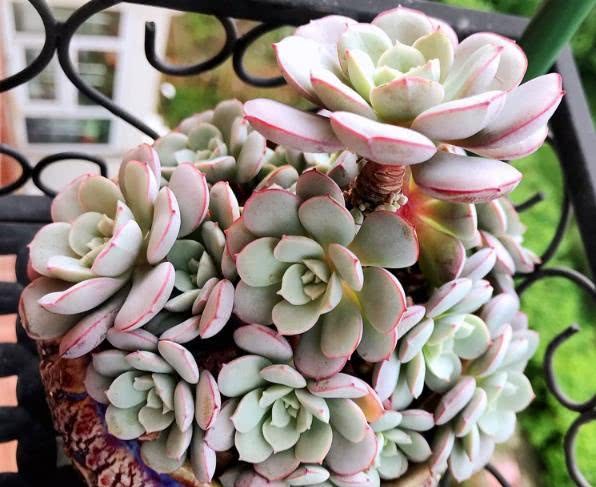
During the growing season is the best time to fertilize succulents. Do a good job with fertilizing, and your succulents can grow more vigorously during the growing season. In fact, right now is also a good time to make leaf mold for succulents, because summer temperatures are high and fermentation is faster. Pile up the fallen leaves you have collected and other material, one layer of dead leaves and one layer of soil, then pour rice-washing water over it, and it will be ready in about 2 to 3 months.
In spring, succulents need to be given enough nutrients, because in summer we need to reduce watering and shade our succulents, and succulents that did not grow well in spring will die during this period for various reasons. So in spring we need to fertilize our succulents. Whether it is chemical fertilizer or organic fertilizer, be sure to apply light fertilizer frequently. For water-soluble fertilizer, mix in a small amount each time you water. Organic fertilizer can be buried in a thin layer in the lower-middle part of the pot when repotting. Slow-release fertilizer can be mixed into the soil or shallowly buried not far from the roots. In this way, as the roots absorb water, they also absorb the nutrients that are beneficial for growth.
Fertilizing is generally chosen during the growing season and flowering period, once every half month, applied along with watering, and continued until the seed pods mature. Generally, try to choose a sunny morning or evening. In addition, the flowering period also needs to be controlled; for individuals whose flowering time needs to be coordinated, fertilize less or not at all. Newly potted plants, as well as plants that are growing poorly, have damaged roots, have wounds on stems or leaves, or are own-root cultivated plants that have turned entirely rust-colored after being harmed by red spider mites, must not be fertilized.
Organic fertilizer must be fully decomposed before use. Seedlings that have just emerged should not be fertilized within one month. However, if succulent growers are really worried that their succulents are malnourished, they can water the succulents with rice-washing water. Rice-washing water contains trace elements such as nitrogen, phosphorus and potassium, and is a mild compound fertilizer that does not harm the roots. Or placing a few grains of slow-release fertilizer on the surface of the potting soil will also work.
Nitrogen mainly promotes lush growth in trees, increases chlorophyll, and strengthens vegetative growth; too much nitrogen fertilizer leads to soft tissues, leggy stems and leaves, greater susceptibility to pests and diseases, and reduced cold hardiness; a lack of nitrogen fertilizer makes plants thin and small, with yellow-green leaves, slow growth, and an inability to flower. Nitrogen mainly comes from nitrogen gas in the air, which dissolves in rainwater through oxidation reactions. If there is too much rain, succulents will become leggy.
Generally, for beginners growing succulents, it is better not to fertilize. This is because succulents are not a type that needs much fertilizer, and the trace elements in ordinary soil are generally enough to cope. Fertilizing is often mainly done with liquid fertilizer, which easily causes side effects just like improper watering. The main reason lies in the mindset of trying to make succulents grow too fast and being eager for quick results. After all, succulents have their own unique physiological characteristics. Although we can, to a certain extent, increase their growth speed by changing the local environment, we cannot fundamentally change them, otherwise failure is inevitable.
This is a gathering place for succulent lovers, sharing succulent care tips. Welcome to follow and exchange ideas.