How to Grow Poria for High Yield? Detailed Cultivation Techniques in the Dabie Mountain Area
High-Yield Cultivation Techniques for Poria in the Dabie Mountain Area
Poria, also known as Yunling and Songling, is a fungal plant that parasitizes on dried pine wood covered by soil. It belongs to the kingdom Fungi, phylum Basidiomycota, class Agaricomycetes, order Polyporales, family Polyporaceae, genus Poria. It is widely distributed in Anhui, Fujian, Hubei, Guangxi, Yunnan, Sichuan and other places. Among these, Poria cultivated using the unique climatic conditions and soil site conditions of the Dabie Mountain area is a traditional authentic product, with good quality and high yield.
Poria is an important traditional Chinese medicinal material in China, with effects such as calming the mind, strengthening the spleen, promoting diuresis and reducing edema. Using the unique climatic conditions and abundant pine tree resources of the Dabie Mountain area to cultivate Poria is a good path for implementing the Party's "rural revitalization strategy" and promoting increased income for farmers. Based on years of experience in cultivating Poria, the author has summarized high-yield cultivation techniques for Poria in the Dabie Mountain area, in order to provide reference for Poria planting.
1 Biological characteristics
1.1 Morphological characteristics
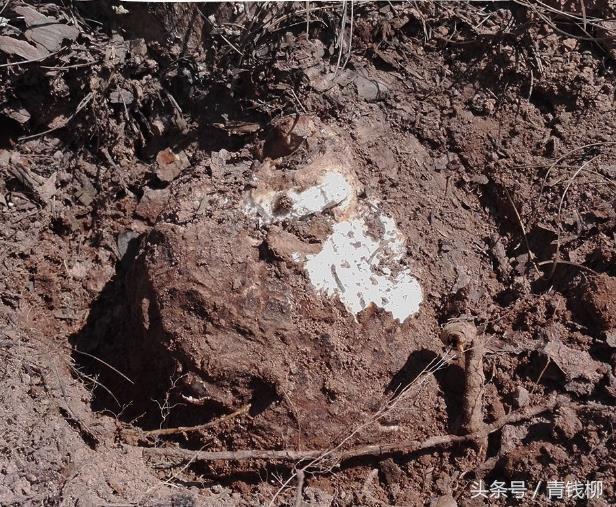
What is usually called Poria is the Poria sclerotium, formed by the aggregation of a large number of hyphae and nutrients. It is in a dormant state, with a dark brown skin and a white or pink interior. It is spherical, elliptical, and also irregular in shape, ranging from several hundred grams to several kilograms.
1.2 Growth cycle
The surface of the Poria sclerotium bears honeycomb-like fruiting bodies. After the fruiting bodies mature, they produce grayish-white spores. Under suitable conditions, the spores germinate and produce mycelium. The primary mycelium is monokaryotic. After plasmogamy, the monokaryotic hyphae produce secondary mycelium, namely dikaryotic hyphae. A large number of hyphae and nutrients gather to form the Poria sclerotium.
1.3 Growth habits
The mycelium can grow at 10-35 °C, with the optimum temperature being 23-28 °C; above 35 °C, the hyphae tend to age. When the mycelium grows in culture medium, it requires a water content of about 60% and a pH value of 5-6. When growing in soil, it requires a water content of about 25%, and grows well in sandy loam. Fruiting body formation requires air humidity of 70%-85%.
2 High-yield cultivation techniques
2.1 Spawn production
2.1.1 Stock culture. The formula is 200 g peeled potato, 20 g glucose, 20 g agar, and 1,000 mL water. Wash and slice the peeled potato, add 1,000 mL water, boil for 30 min, filter and add agar, boil until completely dissolved, then add glucose and stir until dissolved, replenish water to 1,000 mL, adjust the pH value to 5-6, dispense into 20 mm x 200 mm test tubes, and make slanted culture medium. Tie 10 tubes into a bundle, plug firmly with cotton plugs, with the bottle mouths facing upward, and sterilize at 1.05 kg/cm2 pressure and 121 °C for 30 min. After cooling, move into a disinfected inoculation box. Disinfect Poria sclerotia with pure quality (suitable for local growth, greater than 2.5 kg, round in shape), vigorous vitality, and compact texture with 75% alcohol, then rinse repeatedly with sterile water. At 2-3 cm from the outer skin, take a 0.5 cm x 0.5 cm Poria block with a thickness of 0.25 cm and inoculate it onto the test tube slanted culture medium. Then move the inoculated test tubes to the culture room and culture at 25-28 °C for 5-7 d. When the hyphae cover the entire culture medium, it is stock culture.
2.1.2 Mother culture. Use a culture medium made of 10% pine wood strips, 90% wheat grains, 1% sucrose, and 0.5% NH2NO3 with a water content of 60%, put it into 500 mL wide-mouth bottles, and sterilize at 1.5 kg/cm2 pressure for 60 min, or sterilize at 100 °C under normal pressure for 8-10 h. After cooling, move into an inoculation box, and inoculate the stock culture onto the mother culture medium. Each stock culture test tube can inoculate 5-8 bottles of mother culture. After inoculation, move into the culture room and culture for 15-20 d. When the hyphae grow throughout the whole bottle, it is mother culture.
2.1.3 Cultivation spawn. Use a culture medium made of 65% pine wood blocks, 10% pine sawdust, 20% bran, 3% sucrose, 1% gypsum powder, 0.8% magnesium sulfate, and 0.2% prochloraz with a water content of 60%, put it into wide-mouth bottles or polyethylene spawn bags, and sterilize at 100 °C under normal pressure for 8-12 h. After cooling, move into an inoculation box. Each bottle of mother culture can inoculate 60-80 bottles of cultivation spawn. After inoculation, move into the culture room and culture at 28 °C for 10 d, then at 22 °C for about 10 d. When the hyphae cover the whole bottle, it is cultivation spawn.
2.2 Preparation of cultivation materials
2.2.1 Tree selection and felling. Select pine trees of suitable age. In the Dabie Mountain area, Masson pine is the majority. Choose trees with a diameter at breast height of about 20 cm, 10-15 years old, with abundant sap, rich nutrition, and loose texture. Fell from the beginning of winter to the Awakening of Insects the following year. Nutrients are concentrated, and after freezing and sun exposure, they dry fully and then absorb water, making it easy for mycelial growth.
2.2.2 Peeling and leaving strips. About 10-20 d after the pine trees are felled, the branches can be cut off, and the bark peeled while leaving strips. According to the thickness of the trunk, leave several strips at intervals when peeling. Leaving strips means leaving 3 cm wide inner bark (cambium), which helps retain sugars and other nutrients. When the wood material is 70% dry, gather the scattered wood material to the edge of the bed site, saw it into wood sections of about 50 cm, and stack them in a "#" shape to facilitate ventilation and drying.
2.3 Preparation of cultivation site
To reduce transportation costs, choose the cultivation site nearby. It is required to be sheltered from wind and facing the sun, with sandy loam or mabone soil, and old forest soil is best. After the site is selected, cut weeds and branches, clean it up, and dig the site. It is best to dig in winter, about 50 cm deep, remove grass roots and stones, and open drainage ditches and kiln beds.
2.4 Preparation of "meat spawn"
"Meat spawn" refers to the Poria sclerotium used for inoculation. It is required to have pure variety, vigorous vitality, rich nutrition, compact texture, and no contamination. It should neither be too small nor aged. Therefore, in the process of producing "meat spawn," it is necessary to accurately grasp the material placement season, prepare pine trees in advance, peel and leave strips, cut them, and dry them fully. In mid-to-late August, place them in kilns for inoculation and cover with soil. The Poria sclerotium grown in May of the following year can be used as "meat spawn." To produce "meat spawn" with pure variety and vigorous vitality, first, the wood material should have few knots, loose texture, and moderate thickness; second, select the bed site as required; third, choose Poria spawn with strong stress resistance, high yield, and good marketability; fourth, use 3-5 logs per kiln and 0.3-0.5 kg of spawn; fifth, after placing in the kiln, carefully check the mycelial growth on the material, and pay attention to preventing insects and livestock damage.
2.5 Planting
2.5.1 Placing in kilns and inoculating. In mid-to-late May, choose a sunny day to place in kilns. In the prepared bed site, open ditches along the slope, 70-80 cm long, 50-60 cm wide, and about 50 cm deep. Sprinkle a small amount of quicklime in the ditch for disinfection. Then place Poria log segments in the ditch. According to the size of the log segments, place 2 logs in the lower layer and 2 or 1 logs in the upper layer. The log segments should be in close contact. Use 7.5-10.0 kg of log segments per kiln and inoculate 0.3-0.5 kg of cultivation spawn. Open the spawn and inoculate it on the upper end of the log segments. The spawn and log segments should fully contact. Cover well with the spawn bag to prevent contamination. Then cover with soil, about 5 cm thick, in a turtle-back shape to facilitate moisture conservation and drainage. While covering with soil, dig the next ditch, proceeding laterally in sequence. After finishing one row of kilns, make the next row. Leave 40 cm of open space between the 2 rows for connecting "meat spawn" and management. From top to bottom, align each kiln with the others so that the kiln ditches drain smoothly. If there is long-term rainy weather and the soil humidity is too high, plastic film can be used for covering.
2.5.2 Connecting "meat spawn." To improve Poria yield and marketability and induce fixed-point growth of Poria, originally each kiln produced several small Poria. By inoculating "meat spawn," each kiln grows only 1 Poria, and the yield is 1/3 higher than the total yield of the original several Poria. After Poria log segments are placed in the kiln for 15-25 d, generally 20 d is suitable, when the hyphae grow from the inoculation point downward and reach the lower end of the log segments, commonly called "sealing the base," open the soil layer at the lower end of the log segments and connect "meat spawn," namely a 3 cm Poria block. It should fully contact the log segments, be covered well, and be covered with soil to prevent contamination.
2.6 Post-planting management
7-10 d after Poria inoculation, check whether the hyphae have grown onto the material. If inoculation failure is found, supplement inoculation in time. Build a fence around the bed site with branches to prevent damage by people and livestock. Pay attention to clearing ditches and draining water to prevent waterlogging, cover with soil to conserve moisture, and remove weeds from the bed site. The biggest insect pest in the Poria cultivation process is termites, which can be trapped and killed with poisoned bait mixed with mirex, chlorpyrifos, carbofuran and others. In the late growth stage, Poria exposed on the soil surface should be covered with soil in time and pressed firm.
2.7 Harvesting and processing
From the end of October to November, when Poria grows mature, it can be harvested. Generally, Poria forms where the "meat spawn" is placed. Carefully dig open the soil layer with a hoe, take out the fresh Poria, then cover the soil well, and harvest again in June-July of the following year, commonly called the "second field." After the "second field" harvest, the nutrients are generally basically exhausted, and it can be dried as fuel. After the fresh Poria is taken out, brush it clean, pile it in a cool place and cover it with plastic agricultural film. The water evaporates and produces condensed water, which is called "sweating." After about 10 d in winter and 3-5 d in summer, peel it, process it into Poria slices, Poria cubes, Poria spirit and others with a special Poria knife, and dry them in the sun before packaging and selling.