Autumn Is Neither Too Hot Nor Too Cold, Making It the Best Time to Propagate 4 Kinds of Flowers - Plant Them Now and They Will Bloom in Spring
As people's living standards improve, keeping a few potted flowers at home has become a fashionable part of urban life. Not only can retired seniors and homemakers grow potted green plants at home, but even office workers busy day and night have green plants suited to them, such as the easy-to-grow foliage plants pothos, spider plant, and snake plant. Even succulents, which are rather delicate, are grown in pots at home by many girls. Although they can fall ill and rot at the slightest neglect, the love of growing flowers is an irresistible love of beauty. Once you fall into the pit of flower growing, many people stop buying flowers. Why is that? Because as long as you have experience growing flowers, you will want a kind of magical skill, namely the cutting propagation of potted flowers. This skill, which can turn one pot of flowers into 10 pots of flowers, is extremely tempting. Below are 4 kinds that are especially suited to cutting propagation, and in this season, when the temperature is neither too hot nor too cold, the survival rate of cutting propagation is very high. Even if it is your first time doing cutting propagation, it is easy to succeed.
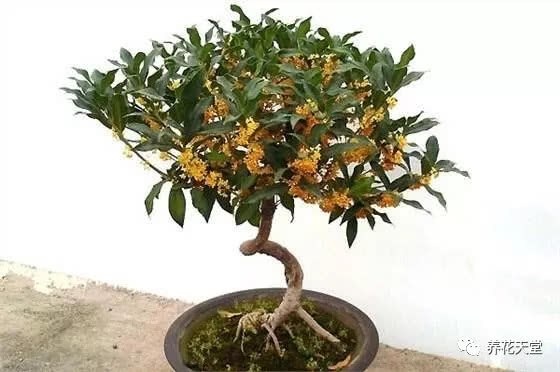
1. How to propagate osmanthus by cuttings
As the saying goes, "osmanthus fragrance carries for ten li." Osmanthus flowers are not only richly fragrant, but osmanthus tea is also very famous. September is exactly the season suited to propagating osmanthus by cuttings. If a neighbor or friend has an osmanthus in a pot at home, you might as well ask for a few branches. Following the cutting propagation method below, it will not take long before you can grow an osmanthus tree in a pot yourself, and perhaps by next year you will smell osmanthus fragrance throughout the house.
Method for propagating osmanthus by cuttings:
Before propagating osmanthus by cuttings, you need to select relatively healthy and robust osmanthus branches, preferably ones with growth points. What is a growth point? It is the place between osmanthus branches where there is a small bulge with a bud point. Once the branches are selected, we can carry out girdling treatment on the osmanthus branches. After the branch tissue heals into a pus-package shape, the branch can be removed. This stage takes about half a month. After removal, the branch can be directly used for cutting propagation. There is not much to pay attention to. Basically, if handled properly, the osmanthus branch after cutting propagation can survive, and then comes the long growing stage. As long as you pay attention to watering and light, smelling the fragrance next year is not a dream.
2. How to propagate Christmas cactus by cuttings
Everyone is very familiar with Christmas cactus, because this flowering plant is easy to grow and has many flower buds, making it very festive. The leaves of Christmas cactus are thick and fleshy, like crab claws, and its flowers are bright and colorful. When they bloom, they set off the oil-green leaves in a very unique and varied way. Autumn is also the flowering season of Christmas cactus, and Christmas cactus after cutting propagation grows extremely fast. As for the cutting propagation method for Christmas cactus, we have talked about it many times before. Simply put, there are two kinds. One is graft propagation, by grafting onto cactus, which can increase the nutrient transport for Christmas cactus and make it bloom earlier and more abundantly. The other is cutting propagation, like other foliage plants: select healthy Christmas cactus leaves (2 or more), disinfect and dry them, then insert them into the growing medium. After about 15 days you can observe whether the Christmas cactus leaves have sprouted. If they have not sprouted, you can wait longer. As long as the leaves remain full and green, there is a chance of success. But if the leaves used for cutting propagation wilt, it can basically be said to have failed. The reason may be that the growing medium is too wet, or that there are pathogens.
Method for propagating Christmas cactus by cuttings:
As in the picture above, propagating Christmas cactus by cuttings is very simple. You only need to choose the Christmas cactus leaves to be used for cuttings and insert the leaves into the soil. Note that after cutting propagation you should water thoroughly, but to avoid the potting soil being wet, do not water frequently.
3. How to propagate kalanchoe by cuttings
Kalanchoe not only has bright, clustered flowers, but also a beautiful meaning. As a flowering plant with fleshy leaves, it grows very quickly, and autumn is also the flowering season of kalanchoe. At this time, propagating kalanchoe by cuttings is a very good opportunity. Propagate two pots now, and after half a year you may see the new potted plants bloom.
Method for propagating kalanchoe by cuttings:
Just like Christmas cactus, kalanchoe can also be propagated directly by leaf cuttings, and the survival rate of leaf cutting propagation is very high, especially in the current weather, which is neither cold nor hot and very suitable for cuttings. However, unlike Christmas cactus, kalanchoe cuttings can be done not only by soil culture but also by water culture. It is equally simple. There is no distinction of better or worse; it depends on what you like.
4. How to propagate camellia by cuttings
Camellia flowers have a great many petals, so camellia looks very full and lovely. It is a very beautiful flowering plant. Likewise, propagating camellia by cuttings in early autumn can let camellia take root and survive faster.
Method for propagating camellia by cuttings:
To propagate camellia by cuttings, you can choose relatively healthy, robust branches, and make a 45° slanted cut at the branch incision to ensure the cut surface is smooth and flat. To make camellia take root faster, you can soak the camellia branches in aspirin solution before cutting. This can not only speed up rooting, but also inhibit the production of bacteria to a certain extent.
The above 4 kinds of potted flowers suited to autumn cutting propagation are all green plants with very high survival rates. If the cuttings succeed now and are cared for properly, you can see them bloom the next year. So take advantage of this autumn and propagate by cuttings right away.