A plant that looks like a pothos produces beautiful flowers and is very easy to grow in a pot
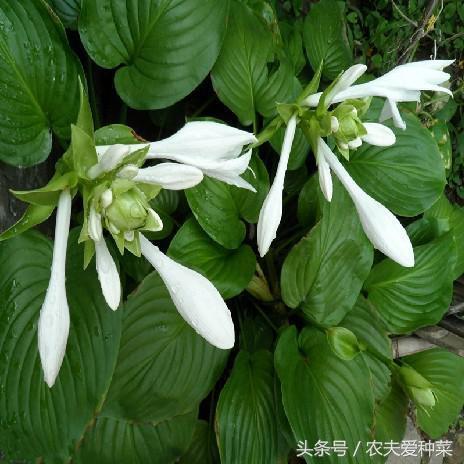
I saw a potted plant at a friend's place. At first glance, I thought it was a pothos, but it had several white flowers blooming on it, which really surprised me. Later I learned that this plant, which looks so much like a "pothos," is called hosta.
Speaking of it, hosta is a perennial herbaceous plant of the Liliaceae family. Its leaves are especially broad and emerald green, and it blooms with spotlessly white flowers from August to October, carrying a fragrant scent. A single plant can produce anywhere from a few to more than a dozen flowers, with buds shaped like hairpins and blooms shaped like trumpets, giving it high ornamental value.
Hosta not only resembles pothos in appearance, but is also just as easy to grow in a pot as pothos
Hosta has low soil requirements. As long as it is not clay, any soil with somewhat good drainage will do, but if you want it to grow better, then just like most plants grown in pots, fertile, loose sandy loam is most suitable for its growth.
Hosta is a typical shade plant that prefers shady, humid environments and must not be exposed to blazing sun. Under strong light, its leaves turn yellow and are also prone to developing spots, which affects its ornamental value.
When growing it in a pot at home, you can simply place the hosta indoors in a spot with bright light for care. As for watering, hosta likes moisture, so during its growing period you should water it more and keep the potting soil slightly moist. But note that although it likes water, once autumn arrives and temperatures drop, you must water it less, letting the potting soil dry and then become wet again, and be careful not to let water accumulate in the pot.
Fertilizing is convenient. In spring and autumn, you can apply light fertilizer frequently, once every 10 days with a nitrogen-based fertilizer solution, and you can stop fertilizing in summer and winter.
Hosta is also very cold-resistant. It can overwinter safely when the winter temperature is above 5°C. In other words, it can be grown year-round in the south, and in the north, as long as it is kept indoors in a warm place during winter, it can also overwinter safely.