Analysis of the 6 Major Causes of Dry, Yellowing Leaves on Tree Peony
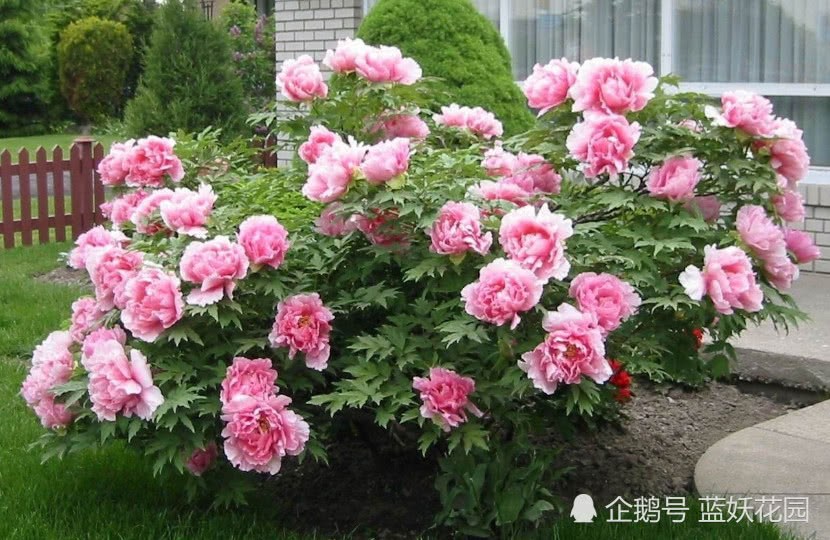
21. If tree peony leaves are dry and yellowing, it comes down to these 6 major causes!
This is an excerpt from the original "Tree Peony Cultivation" column article by Lan Yao
During cultivation, tree peonies often show the phenomenon of leaves drying up and turning yellow. So why does this happen? And how should we respond and solve it? Today Lan Yao will explain in detail the causes of dry, yellowing leaves on tree peonies and how to deal with them.
The 6 major causes of dry, yellowing leaves on tree peonies:
1. Overwatering
Tree peonies prefer dry conditions and dislike dampness, and are most averse to waterlogging. If the potting soil stays too wet for a long time, the roots cannot breathe properly and yellow leaves appear.
Yellow leaves caused by overwatering mainly show as: old leaves with no obvious change, while new leaves turn yellow. If you find the new leaves of your tree peony turning yellow and the potting soil is rather moist, you should consider overwatering as the cause.
Solution:
Loosen the soil promptly, improve ventilation, and control watering. From then on, water only when the soil is dry and stop when it is moist, to prevent waterlogging in the potting soil.
2. Drought-induced yellow leaves
Although tree peonies like dryness, excessive drought can also cause yellow leaves. Drought-induced yellow leaves mainly show as yellowing from the bottom up: old leaves turn yellow first, while new leaves remain normal.
Solution:
When the potting soil of a tree peony is too dry, water it promptly to replenish moisture.
3. Soil that is too alkaline
When potting up tree peonies and mixing soil, we mentioned that tree peonies cannot grow in overly alkaline soil, so when mixing soil use rice husk ash rather than plant ash, because plant ash is too alkaline.
If the potting soil is too alkaline, tree peonies will grow poorly and develop yellow leaves, mainly showing as chlorosis between the veins while the main veins remain green, producing an alternating yellow-green appearance. In severe cases, the veins gradually lose their green, then the whole leaf turns white, the leaf margins become scorched, and the leaves drop off.
Lüjuneng (llano) Type-C data cable, short, LeTV phone data cable, suitable for Xiaomi 5 / Smartisan Nut Huawei P9 / Honor 8 / v8, power bank cable, 0.2 m, silver
¥9.90
Solution
When the potting soil of a tree peony is too alkaline, apply acidic fertilizer promptly to neutralize the alkalinity of the soil.
4. Improper fertilizing
"Clear for tree peony, cloudy for Chinese peony." Tree peonies are rather particular about fertilizing; generally no liquid fertilizer is used, and raw or concentrated fertilizer must never be used. Improper fertilizing can cause tree peony leaves to turn yellow and leaf tips to dry up. Sometimes it also shows as new leaves that are thick, glossy and uneven.
Solution
When tree peony leaves become scorched and yellow after fertilizing, it indicates fertilizer burn; drench the roots with plenty of clean water to dilute the concentration of inorganic salts in the soil.
If new leaves appear thick and uneven, stop fertilizing for a period and let the plant recover naturally.
5. Nutrient deficiency
Many people, on hearing "clear for tree peony," are afraid to fertilize, which leads to nutrient deficiency in tree peonies from lack of fertilizer, showing as yellow leaves. With nutrient deficiency, yellow leaves appear first on the new leaves.
Solution
For yellow leaves due to insufficient fertilizer, apply additional fertilizer promptly. You can shallowly bury fermented organic fertilizer as a top dressing, or spray the foliage with a low-concentration water-soluble quick-acting fertilizer.
6. Root rot
The above 5 kinds of yellow leaves are relatively easy to solve, but if it is root rot causing the yellow leaves, it becomes more troublesome.
Tree peony root rot may be caused by waterlogging in the potting soil, or by root rot disease. In any case, after root rot the tree peony's lower leaves begin to yellow and drop, gradually progressing upward.
Solution
For mild root rot, drench the roots with fungicides such as carbendazim or mancozeb to sterilize, then control watering to solve it.
If the root rot is fairly severe, dig the tree peony out, prune away the rotted roots, soak it in a mancozeb solution, and then replant it in fresh soil.
Some flower lovers find that newly planted tree peonies tend to have curled leaves. Why is that? Tomorrow we will continue to explain it for you, and you are welcome to keep following.
If you want to learn flower growing with Lan Yao and quickly leave behind being a novice, pleaseFollow my WeChat official account: Lan Yao Garden (ilanyao)