How to grow potted spider flowers? A detailed guide to cultivation methods
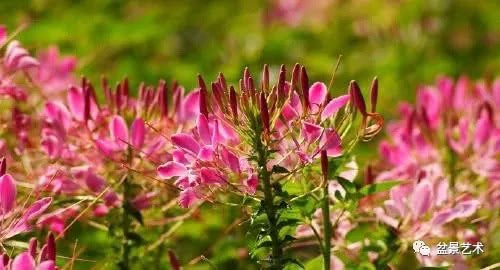
Spider flower potting care tips:
Seedlings should be thinned in time and transplanted when they have 2-3 true leaves, then planted in the ground or in pots in June. It is a taproot plant with small fibrous roots and recovers poorly after transplanting, so it is generally sown directly outdoors in spring, or transplanted when the seedlings grow to about 5 cm tall, into fertile soil. Generally no additional fertilization is needed; apply fertilizer once every half month during the growing period, and control water and fertilizer during growth to prevent the plants from growing leggy and affecting flowering. When flower buds form and during the flowering period, apply top dressing 2-3 times, which can extend the flowering period. For routine watering, keeping the soil in a semi-moist state is best; water frequently during drought.
Spider flower
When flowering, set up supports to prevent lodging. If you do not want to save seeds, promptly cut off the spent flowers after they fade so the plant does not set seed, reducing nutrient consumption and helping to extend the flowering period. The whole plant has sticky hairs and uses relatively little water; apart from the greater water demand during the flowering period, the seedling stage can go without watering or with little watering, making it relatively easy to manage. In summer, water at least once a day; if high temperatures and drought occur, it can be moved to a shady spot, and after the potting soil cools slightly, water again to replenish moisture. In autumn and winter, reduce watering and water again when the soil surface dries.
Light and temperature: the spider flower likes high temperatures and tolerates summer heat. Its most suitable growing temperature is 20°C to 32°C. It likes light; although it can also grow under semi-shade conditions, to keep it compact, expose it to direct light as much as possible, preferably more than 4 hours per day. When planting in flower beds, promptly remove spent flowers so the plant does not set seed, thereby extending the flowering period.
For those used as potted plants, remove the terminal buds at the seedling stage and control the application of nitrogen fertilizer to dwarf the plant. For those used as cut flowers, plant them slightly more densely and remove the side buds to promote the development of the terminal inflorescence. If you want the spider flower to bloom during the Spring Festival, you can sow it in pots in autumn, move it indoors to a sunny spot before winter begins, keep the indoor temperature at around 20°C, keep the potting soil slightly moist at all times, and apply 2-3 times of dilute compound liquid fertilizer during the bud stage; it will then bloom during the Spring Festival.
It is often harmed by leaf spot disease and rust. For leaf spot disease, spray with a 500-fold dilution of 50% thiophanate wettable powder; for rust, spray with a 3000-fold dilution of 50% wettable rust control powder for prevention and control.